Federal regulators have granted a 40-year operating license to one of the largest proposed energy storage projects in the United States, sited on the contaminated remnants of a defunct aluminum smelter along the Columbia River Gorge - a development that energy professionals say could set a template for brownfield-to-storage redevelopment nationwide.
Background
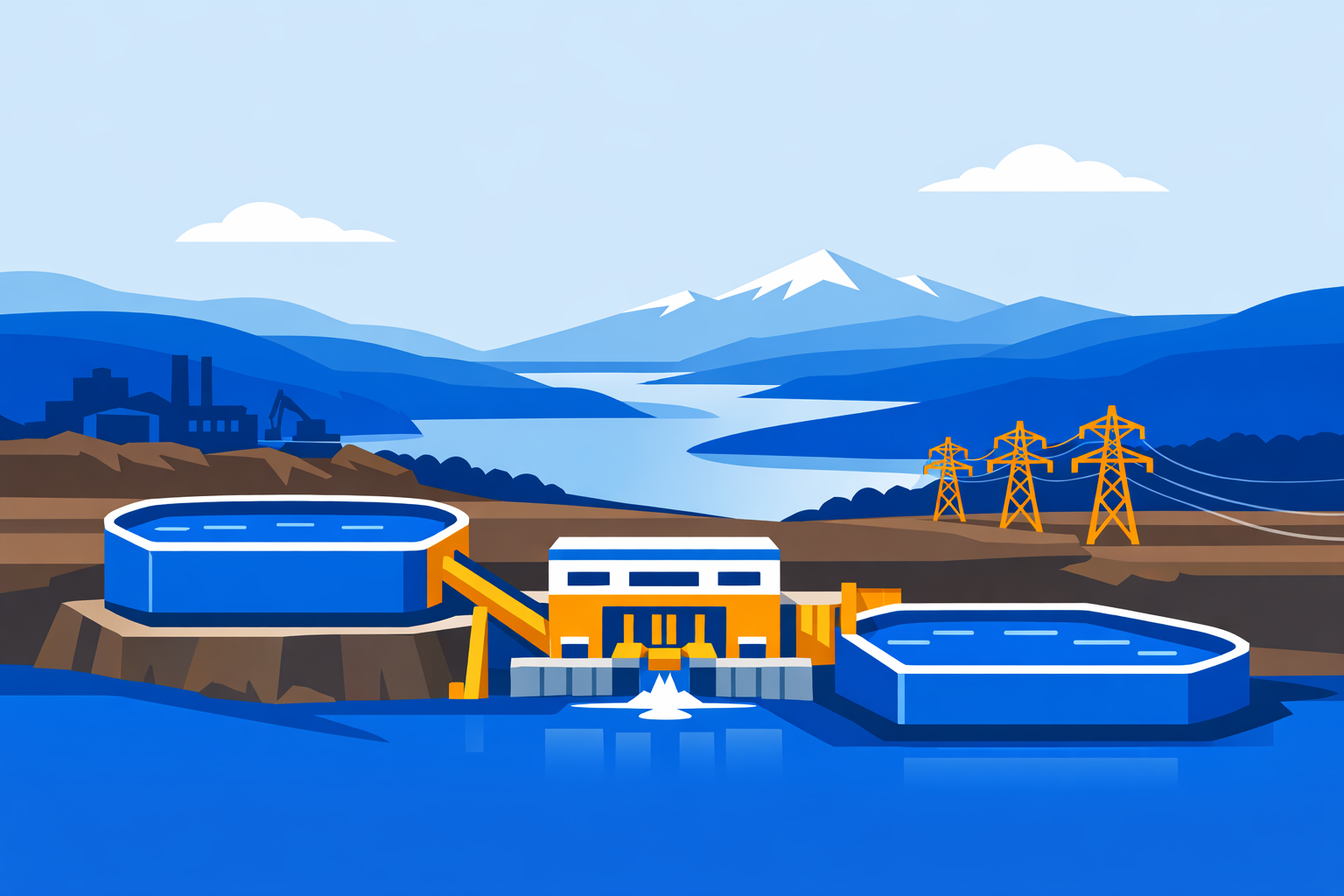
On January 22, 2026, the Federal Energy Regulatory Commission (FERC) issued a 40-year license to Rye Development and its financing partner, Copenhagen Infrastructure Partners (CIP), for the Goldendale Energy Storage Project near Goldendale, Washington. The facility is proposed for private land at the former Columbia Gorge Aluminum smelter, a brownfield site 8 miles southeast of Goldendale in Klickitat County, overlooking the Columbia River near the John Day Dam.
The licensing decision followed a five-and-a-half-year application process that began when Rye filed for its FERC license in June 2020. The project cleared a significant milestone in February 2024, when FERC staff finalized an environmental impact statement endorsing the proposal. The site lies entirely within Klickitat County's Clean Energy Overlay Zone, a designation established in 2005 to streamline energy development in the area.
Brownfield redevelopment for clean energy has gained policy momentum through the Inflation Reduction Act (IRA), which established an energy community tax credit bonus. The IRA's energy community adder provides a 10-percentage-point bonus on investment tax credits for clean energy projects located on brownfield sites or in communities historically dependent on fossil fuels, according to the EPA. The IRA's incentives are estimated to reduce the cost differential of brownfield solar and storage development by close to two-thirds compared to greenfield sites, according to the Center for American Progress. The broader potential is substantial: the EPA's RE-Powering Mapper has identified 190,000 contaminated sites across the United States with clean energy potential, of which more than 17,000 could feasibly host utility-scale facilities of at least 5 megawatts.
Project Details
Once operational, the closed-loop pumped hydro system will store electricity for up to 12 hours and generate 1,200 megawatts of on-demand power - enough to supply approximately 500,000 homes. The project calls for two 60-acre reservoirs separated by 2,000 feet of vertical elevation, with water cycled between them to store surplus wind and solar generation and dispatch it during peak demand. The layout spans roughly 680 acres and will use existing road and transmission infrastructure associated with the 136.6-megawatt Tuolumne Wind Farm already operating at the site, reducing the need for new corridors.
Rye Development has committed to an estimated $15 million remediation of the former aluminum smelter site, to be overseen by the Washington Department of Ecology, according to Columbia Insight. The total project cost is estimated at between $2 billion and $3 billion, with CIP committed to supplying the capital once Rye secures power purchase agreements, according to Canary Media.
"This is a landmark moment for the Pacific Northwest," said Erik Steimle, Rye Development's chief development officer. "With electricity demand and energy costs on the rise, this license represents a huge step toward a more reliable grid and affordable energy prices for the region."
On the economic front, the project is projected to create more than 3,000 construction jobs during a four-to-five-year build period and generate more than $10 million annually in tax revenue for Klickitat County, supporting schools, roads, and emergency services. A memorandum of understanding with the Washington State Building & Construction Trades Council and the Columbia Pacific Building & Construction Trades Council requires all contractors to hire union workers and prioritize local hires.
The project is not without opposition. The Yakama Nation has consistently objected on cultural and environmental grounds, stating that the site contains sacred resources. Columbia Riverkeeper, a nonprofit environmental law organization, has raised concerns about potential groundwater contamination from construction disturbance of the former smelter cleanup site and challenged elements of the state's Clean Water Act certification. Project opponents retained 30 days from FERC's license publication to formally challenge the decision, according to Columbia Insight.
Outlook
Rye Development still faces a sequence of pre-construction requirements before breaking ground. The FERC license stipulates that construction must commence within 24 months of issuance, creating firm timeline pressure. Remaining steps include submission of detailed engineering and dam-safety documents, state and local permits covering wetlands, stormwater, and land disturbance, finalization of power purchase or market participation agreements, and grid interconnection approvals through the Bonneville Power Administration. Electricity demand in the Pacific Northwest is projected to grow by more than 30% over the next decade, according to Rye Development and Copenhagen Infrastructure Partners, underpinning the project's commercial rationale.
The Goldendale project joins a small but growing number of brownfield energy conversions nationally. In November 2025, Distributed Energy Infrastructure completed a 7.1 MW solar and 4 MW battery storage project in Acton, Massachusetts, on a former EPA Superfund site, according to Energy Tech. Rye is simultaneously pursuing a 266-megawatt pumped storage project on former mine lands in Bell County, Kentucky - the Lewis Ridge project - for which the U.S. Department of Energy selected the company to receive $81 million in federal funding. Industry analysts and federal agencies increasingly point to brownfield reuse as a strategy that addresses legacy contamination, near-term grid capacity needs, and community economic revitalization - particularly in regions where industrial closures have left stranded infrastructure and workforce gaps.