A structural shift in utility-scale battery energy storage system (BESS) financing is gaining momentum. Developers, lenders, and offtakers are increasingly replacing traditional capex-heavy procurement with performance- and availability-based contract structures that tie payments to operational metrics.
Background
The push toward contracted revenue structures has accelerated as BESS projects grow in scale and project finance markets mature. Utility-scale batteries of 200 MW or more with four-hour-plus durations are now common, and assets at that scale demand significant upfront capital - banks typically require a higher degree of revenue certainty before lending. Under conventional power purchase agreements (PPAs) and engineering, procurement, and construction (EPC) contracts, construction and operational risk sits predominantly with the developer, and payment is tied to energy output rather than service reliability.
Capital deployment grew more selective in 2025, though investor interest in battery storage assets remained strong - particularly for late-stage and operational projects. Investors are prioritizing quality over volume, intensifying scrutiny of revenue structures. While a few banks remain comfortable financing smaller BESS assets with fully merchant revenues, many now hesitate to finance projects without at least 50% of revenues secured through a bankable tolling agreement - or they charge high interest premiums and offer very low loan-to-cost ratios.
Details
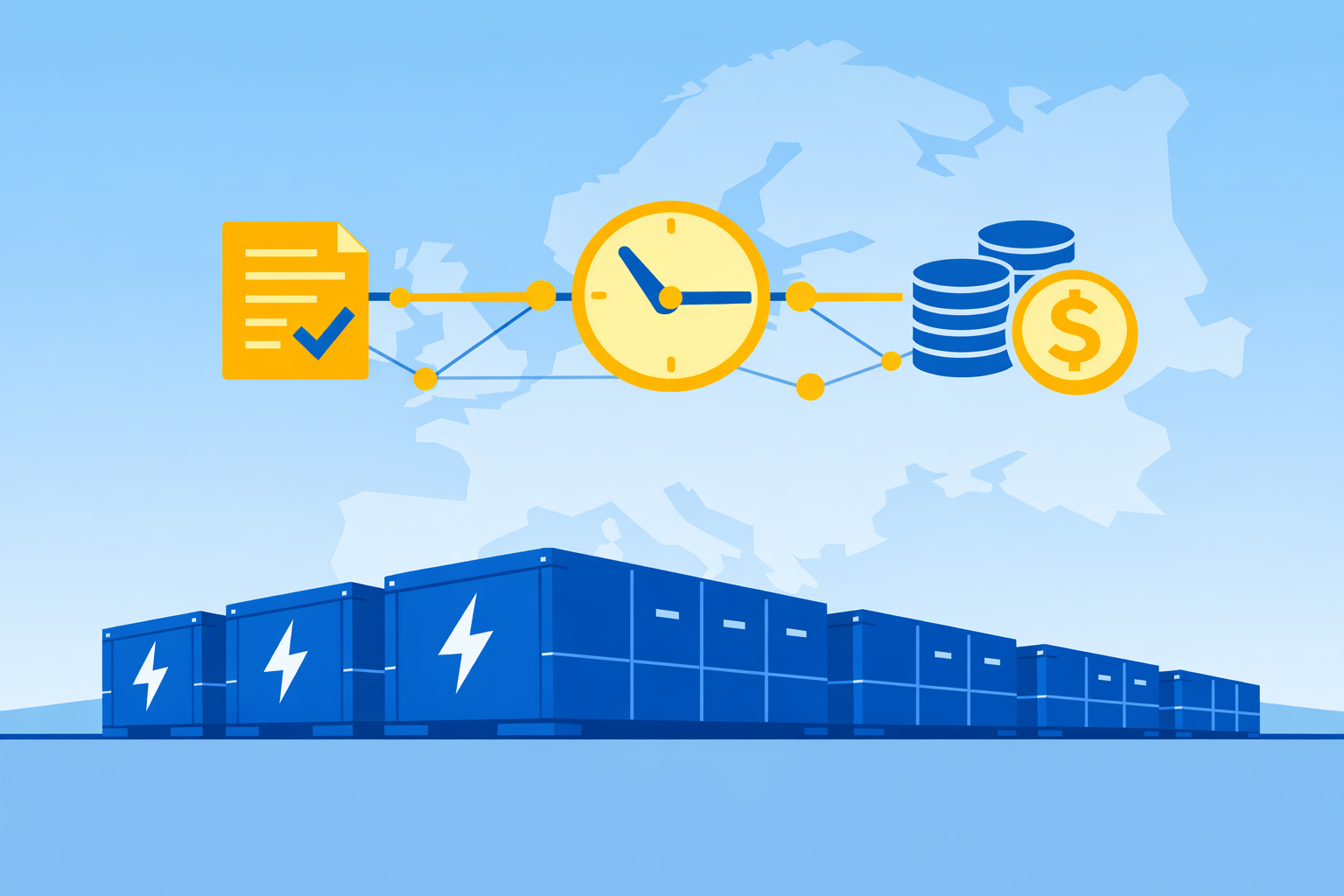
Tolling agreements - under which an offtaker pays a fixed fee, typically denominated in €/MW/year or $/kW-month, in exchange for dispatch rights over the battery - have emerged as the fastest-growing revenue structure in European BESS. Europe's BESS financing market grew faster in 2025 than in any previous year, with Modo Energy tracking over 80 financing deals across 13 countries, more than triple the 25 recorded in 2024. Disclosed debt rose from €1.4 billion to €6.1 billion. Tolling agreements proliferated notably: standalone tolling deals rose from 3 in 2024 to 15 in 2025, and a further 4 project finance deals involved tolling counterparties - making tolling a feature of 19 transactions in total.
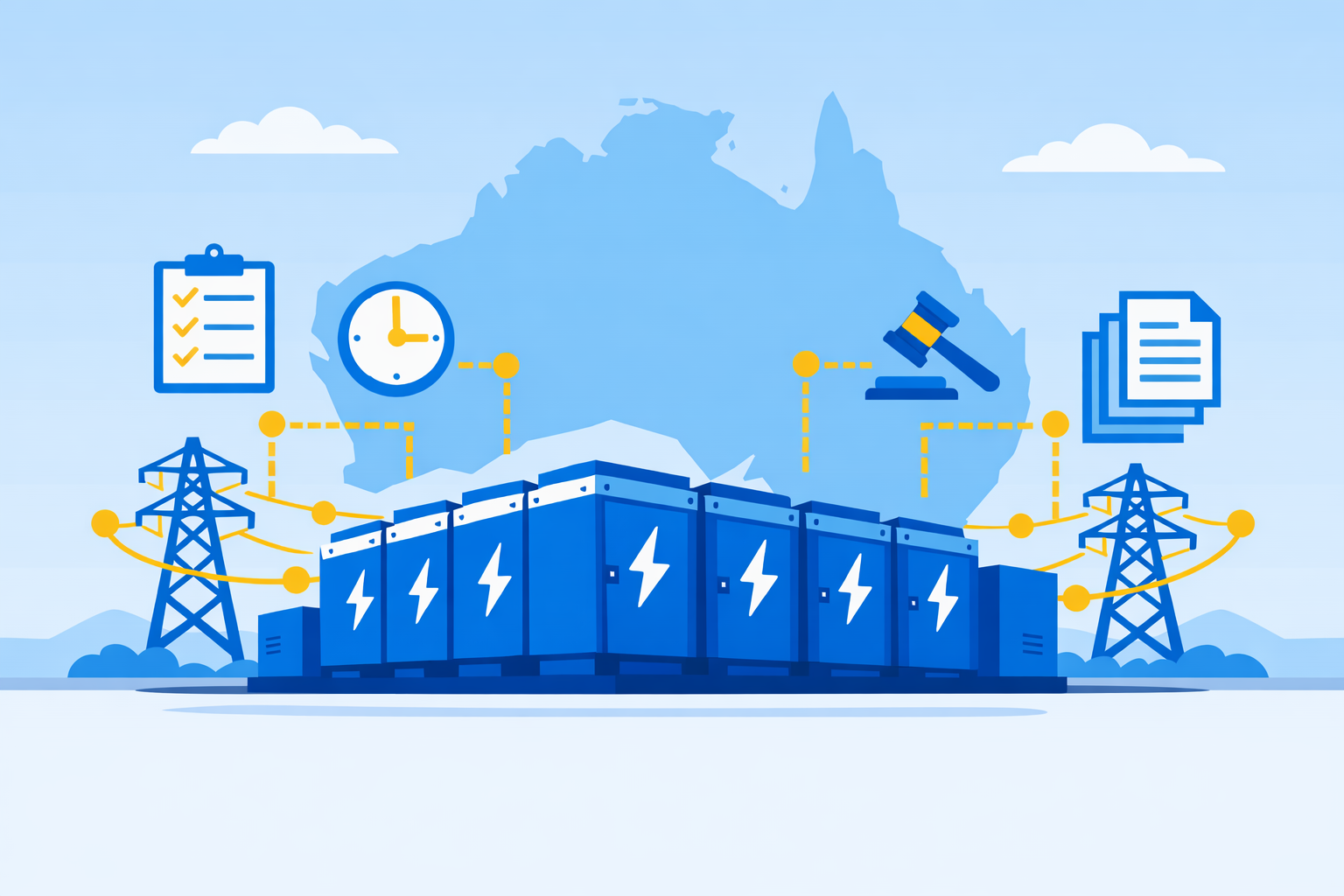
In Australia, hybrid capacity-swap structures are drawing lender interest by combining a fixed revenue floor with shared upside. A capacity swap gives the developer a fixed revenue line - crucial for project financing - and control over the asset, while sharing upside with the offtaker. The structure sits between a physical tolling agreement, which offers no market upside for the developer, and a virtual tolling agreement, where market downside can create bankability challenges. Real-world examples include the 300 MW Bulabul BESS, which pairs a 150 MW virtual toll with ZEN Energy and a 120 MW capacity swap with InCommodities. Western Downs BESS carries three virtual toll agreements with AGL, Shell Energy, and ENGIE.
In the U.S. market, performance terms are increasingly embedded in contract negotiations. Utility-scale storage demand is driven by renewables integration, grid reliability needs, and growing data center load, with financeability and performance terms now shaping procurement decisions. Volatility in merchant revenue - particularly in ERCOT - has pushed buyers toward the relative safety of tolling agreements. M&A premiums are accruing to developers who can wrap storage assets in 10-20 year capacity contracts with utilities or hyperscalers. In Texas, some energy storage projects use hedge agreements that provide a revenue floor alongside market reports on future power prices. In California, some projects can contract for both energy and resource adequacy, providing a contracted revenue stream suitable for nonrecourse project financing.
For project finance lenders, performance metrics are embedded deeper into loan structures. Lenders typically stress performance and downside cases to protect debt service coverage ratios (DSCRs) and may assume more conservative availability figures unless a strong long-term service agreement with meaningful guarantees is in place. Negotiating availability thresholds, round-trip efficiency degradation provisions, and augmentation obligations has become standard lender diligence. For floor prices and tolling agreements, credit support, re-opener terms, termination payments, and clarity on how availability, degradation, and round-trip efficiency affect the fixed payment quantum remain key to successful contract negotiation.
According to industry practitioners, performance obligations embedded in tolling structures carry operational risk that developers must actively manage. A tolling agreement "doesn't mean risk-free mode for a battery - it mitigates a portion of risk, namely market exposure, but increases risks on the other side like delivering megawatts and efficiency," with sanctions likely if those obligations are not met.
McKinsey noted that developers evaluating options such as tolls or revenue-sharing arrangements with guaranteed minimum payments can increase their equity internal rate of return by approximately three to four percentage points by optimizing commercial strategy and improving market exposure alongside contracted revenues.
Outlook
The United States added approximately 10.9 GW of energy storage capacity in Q3 2025 alone - the largest quarterly addition on record - and industry forecasts project more than 90 GW of additional U.S. storage capacity between 2025 and 2030. As deployment scales, legal and financial advisors expect performance-based and service-level contract frameworks to continue displacing pure capex structures. Despite global policy shifts in 2025 that prompted lenders to undertake additional diligence before financing energy storage projects, the project finance market for storage has grown and continues to expand alongside the rapid transition to less carbon-intensive resources. Regulatory developments - including FERC's evolving participation rules and state-level integrated resource planning obligations - are expected to further standardize availability- and performance-based payment terms across U.S. and cross-border storage transactions in 2026 and 2027.