A net-zero electricity grid will require between 225 and 460 gigawatts of long-duration energy storage (LDES) by 2050, according to the U.S. Department of Energy. Yet developers continue to face two chronic obstacles: sites with adequate grid interconnection and permitting pathways that do not start from zero. Decommissioned nuclear plants - which carry high-voltage grid connections, industrial land already zoned for energy use, and skilled local workforces - are emerging as one answer to both problems. Germany's Grohnde plant, now in formal dismantling, offers a timely lens for examining the opportunity and its constraints.
The Grohnde Precedent: Infrastructure at Scale
Germany's Grohnde nuclear power plant - a 1,360 MWe pressurized water reactor operated by PreussenElektra, a subsidiary of E.ON - was shut down on 31 December 2021 as part of the country's legislated nuclear phaseout. The Lower Saxony Ministry for the Environment, Energy and Climate Protection issued the first decommissioning and dismantling permit in December 2023, with dismantling work beginning shortly thereafter. Decommissioning is scheduled for completion by 2039, after which the plant site will be available for redevelopment. Approximately 500 people are currently employed at the site.
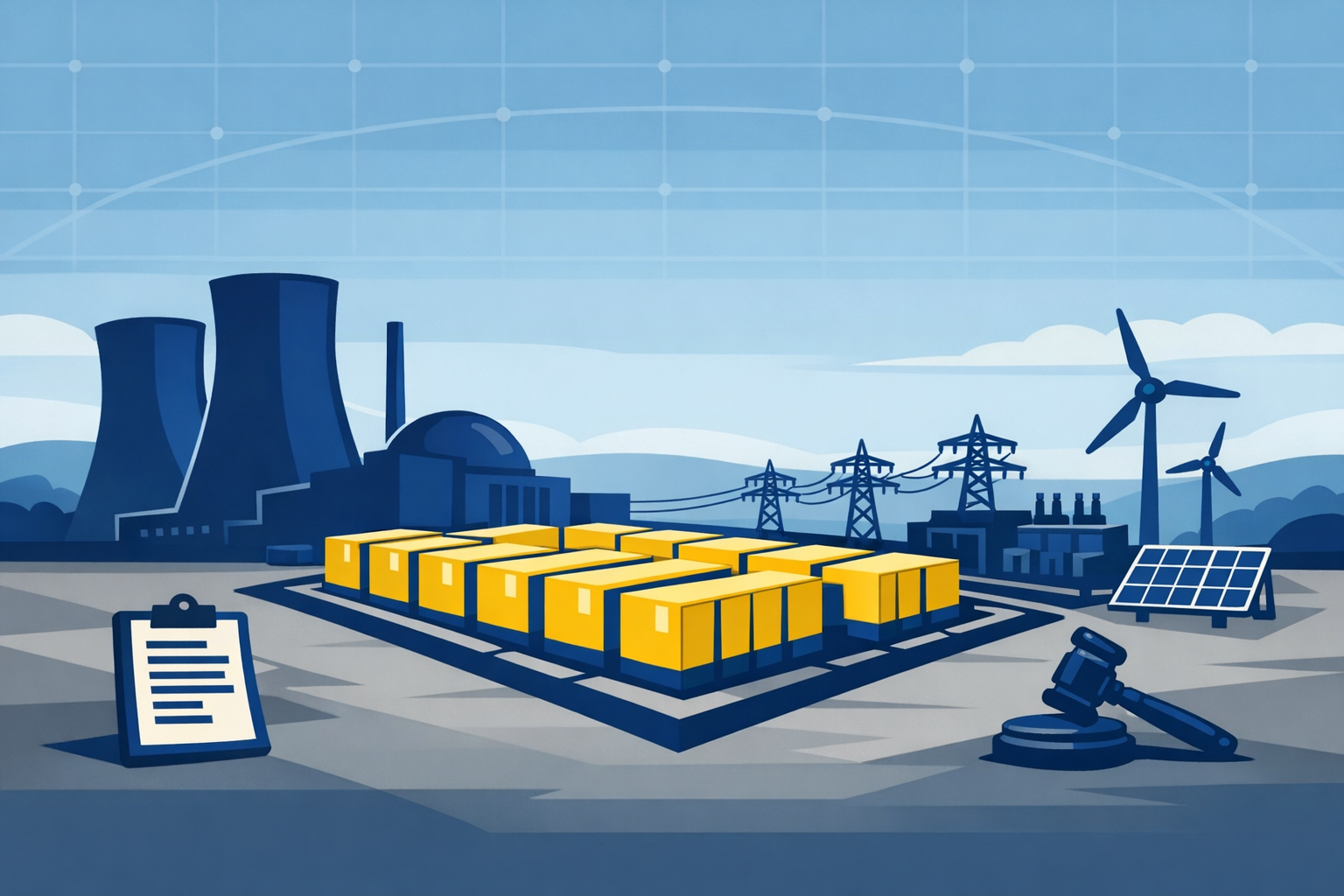
The physical endowment of sites like Grohnde is significant. High-capacity transmission lines, large fenced industrial footprints, cooling water infrastructure, road access, and security perimeters represent capital assets worth hundreds of millions of euros that would otherwise need to be built from scratch.
The grid-connection advantage is particularly material. The U.S. interconnection backlog exceeded 2 terawatts in 2023, a figure that captures what developers across markets increasingly confront. Building a new LDES project on a greenfield site means joining that backlog; leveraging an existing nuclear interconnection means bypassing it. As one utility executive involved in a brownfield storage project noted, "One of our objectives is to try to retain the interconnect capacity opportunities that we have at those retiring plants."
A Functioning Precedent: California's Rancho Seco
The concept has already produced a contracted project. In June 2025, D.E. Shaw Renewable Investments (DESRI) and the Sacramento Municipal Utility District (SMUD) executed a 20-year power purchase agreement for the Dry Creek Energy Storage project - a 160 MW/640 MWh battery energy storage system located at the decommissioned Rancho Seco nuclear generating facility in Sacramento County, California.
The BESS will connect to the Rancho Seco Solar II substation and occupy approximately 15 acres within the site's existing 87-acre fenced industrial footprint. SMUD cited the site's existing transmission infrastructure as central to the location decision, stating that it "minimises the need for costly upgrades." Construction is scheduled to begin in June 2026, with completion expected within 12 to 18 months.
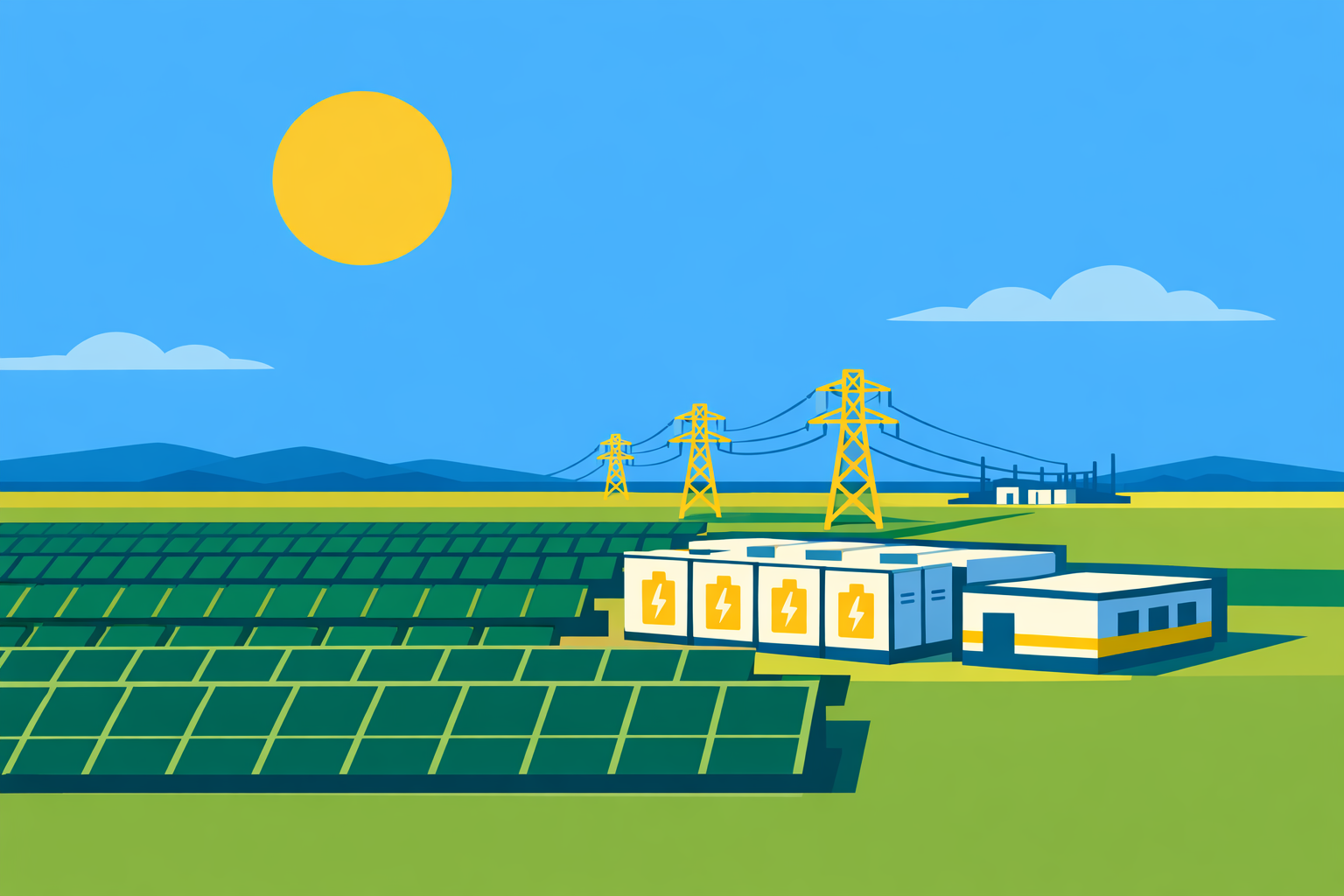
The Rancho Seco model illustrates a layered repurposing pathway: the site first hosted a decommissioned reactor, then a 160 MW solar facility, and now a co-located battery storage system - all using the same grid connection point. Each successive use builds on prior infrastructure rather than displacing it.
The Economics: Where the Case Is Made and Broken
The economic logic of nuclear brownfield LDES projects rests on infrastructure cost offsets. A Grohnde-scale storage hub would avoid new substation construction, eliminate new transmission line routing, and reduce land acquisition costs. Comparable battery storage facility projects have reached total costs approaching $200 million, making transmission cost avoidance a meaningful share of total project economics.
However, the economics are not uniformly favorable. Several structural challenges apply:
- Decommissioning trust fund separation: Funds reserved for nuclear dismantling are legally ring-fenced and cannot be redirected toward storage development capital expenditure.
- Dual permitting cost: Developers must underwrite both nuclear regulatory compliance (ongoing during decommissioning) and standard energy storage permitting, increasing pre-construction overhead.
- Tariff exposure: Q2 2025 saw the sharpest jump in battery energy storage system prices since 2021, according to procurement platform Anza Renewables, driven in part by import tariff uncertainty. Projects structured around long-lead battery imports face procurement risk that greenfield and brownfield sites share equally.
- Operator model complexity: Risk allocation between the nuclear license holder (responsible for decommissioning liabilities), the storage developer, and the offtaking utility requires bespoke contractual structures. The SMUD/DESRI arrangement - in which SMUD retains dispatch rights at a fixed price while DESRI develops and owns the asset - represents one emerging template.
SMUD's 20-year PPA with DESRI is expected to cost the utility approximately $25 million annually, with contractual provisions insulating SMUD from tariff-driven cost increases above a predetermined cap.
Regulatory and Permitting Hurdles
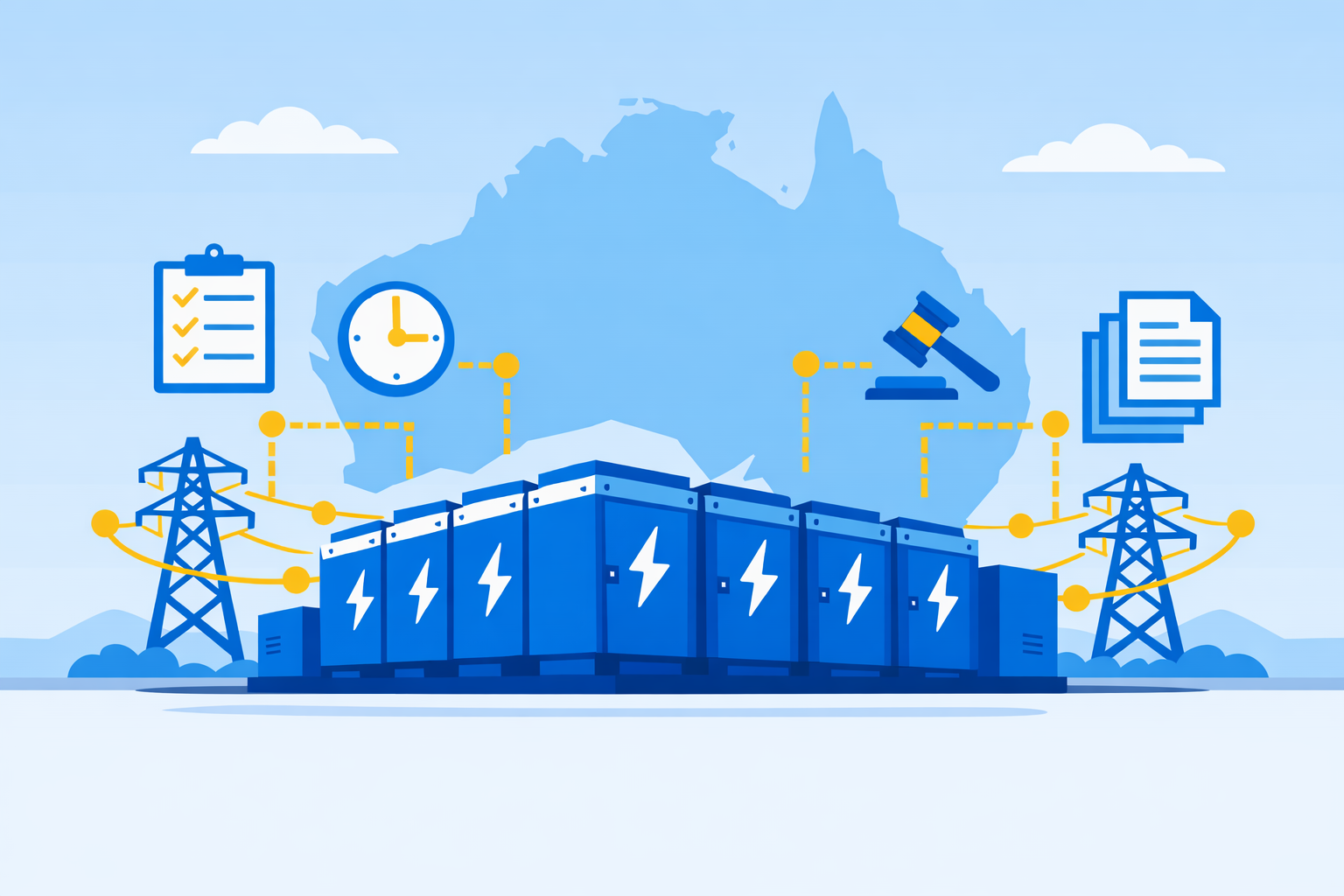
The regulatory environment for nuclear-to-storage conversions is complex precisely because two distinct licensing frameworks apply simultaneously.
{{widget:nuclear-ldes-readiness-widget}}
In Germany, decommissioning approvals are issued by state (Länder) authorities under the Atomic Energy Act. The Grohnde permit took six years of review before Lower Saxony's environment ministry granted approval. Separate permitting would be required for any storage facility on the cleared portions of the site - under German energy law, grid connection agreements, and environmental impact assessment procedures for new infrastructure.
In the United States, the NRC framework allows licensees to sell or release portions of a decommissioned site once those parcels meet NRC release criteria, while parcels containing spent fuel storage installations remain under active license. The NRC requires that decommissioning be completed within 60 years of permanent shutdown. For sites early in the decommissioning cycle, storage developers may work alongside an active nuclear license holder for a decade or more.
{{component:regulatory-callout}}
Environmental impact assessments for storage projects on formerly nuclear-licensed land also carry additional scrutiny. Residual radiological surveys, groundwater monitoring, and potential restrictions on land disturbance near spent fuel storage installations add cost and time to standard BESS environmental review processes.
Comparison: Greenfield vs. Nuclear Brownfield LDES Development
{{component:comparison-table}}
Policy Levers and Market Design
The policy environment for LDES is evolving - but unevenly. In the United States, the DOE established the Long Duration Storage Shot in 2021, targeting a 90% cost reduction for technologies providing 10 or more hours of storage by 2030. The Inflation Reduction Act introduced investment tax credits applicable to standalone storage, and the Bipartisan Infrastructure Law funds grid modernization that includes storage deployment. Federal programs such as the DOE's Energy Infrastructure Reinvestment loans and IRA tax credits can support brownfield energy transitions.
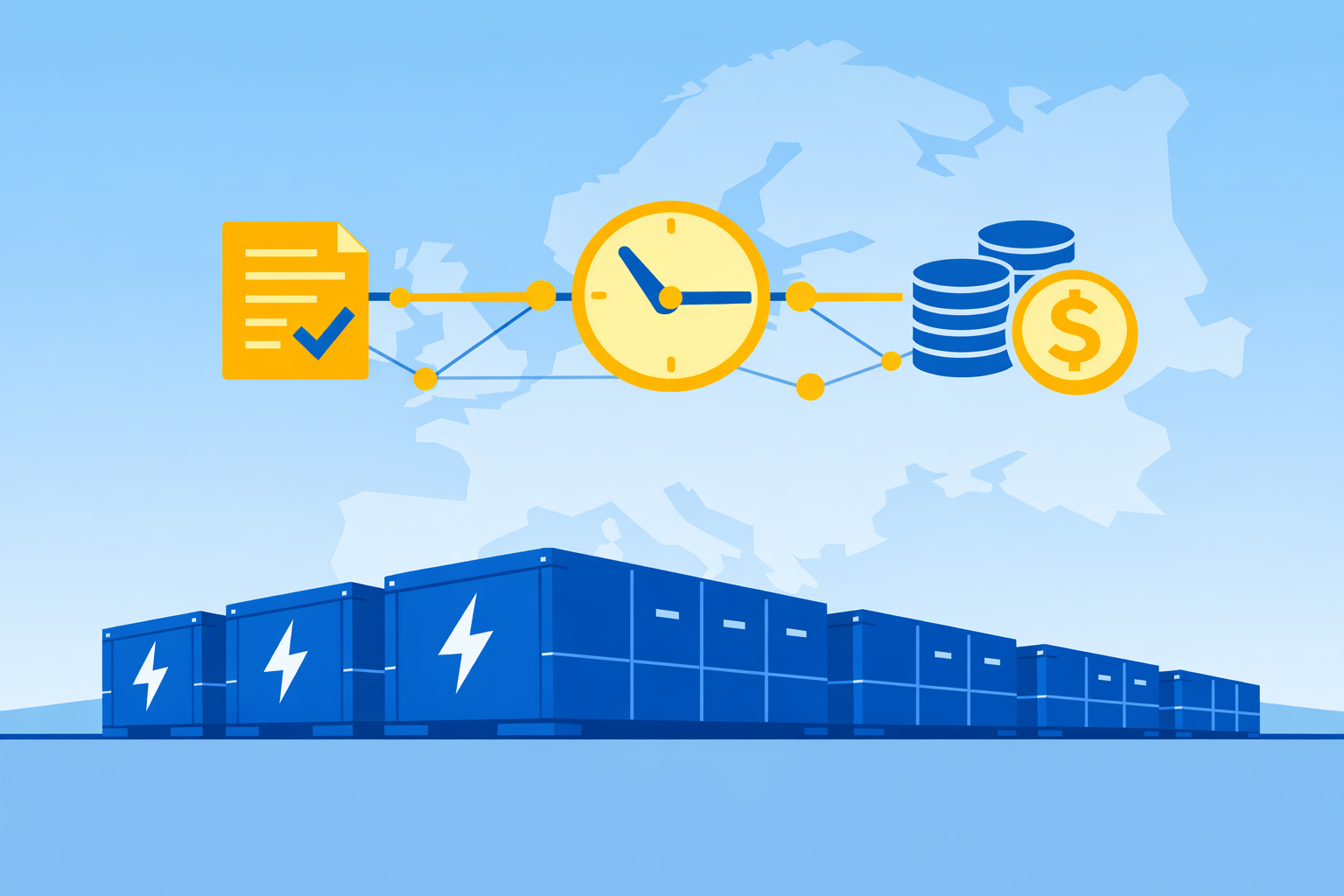
In Europe, Germany's current policy framework provides no dedicated subsidy mechanism for LDES at decommissioned nuclear sites. Capacity market structures across European markets remain fragmented, limiting revenue certainty for multi-hour or multi-day storage assets - a prerequisite for project finance at the scale Grohnde-type sites would require.
Research published in Nature Communications found that mandating enough LDES to enable year-long storage cycles would reduce electricity prices during times of high demand by over 70%. That finding underscores the system value of LDES that current market designs fail to capture. Closing this valuation gap through capacity market reform, contracts for difference, or dedicated LDES procurement mechanisms would materially strengthen the business case for converting sites like Grohnde.
Community and Workforce Dimensions
Local acceptance is a distinct advantage of nuclear brownfield LDES projects. Communities hosting nuclear plants have typically lived with energy infrastructure for decades. Workers - engineers, electricians, control room operators, security personnel - possess transferable skills for storage facility operation and maintenance. The transition from nuclear to storage employment is more direct than transitions from most other industrial closures.
For Grohnde, with approximately 500 workers currently on-site, a storage hub developed post-2039 would not provide equivalent employment. However, it would represent a more durable land use than site restoration to greenfield, which would eliminate energy sector employment entirely.
Outlook for the LDES Pipeline
The nuclear brownfield pathway is nascent but gaining traction. The Rancho Seco/SMUD project serves as a proof of concept for the developer-utility-offtaker model. Grohnde, Brokdorf, and other German sites represent future optionality - contingent on decommissioning progress, policy evolution, and LDES cost trajectories.
Multi-day long-duration energy storage is essential for decarbonizing the power grid, yet grid-scale deployment of LDES faces steep cost, scale, and risk barriers, according to research published in Nature Energy. Nuclear brownfields do not solve the cost barrier directly, but they can materially reduce the interconnection and siting risks that compound it.
For project developers, utilities, and policymakers, the core question is whether regulatory frameworks governing decommissioned nuclear sites - designed for a previous era - can adapt quickly enough to unlock this infrastructure for the grid needs of the next decade. The sites exist. The grid connections exist. The policy architecture to translate that into contracted, financed, operating LDES projects remains the critical missing variable.
Key Takeaways
- Decommissioned nuclear sites offer pre-existing high-voltage grid connections, industrial land, and skilled workforces - structural advantages for LDES development that greenfield sites cannot replicate.
- The SMUD/DESRI Dry Creek project at Rancho Seco provides a contracted, near-term precedent for the nuclear-to-storage conversion model in the United States.
- Germany's Grohnde site will not be available for redevelopment until 2039 at the earliest, reflecting the multi-decade timeline of nuclear decommissioning.
- Dual nuclear and energy storage regulatory tracks impose layered permitting complexity; misaligned timelines between the two frameworks are a principal project risk.
- Effective LDES market design - including capacity contracts, revenue certainty mechanisms, and dedicated policy support - remains the single largest determinant of whether nuclear brownfields can be commercially developed at scale.
Frequently Asked Questions
{{component:faq}}