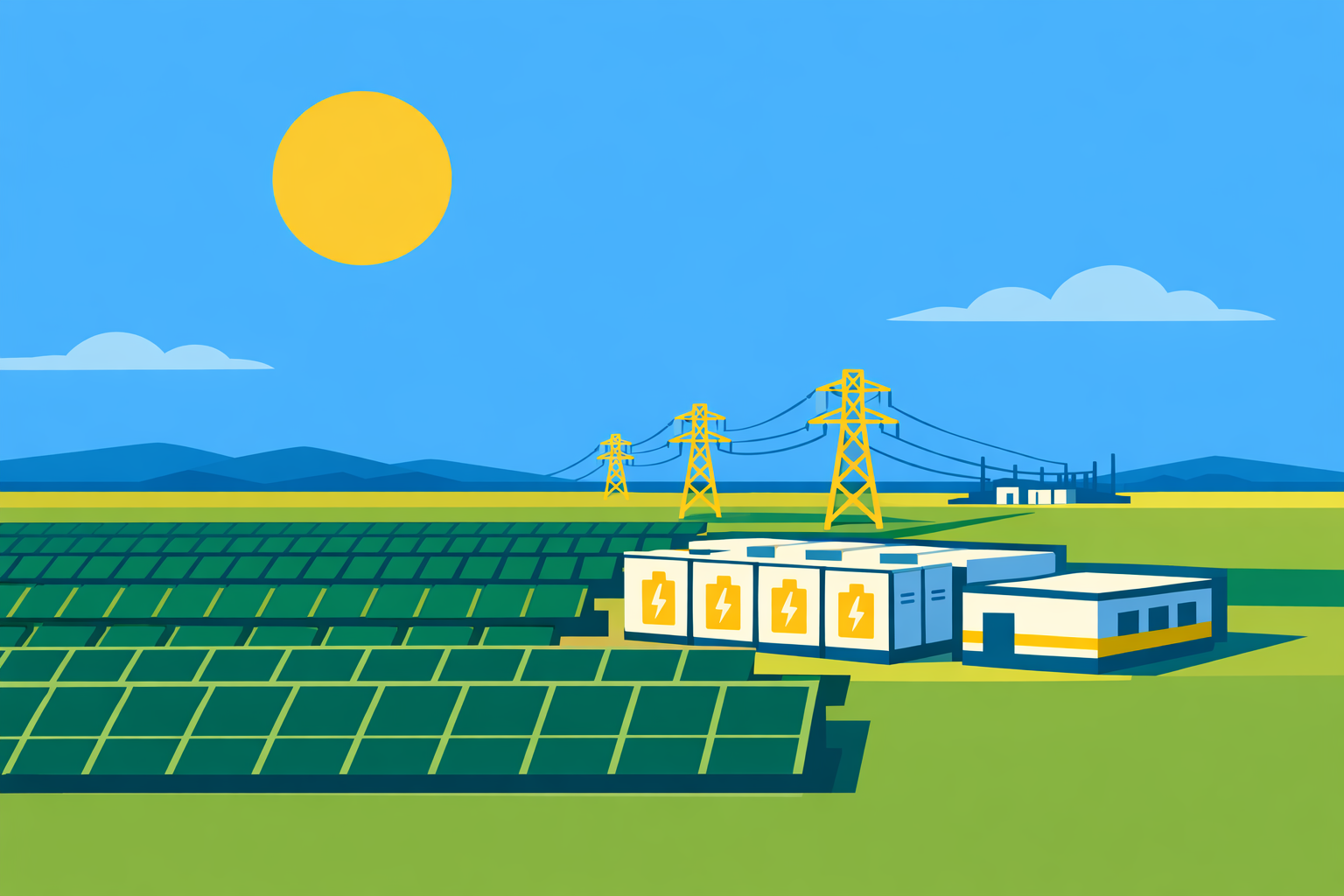
Approximately 2.6 terawatts of generation and storage capacity are currently queued for grid interconnection across the United States, with batteries and solar representing the vast majority of that backlog. For utility-scale battery energy storage system (BESS) developers, the single most intractable constraint is not technology cost or land availability - it is the grid connection itself. Against that backdrop, a small but growing cohort of project developers and utilities has begun targeting sites that already possess some of the most valuable transmission infrastructure on the grid: decommissioned nuclear power plants.
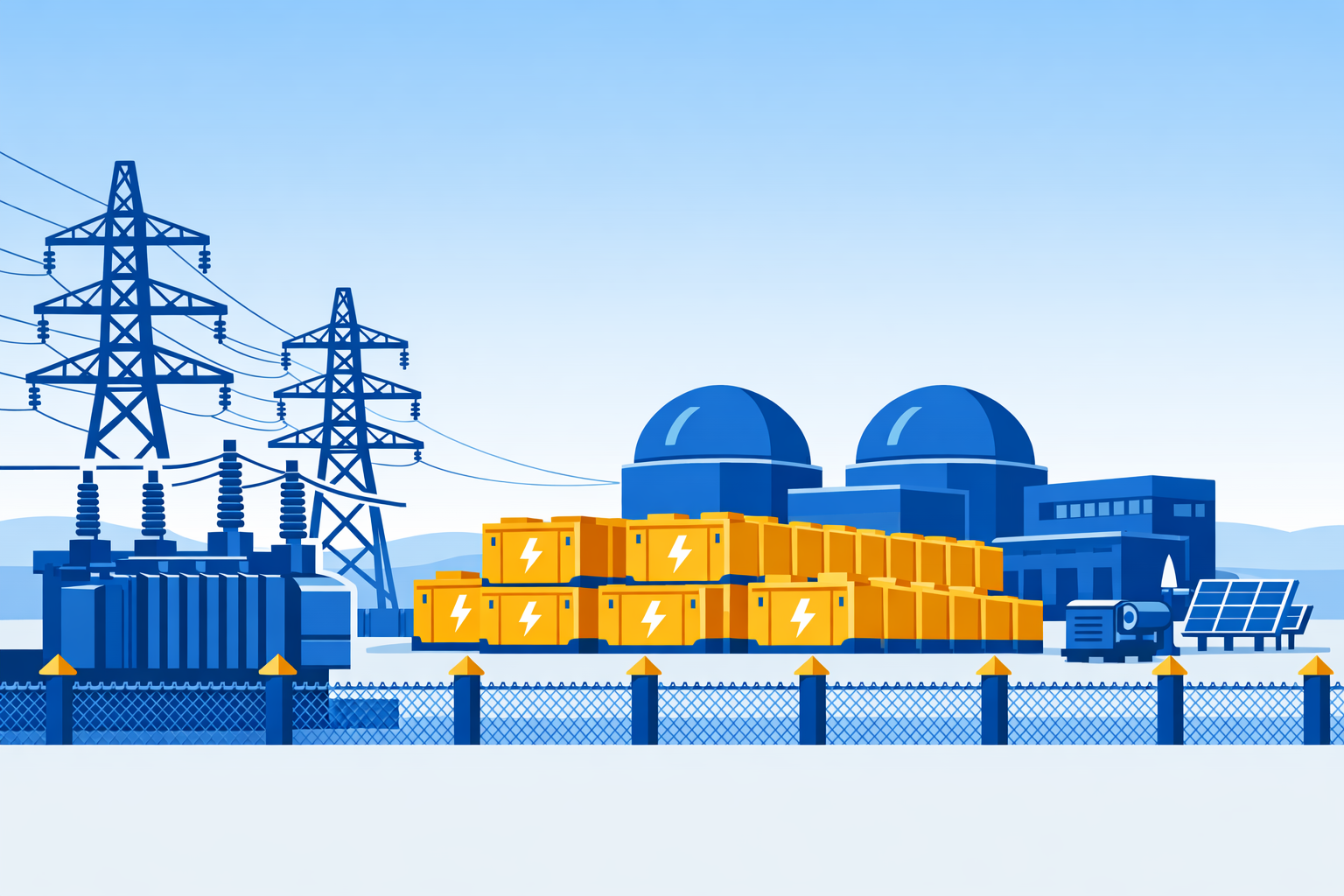
The logic is compelling. Nuclear stations were built to inject hundreds of megawatts directly into the high-voltage transmission network. Their substations, switchyards, and transmission tie-lines were engineered for gigawatt-class output. When a reactor retires, that capacity does not disappear - it sits idle. Repurposing it for ultra-large BESS projects offers a potential shortcut through the interconnection queue, provided developers and regulators can navigate the distinct environmental, licensing, and community challenges that nuclear heritage brings.
Why Nuclear Sites Offer a Structural Grid Advantage
The interconnection advantage is not theoretical. RWE is building Germany's largest battery storage facility at the Gundremmingen energy site - a 400-megawatt plant with 700 megawatt-hours of storage capacity that will use the decommissioned nuclear plant's existing high-capacity grid connection, now being decommissioned. That decision eliminates one of the most time-consuming and costly stages of greenfield BESS development: the interconnection study, substation construction, and transmission upgrade cycle that, in congested markets, can add three to six years to project timelines.
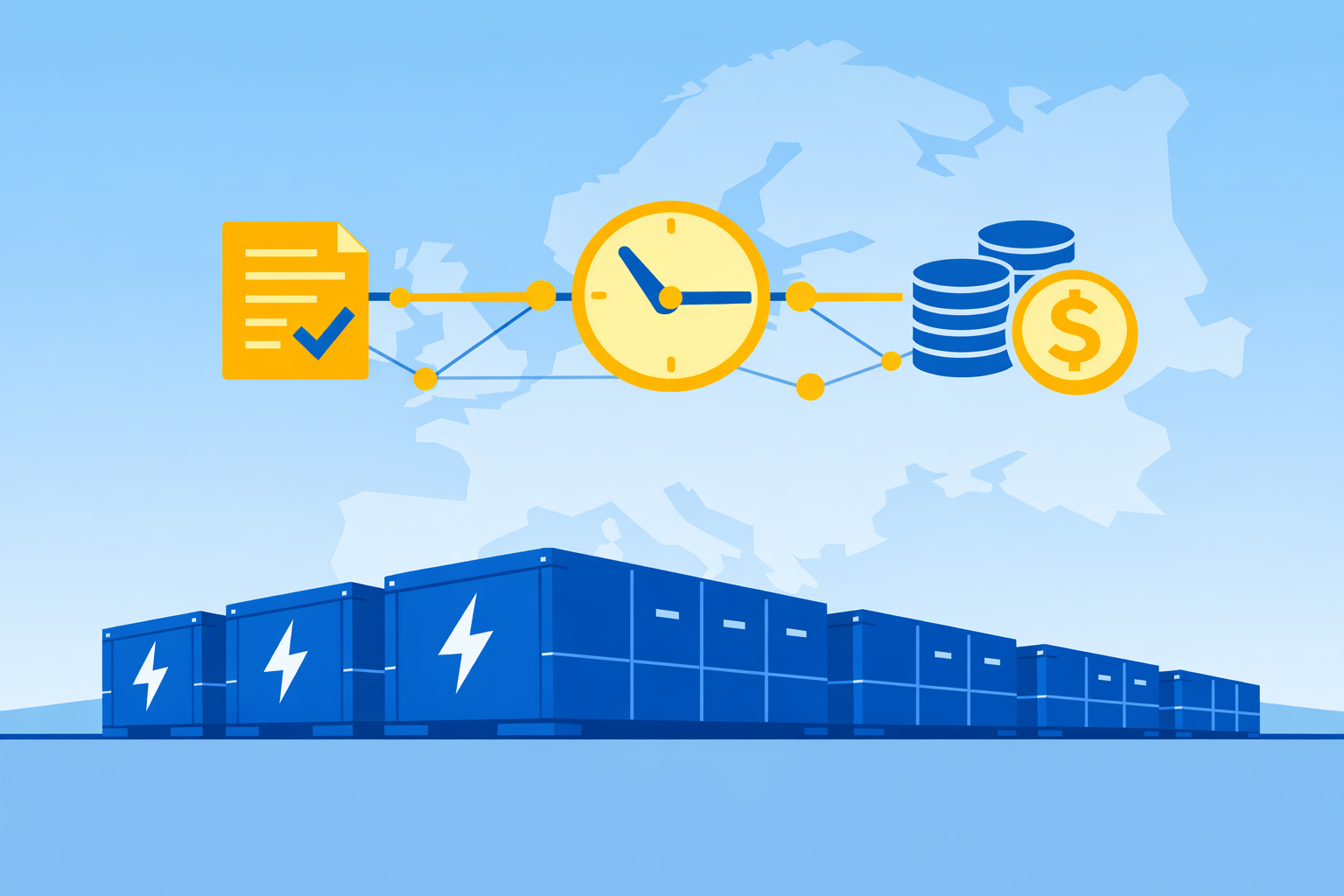
The maze of regulatory procedures and interconnection delays has pushed many new projects back two to four years - if not caused outright abandonment due to uncertain timing. For projects requiring multi-gigawatt-class connections - the kind a repurposed nuclear site can provide - this advantage compounds. Standard substation builds for comparable capacity require custom engineering, long-lead transformer procurement, and potentially new transmission lines at costs that can rival or exceed the battery hardware itself.
Nuclear sites also offer secondary infrastructure that greenfield projects must procure from scratch: secure perimeter fencing, access roads, water supply systems, control buildings, and - critically - a skilled workforce with deep electrical and plant operations experience available for redeployment toward BESS operations.
Case Studies: Two Continents, Two Approaches
Germany: RWE Gundremmingen
For decades, the Gundremmingen site in the Günzburg district anchored Bavaria's electricity supply. Following the shutdown of two nuclear units in 2017 and 2021, the site is now undergoing safe decommissioning.
RWE broke ground on the BESS facility in October 2025, investing approximately €230 million. Advanced control technology and more than 100 ultra-fast inverters will enable the facility to supply or absorb electricity within milliseconds, supporting grid stability. Commercial operation is planned for early 2028.
Beyond battery storage, a 55-hectare solar park and a gas-fired power station are also slated for construction. This multi-technology redevelopment model - blending storage, solar, and dispatchable backup on a single former nuclear site - is emerging as a best-practice template for maximizing the value of repurposed nuclear land.
United States: SMUD and the California Model
In California, the Sacramento Municipal Utility District (SMUD) is advancing a 160-megawatt, 640-megawatt-hour BESS project on a decommissioned nuclear power plant site. The storage system will occupy approximately 15 acres within the site's existing 87-acre fenced industrial footprint. Plans call for roughly 100 BESS containers, supported by stormwater controls, onsite maintenance areas, and enhanced security infrastructure meeting National Electrical Safety Code requirements.
While smaller in scale than Gundremmingen, the SMUD project demonstrates the model's replicability across different regulatory jurisdictions and utility ownership structures. The existing fenced industrial footprint directly reduces land-use permitting complexity - a frequently underestimated drag on greenfield BESS timelines.
Comparing Repurposed Nuclear Sites vs. Greenfield BESS
The table below summarizes key project development trade-offs between the two approaches:
| Factor | Greenfield BESS Site | Decommissioned Nuclear Site |
|---|---|---|
| Grid Connection | New interconnection study required (6-18 months typical) | Existing high-capacity connection potentially reusable |
| Land Permitting | Standard environmental review, 12-36 months | Partial site characterization already completed |
| Transmission Capacity | Must be built or upgraded | Often rated for 400 MW-1+ GW |
| Community Acceptance | NIMBY risk on new industrial land | Established energy-community relationship |
| Environmental Remediation | Minimal (no legacy contamination) | Radiological characterization and clearance required |
| Infrastructure Reuse | No existing substation or security infrastructure | Substations, roads, security perimeters in place |
| Workforce | Recruit from scratch | Experienced nuclear workforce available for transition |
| Regulatory Complexity | Standard BESS/utility permits | NRC license termination process required |
The Environmental Remediation Hurdle
The primary offset against the interconnection advantage is the radiological clearance process. From the NRC's perspective, decommissioning means safely removing a facility or site from service and reducing residual radioactivity to a level that permits property release - either for unrestricted use and license termination, or under restricted conditions and license termination.
The process involves decontaminating the facility, dismantling structures, removing contaminated materials to appropriate disposal facilities, storing used nuclear fuel until it can be transferred for disposal or consolidated storage, and releasing the property for other uses.
For BESS repurposing, developers do not necessarily need full site clearance - only the specific land parcels designated for battery containers, inverters, and associated balance-of-plant. Targeting non-reactor portions of the site (switchyards, former turbine halls, and laydown areas) can enable parallel-path development: remediation proceeds on reactor areas while BESS construction advances on cleared portions. This phased approach is central to the Gundremmingen redevelopment model.
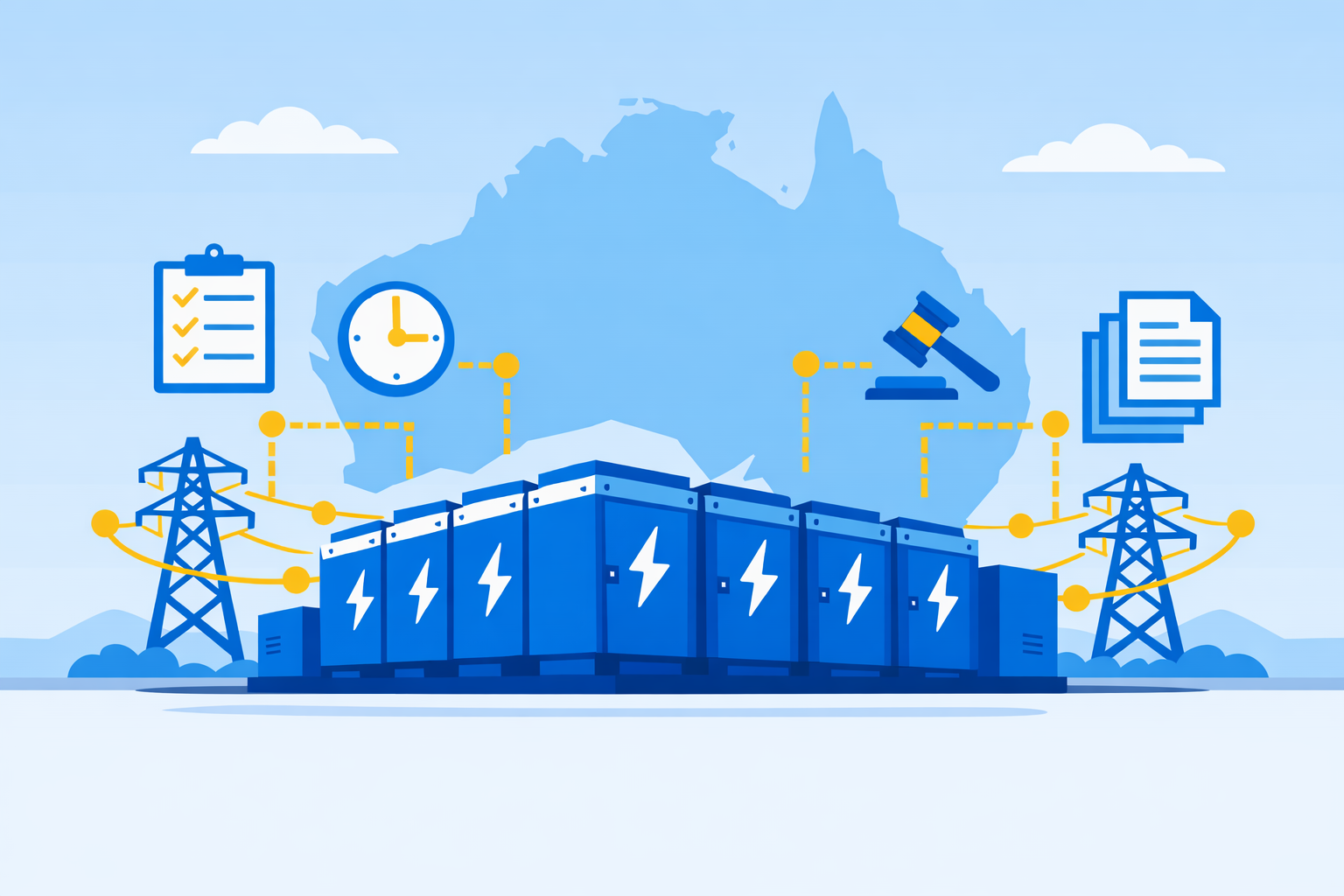
Key Regulatory Distinction: Under U.S. NRC rules, developers must secure a License Termination Plan - addressing site characterization, remediation schedules, and final radiation surveys - before any portion of a decommissioned nuclear site can be repurposed for unrestricted industrial use. To align staffing and programs with the low-risk profile of a defueled reactor, plant owners must submit eight to twelve exemption and license amendment requests to the NRC. The approval process typically takes 12 to 18 months. Early engagement with the NRC and state agencies is critical to avoid delays that could erode the interconnection timeline advantage.
Siting, Community Engagement, and the Social License
Decommissioned nuclear sites carry institutional trust assets easily overlooked in project finance models. Host communities have decades of experience with industrial energy infrastructure and, in many cases, a workforce directly motivated to see the site remain economically productive. Significant socioeconomic impacts accompany the closure and decommissioning of a nuclear power plant.
The IAEA has documented[1] that repurposing nuclear sites requires comprehensive early stakeholder engagement. "Continuous stakeholder engagement ensures that diverse perspectives are heard, contributes to informed decisions about the safe repurposing of sites, and helps to secure lasting economic, social and environmental benefits for generations to come."
Developers that frame BESS projects as continuations of a site's energy mission - rather than remediation by-products - consistently report smoother community acceptance. The Gundremmingen groundbreaking, attended by Bavaria's Minister-President, illustrates how political endorsement can be mobilized when a project is positioned as an extension of regional energy identity rather than a consolation prize for a shuttered reactor.
Spent fuel storage presents the most persistent siting complication. The disposal of spent nuclear fuel from commercial power plants is the federal government's responsibility under the Nuclear Waste Policy Act of 1982, but disposal efforts await legislative direction from Congress. On-site storage remains the only available option. BESS developers must account for long-term co-location of an Independent Spent Fuel Storage Installation (ISFSI) when assessing usable site areas and public communication strategies.
Grid Reliability: The Systemic Case
The reliability argument for nuclear-sited BESS extends beyond individual project economics. Credible analyses indicate that MISO and PJM face brownout and blackout risk in the coming years, driven by retiring assets, long interconnection queues, and surging demand. Nuclear plant retirements directly contribute to that capacity erosion - and repurposing those sites for BESS partially offsets the loss.
Battery energy storage has become a core component of utility planning, grid reliability, and renewable energy integration. Following a record 2024, when more than 10 gigawatts of utility-scale battery storage were installed nationwide, deployment accelerated further in 2025. Current forecasts indicate approximately 18 gigawatts of new utility-scale battery storage capacity will come online by year-end 2025, making it the largest annual buildout on record.
BESS deployed at former nuclear nodes occupies transmission positions historically sized for round-the-clock, multi-hundred-megawatt injection. A 400 MW BESS at such a node can provide frequency regulation, voltage support, and peak capacity in the same grid locations where the retired reactor once delivered firm baseload - maintaining the transmission system's power flow architecture while introducing the dispatch flexibility that variable renewables require.
Integrating BESS into utility environments involves far more than physical interconnection. It requires seamless coordination across network integration, security integration, distributed control system (DCS) integration, operations center development, process design, and regulatory compliance. At nuclear-repurposed sites, existing control buildings and communications infrastructure can significantly reduce the scope of this integration challenge.
Financing Models and Stranded Asset Risk
The capital structure of nuclear-to-BESS projects differs materially from conventional BESS development. Three financing mechanisms are emerging:
- Utility-owned repurposing: The original nuclear operator retains the site and develops BESS on its balance sheet, as with RWE at Gundremmingen. This model benefits from operational continuity and avoids site transfer complexity but concentrates risk on the utility.
- Developer acquisition: Independent power producers acquire decommissioned sites from nuclear operators or decommissioning trusts using project finance structures. Revenue certainty typically requires capacity market contracts or long-term tolling agreements.
- Public-utility hybrid: Municipal utilities such as SMUD develop projects using a mix of ratepayer-backed financing and DOE grant support. Traditional utility financing cannot meet the scale and speed requirements, driving adoption of Independent Transmission Projects (ITPs), blended finance mechanisms, and green bonds that attract private capital while reducing public-sector financial strain.
Stranded asset risk is a material concern across all three models. BESS revenue depends on capacity market rules, ancillary services tariffs, and wholesale price signals - all subject to regulatory revision. Projects relying on a single revenue stream face higher refinancing risk than those with stacked revenue (capacity + frequency regulation + energy arbitrage). Policy frameworks providing long-duration capacity contracts - such as the UK Capacity Market's 15-year BESS contracts - materially reduce this risk and represent a model that U.S. markets have yet to fully adopt.
Policy Levers That Could Unlock Scale
Several regulatory and market reforms would materially accelerate the nuclear-to-BESS pipeline:
- Streamlined NRC partial-site release: An expedited NRC review pathway for BESS deployment on demonstrably non-contaminated portions of decommissioned sites - without requiring full license termination - could remove years from project schedules.
- Interconnection queue grandfathering: Regulatory guidance allowing BESS projects to inherit the existing interconnection agreements of a decommissioned plant, rather than entering the queue from scratch, would preserve one of the strategy's core advantages. FERC Order No. 2023 introduced the Cluster Study Process, the "First-Ready, First-Served" reform, and firm deadlines for grid operators to complete studies, including financial penalties for missed timelines. Extensions of this order specifically addressing repurposed-site assets would be beneficial.
- Decommissioning trust fund flexibility: Allowing a portion of nuclear decommissioning trust funds to be directed toward BESS infrastructure on the same site could bridge early-stage development financing gaps - aligning the interests of decommissioning operators and clean energy developers.
- Long-term capacity contracts: State and federal capacity market reforms offering BESS projects 10-15-year revenue certainty - rather than annual or biennial auctions - would improve bankability for the complex, multi-party transactions that nuclear site repurposing requires.
Outlook: Where the Strategy Fits in the BESS Ecosystem
Nuclear site repurposing is not a silver bullet for the utility-scale storage deployment challenge. The global inventory of decommissioned reactors with viable, unutilized grid connections is finite, and each project requires bespoke regulatory navigation. However, as a strategy for siting the largest individual BESS projects - 400 MW and above - at transmission nodes with proven grid capacity, it ranks among the most credible near-term pathways available.
The Gundremmingen and SMUD projects provide concrete proof of concept. The next phase will depend on whether regulators in the U.S. and Europe can build coordination frameworks - across nuclear safety agencies, transmission system operators, and energy market regulators - needed to convert a handful of pioneering projects into a repeatable, scalable deployment model.
For developers and utilities assessing their BESS pipelines, the calculus is straightforward: decommissioned nuclear sites offer a rare combination of transmission access, land availability, and workforce readiness that greenfield projects cannot replicate. The challenge is regulatory complexity, not technology. For those willing to engage early with both the NRC and transmission operators, the interconnection queue - the single greatest constraint on utility-scale battery storage deployment - may be substantially shorter than it first appears.
Key Takeaways
- Decommissioned nuclear sites offer high-capacity grid connections, reusable infrastructure, and skilled workforces - structural advantages that can compress BESS project timelines by years.
- RWE's 400 MW/700 MWh Gundremmingen project and SMUD's 160 MW/640 MWh California project are the leading real-world case studies, both targeting commercial operation in the 2027-2028 window.
- Radiological remediation and NRC partial-site release are the primary regulatory hurdles; phased development strategies targeting non-reactor areas first can mitigate timeline impact.
- Spent fuel co-location and community engagement on nuclear heritage require proactive, transparent stakeholder programs anchored in socioeconomic transition planning.
- Policy reforms - including interconnection grandfathering, decommissioning trust fund flexibility, and long-duration capacity contracts - are the critical market design levers to unlock scalable deployment.