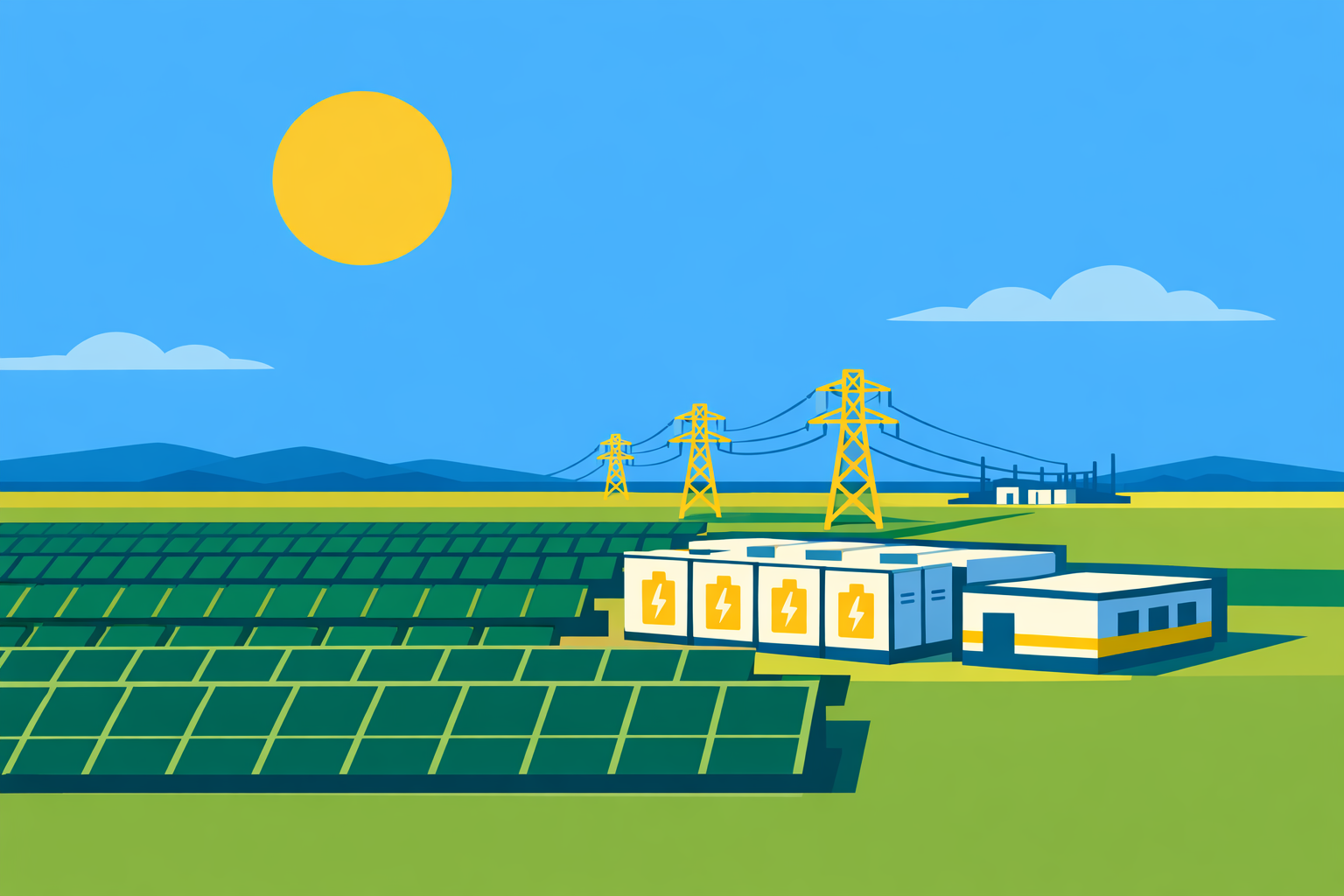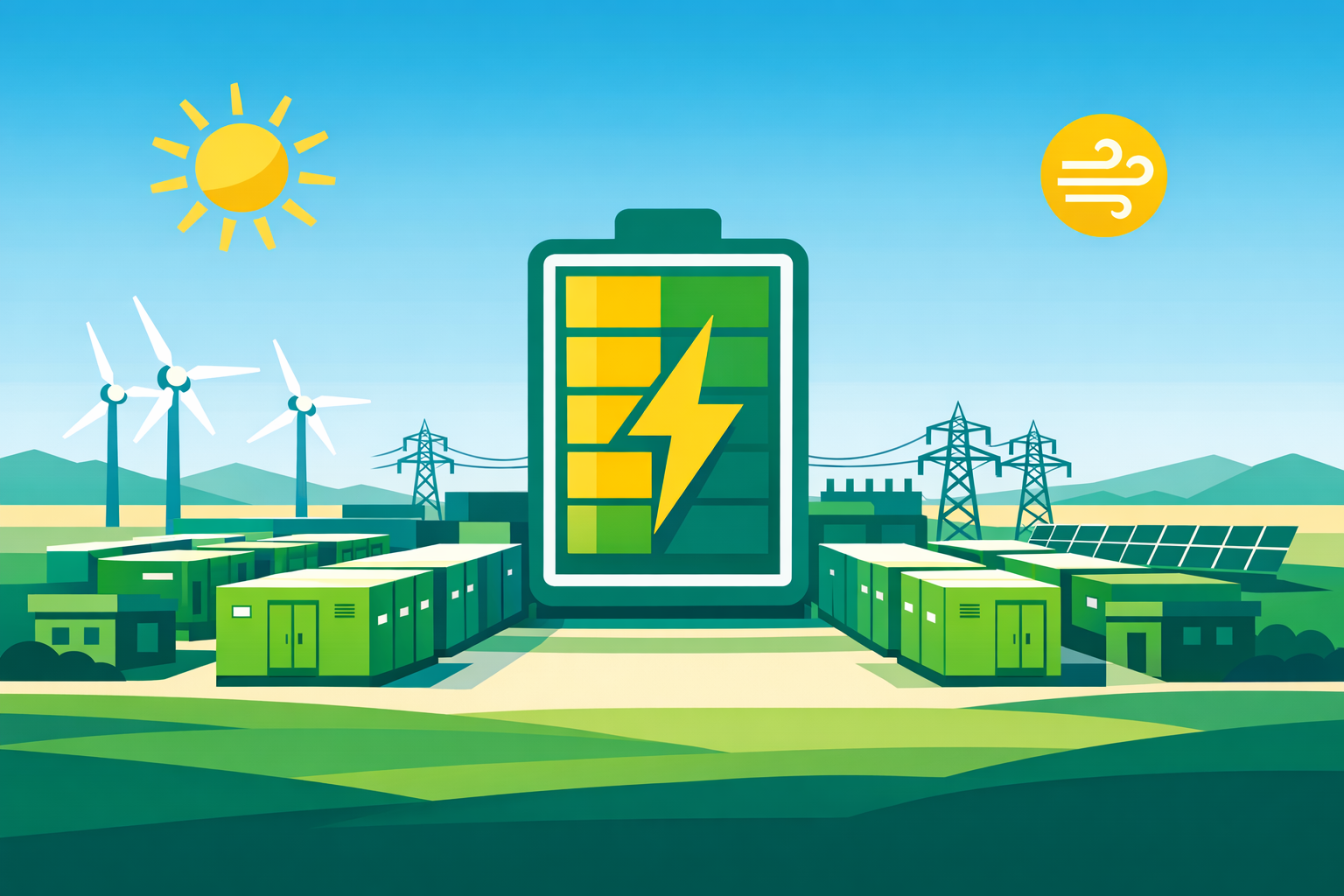
Adani Green Energy Limited (AGEL) announced on Tuesday the commissioning of a 3.37 GWh Battery Energy Storage System (BESS) at Khavda, Gujarat. The facility is now the world's largest single-location battery storage deployment outside China, placing India on the global map for utility-scale energy storage.
The deployment brings AGEL's total operational renewable generation capacity to 19,785.8 MW. The BESS forms a critical component of the 30 GW renewable energy park under development at Khavda, integrating lithium-ion battery technologies with advanced energy management systems to optimize grid stability and renewable energy dispatch.
Background
India's push for utility-scale storage is driven by its target of 500 GW of non-fossil fuel capacity by 2030 and growing grid stability demands. According to the Central Electricity Authority (CEA), India will require 411.4 GWh of total grid-connected storage by 2031-32, comprising 236.2 GWh from BESS and 175.2 GWh from pumped hydro. The government's Energy Storage Obligation (ESO) mandates distribution companies to increase their storage share from 1% of electricity demand in 2023-24 to 4% by 2029-30, with progressive annual escalation targets.
India's utility-scale BESS sector has grown increasingly competitive. JSW Energy has emerged as the most aggressive developer after Adani, with nearly 2 GW of awarded capacity across multiple tenders. Tata Power commissioned a 100 MW solar farm paired with 120 MWh BESS in Maharashtra in 2025. NTPC is running India's most ambitious multi-site program - a 1,700 MW/4,000 MWh deployment across 11 thermal stations.
Details
The 3.37 GWh total includes 1.37 GWh capacity commissioned at Khavda in March 2026, with the additional 1,990 MWh brought online Tuesday. AGEL said the project was delivered within ten months of commencement of on-site construction, marking one of the fastest utility-scale battery storage deployments globally. The company has deployed advanced energy management systems at Khavda that use machine learning to forecast generation, predict demand, and optimize charge-discharge cycles in real time.
Sagar Adani, Executive Director of AGEL, framed the milestone in terms of long-term grid strategy. "Large-scale energy storage will play a defining role in the next phase of India's clean energy transition. As renewable energy capacity scales rapidly, storage infrastructure becomes critical for delivering reliable, round-the-clock clean power," he said. He added that "AGEL is strengthening the foundation for resilient, dispatchable and flexible energy systems" and that its investments "reflect a long-term commitment to building future-ready clean energy infrastructure at global scale."
The Khavda renewable energy park, located in Gujarat's Kutch district, spans 538 square kilometres of barren land and is being developed as the world's largest renewable energy plant. AGEL is targeting 30 GW total renewable capacity at Khavda by 2029, with 9.9 GW already operational. The company aims to add 10 GWh of battery storage in FY27, with a long-term target of 50 GWh over the next five years.
Outlook
India's Central Electricity Authority projects the country will need 74 GW/411 GWh of storage by 2032. Against that requirement, AGEL's 3.37 GWh milestone - while the largest single-site deployment outside China - represents an early step in a substantially larger infrastructure build-out.
Utility-scale battery storage is emerging as critical infrastructure globally as renewable energy adoption accelerates, helping address generation variability by storing excess energy and dispatching it during peak demand. Developers, grid operators, and policymakers will be watching whether AGEL's execution timeline and offtake model can serve as a replicable template as India races toward its 2032 storage targets.