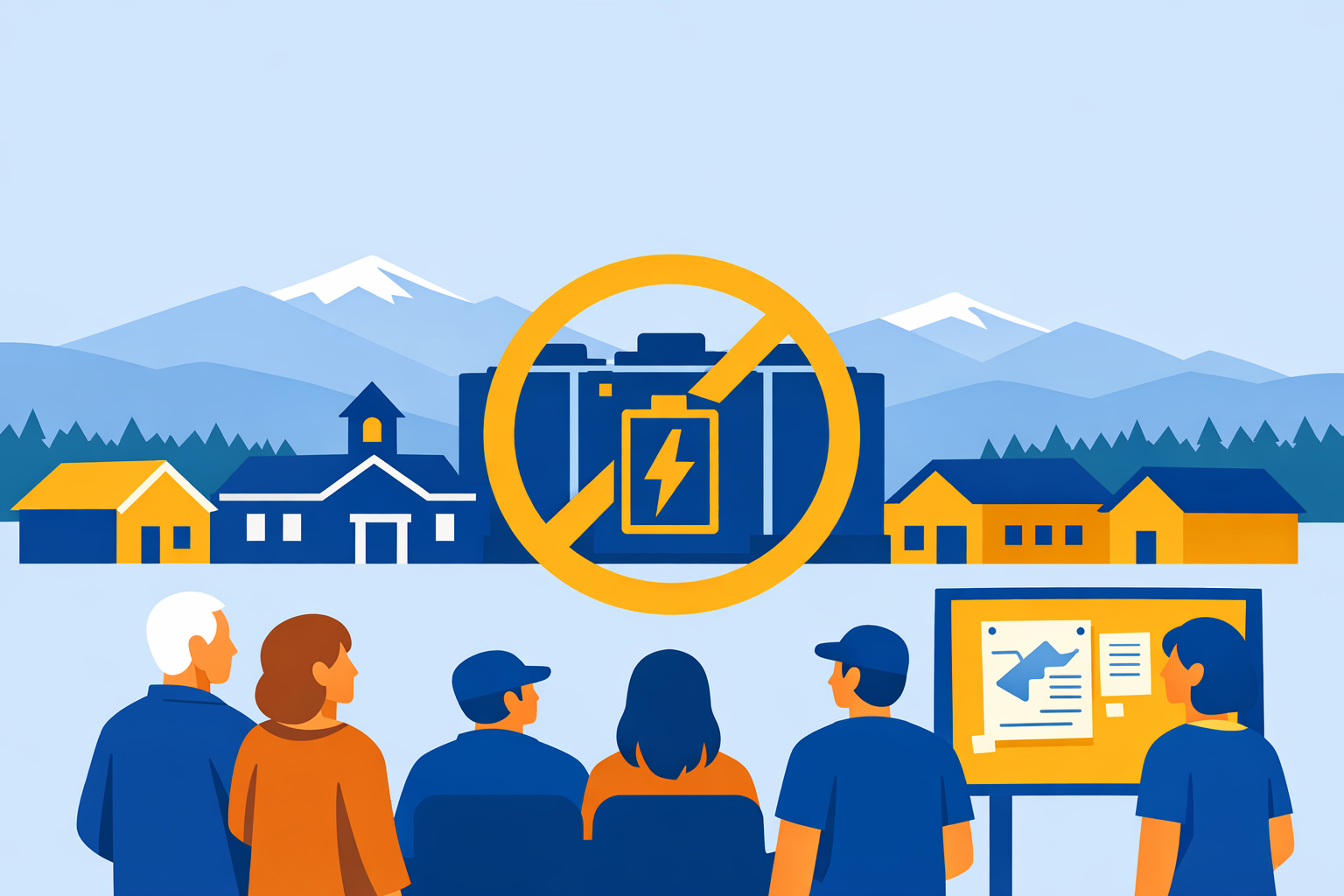
Two communities in New York's Adirondack region have imposed moratoriums on local battery energy storage system (BESS) projects, prompting calls from clean-energy advocates and policymakers for state-level siting and permitting standards. Officials in Long Lake and Raquette Lake suspended new BESS applications to address safety concerns and inconsistent zoning. Advocates caution that, without clearer regulations, moratoriums could hinder deployment of grid resilience assets in remote communities.
Background
Long Lake enacted a 12-month moratorium on new BESS applications following a lithium-ion battery storage fire in Lyme, about 90 miles west of Adirondack Park. The incident heightened concerns over emergency response and environmental risks. The moratorium remains while the town assesses safety protocols, aesthetic impact, and evacuation plans. Similar measures followed in Raquette Lake, where local opposition led National Grid to withdraw a proposed 20 MW "Adirondack Central Microgrid" battery storage project amid community resistance.
Details
At the January 2026 Adirondack Park Agency (APA) meeting, officials approved a new 10 MW storage site near Northville, despite public comments focused on fire risks. According to New York State data, the incident rate for battery fires is 2 percent. Board member Rush Holt noted that lithium fires are "really hot and really persistent," and require specialized firefighting responses.
In late 2023, Governor Kathy Hochul convened an Inter-Agency Fire Safety Working Group after more fires statewide. Preliminary findings indicated battery system fires did not significantly increase toxic exposure for nearby responders. The group expects to complete facility inspections and release draft fire-code recommendations in early 2024. The APA has also indicated plans to develop specific guidance for energy storage project applications in its jurisdiction, but hamlet zones such as Raquette Lake remain outside this scope.
Community concerns persist. Melissa Wilde, vice chair of Protect Raquette Lake, has called for stricter siting criteria that address the park's environmental, social, and economic conditions. She highlighted gaps in zoning that enabled the proposal in a hamlet, where development typically faces fewer restrictions.
Outlook
State-level guidelines, anticipated in late 2026, are expected to clarify setback, buffer, and emergency response requirements for BESS in sensitive areas. Until then, developers must contend with varied local moratoria and regulatory uncertainty as grid modernization and resilience remain ongoing priorities.