AI-driven growth in computing workloads is accelerating the deployment of long-duration energy storage (LDES) systems at data centers, aiming to secure grid reliability and manage volatile demand. Form Energy announced it will supply its multi-day storage technology to Crusoe, a data center developer, during the CERAWeek conference in Houston on March 25, 2026 Form Energy will provide multi-day storage technology to data center developer Crusoe. This partnership highlights increased urgency among AI operators to control energy access as compute demand surges and grid uncertainty intensifies Cully Cavness, Crusoe co-founder and president, emphasized the need to control timelines by securing energy infrastructure.
Background
AI workloads-particularly for large language model training and inference-have significantly increased power demand in the data center sector. Goldman Sachs projects global data center power use will rise from roughly 55 GW to 84 GW by 2027, with AI's share climbing from 14% to 27% of the total Goldman Sachs projects data center power demand increasing from around 55 GW to 84 GW by 2027, with AI growing to 27% of the total. JLL forecasts global data center capacity will nearly double to 200 GW by 2030, driven by AI workloads expected to represent half of that capacity JLL anticipates global data center capacity to grow to 200 GW by 2030, and AI workloads to account for half of that capacity.
Data centers are straining grid infrastructure. Delays in European grid connections-some extending up to seven years-are already slowing AWS's expansion AWS's Pamela MacDougall said grid connections in Europe can take up to seven years, hampering growth aspirations. The gap between rapid facility construction and slower energy infrastructure development has created urgent demand for on-site generation and energy storage solutions.
Details
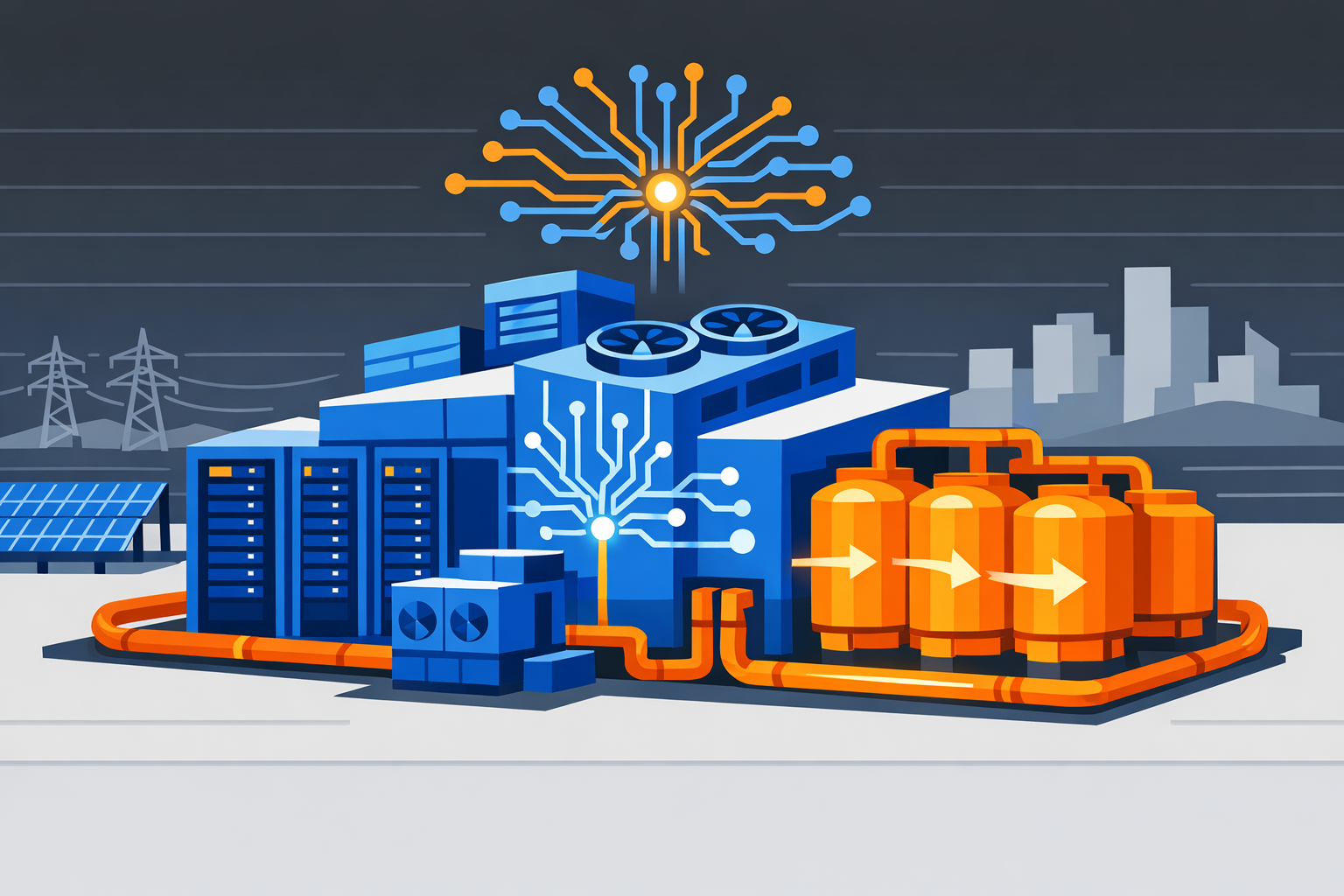
LDES technologies are gaining traction as developers and utilities manage the intermittent, high-density demands of AI workloads. Thermal storage systems can capture surplus renewable energy and deliver it around the clock using low-cost media such as solid carbon; multi-gigawatt-hour deployments already support data centers Thermal storage can capture curtailed energy and deliver round-the-clock power, using materials like solid carbon, and multi-gigawatt-hour deployments are already powering data centers. Market forecasts predict that energy storage systems colocated with AI data centers could generate $4.1 billion to $6.0 billion in annual revenue by 2030, growing at a compound annual rate of 28-38% from about $1.2 billion in 2025 The global market for storage co-located with AI data centers is projected to reach $4.1-6.0 billion annually by 2030, up from approximately $1.2 billion in 2025.
Utilities and developers are also exploring hybrid approaches. Long-duration options-including flow batteries and hydrogen-based systems-are scaling alongside lithium-ion technologies to deliver multi-hour to multi-day reliability. These solutions are critical as AI workloads introduce rapid load swings and set new uptime standards Long-duration technologies like thermal, flow and hybrid hydrogen systems are beginning to scale alongside lithium-ion to address volatility and ensure frequency and reliability in AI-driven load profiles.
Outlook
Industry observers expect momentum to continue as AI operators prioritize resilient energy solutions. Large-scale LDES projects and regulatory incentives are likely to drive accelerated deployment in 2026, as stakeholders align on financing models, storage durations, and integration practices. Ongoing grid interconnection delays and volatility in compute demand are expected to sustain pressure on storage developers to provide fast-deploying, long-duration systems at scale.