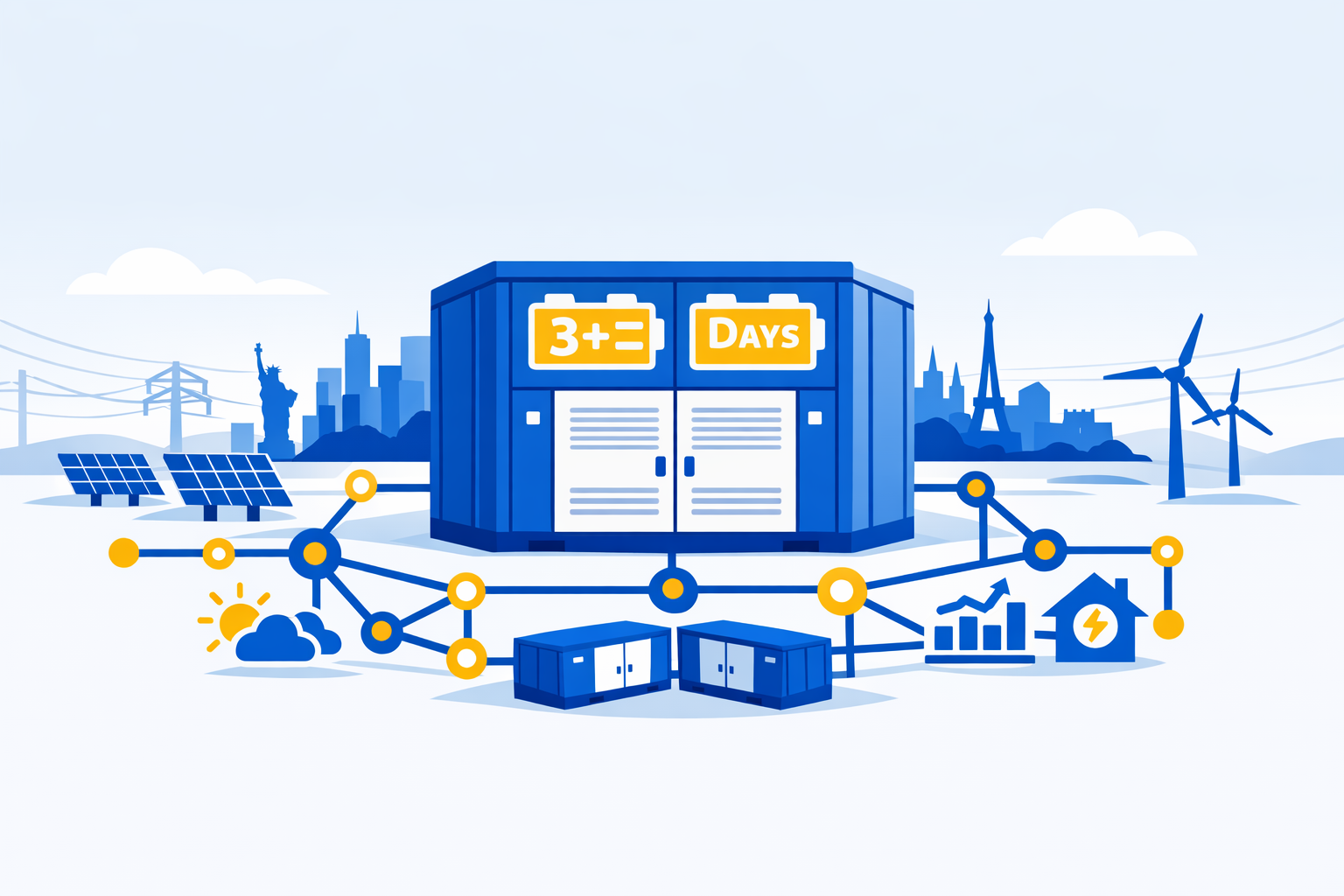
AI-enabled long-duration energy storage (LDES) systems have advanced from pilot phases to commercial deployment in the United States and Europe. These systems now offer multi-day energy dispatch coordinated with forecasted demand and variable renewable generation. Netherlands-based Ore Energy recently completed a grid-connected, EU-funded pilot of its iron-air technology in France, achieving up to 100 hours of storage under operational conditions. The demonstration delivered multi-day energy supply and yielded data valuable for utility integration of iron-air LDES. According to a February 2026 report under the EU's StoRIES program, the system operated through diverse load profiles and seasons at EDF Lab les Renardières in Écuelles, France. Ore Energy emphasized its modular design-which utilizes only iron, water, and air-and relies on a European supply chain. This highlights the pilot's strategic role in assessing LDES for renewable balancing. Ore Energy CEO Aytaç Yilmaz stated the trial improved the industry's understanding of multi-day storage performance in utility settings. The project is among the first of its type in Europe.
Background
Long-duration energy storage provides multi-day energy shifting, extending beyond conventional four- to twelve-hour battery systems. This capability supports grid reliability in regions with high levels of renewable generation. The EU's StoRIES initiative funds demonstrations to evaluate LDES suitable for renewable integration over multiple days. In the U.S. PJM capacity market, LDES assets receive higher accreditation under Effective Load Carrying Capability (ELCC) rules, though lithium-ion batteries remain the primary deployed technology. PJM's 2027-28 auction values eight-hour systems at 70% ELCC and ten-hour systems at 78%, versus 58% for four-hour systems.
Details
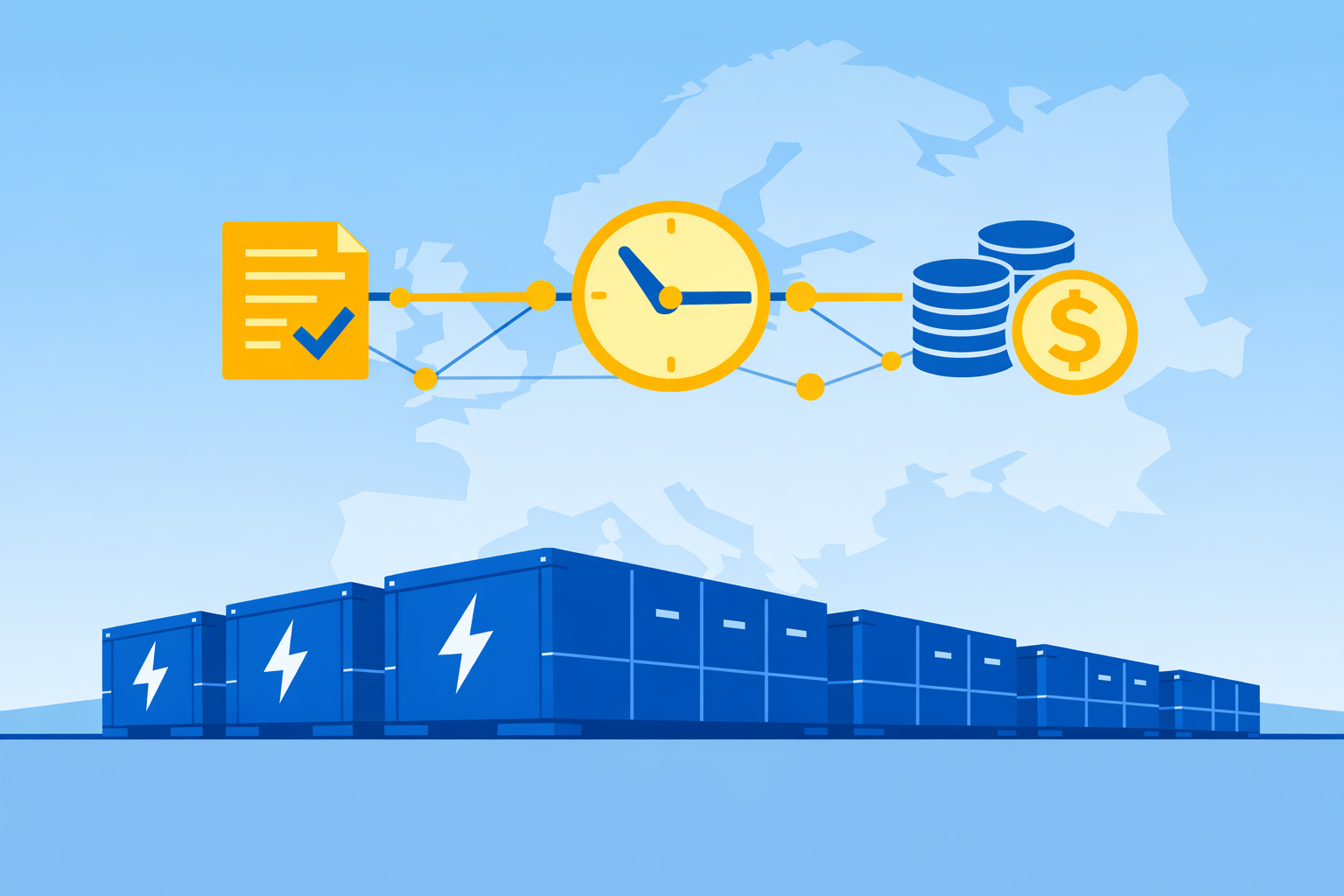
Invinity Energy Systems secured vanadium flow battery (VFB) sales in Hungary totaling 20 MWh, with two Endurium systems (8 MWh in Veszkény and 12 MWh in Dunaföldvár) to be paired with solar PV. Project notices are expected in the first half of 2026. Deliveries are scheduled to begin in H1 2026. Invinity anticipates approximately £17 million in 2025 revenue and grant income, with a comparably sized signed order book for 2026. The Copwood VFB Energy Hub (20.7 MWh) is slated to commence operation in H1 2026 under an optimization agreement with Enel X. Invinity is participating in the UK LDES Cap & Floor scheme, with Ofgem expected to offer guidance in summer 2026.
In Spain, H2 Inc.'s EnerFLOW 640 vanadium flow battery project (1.1 MW/8.8 MWh) is progressing toward installation in the second half of 2025. This deployment will be the nation's largest VFB project to date. Spain targets 20 GW of energy storage by 2030, along with over 80% renewable electricity generation. To support gigawatt-hour ambitions, H2 is planning a second manufacturing facility in South Korea. The EnerFLOW 640 features a modular design, improved safety, and minimal degradation across 25 years.
Outlook
As electric grids confront new reliability and flexibility challenges-driven by extreme weather and rising renewable contributions-commercial LDES deployments provide early evidence of the value of AI-augmented dispatch. In Europe, regulatory frameworks such as Ofgem's LDES Cap & Floor and projects under the StoRIES program may spur LDES adoption by offering revenue certainty and technical validation. In the United States, improved ELCC accreditation and capacity market incentives could strengthen the economics of LDES, contingent on these emerging technologies' ability to compete with established lithium-ion systems.