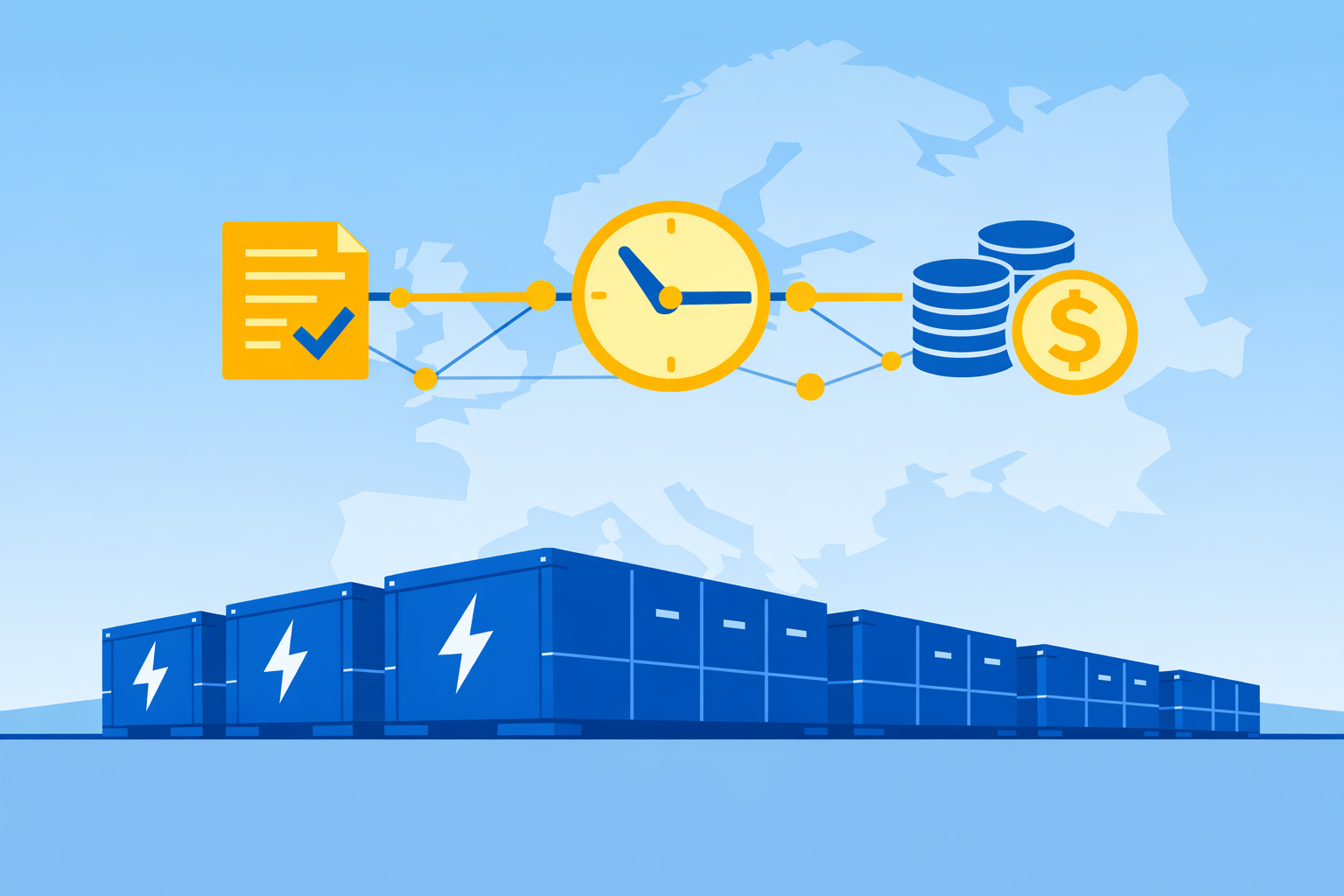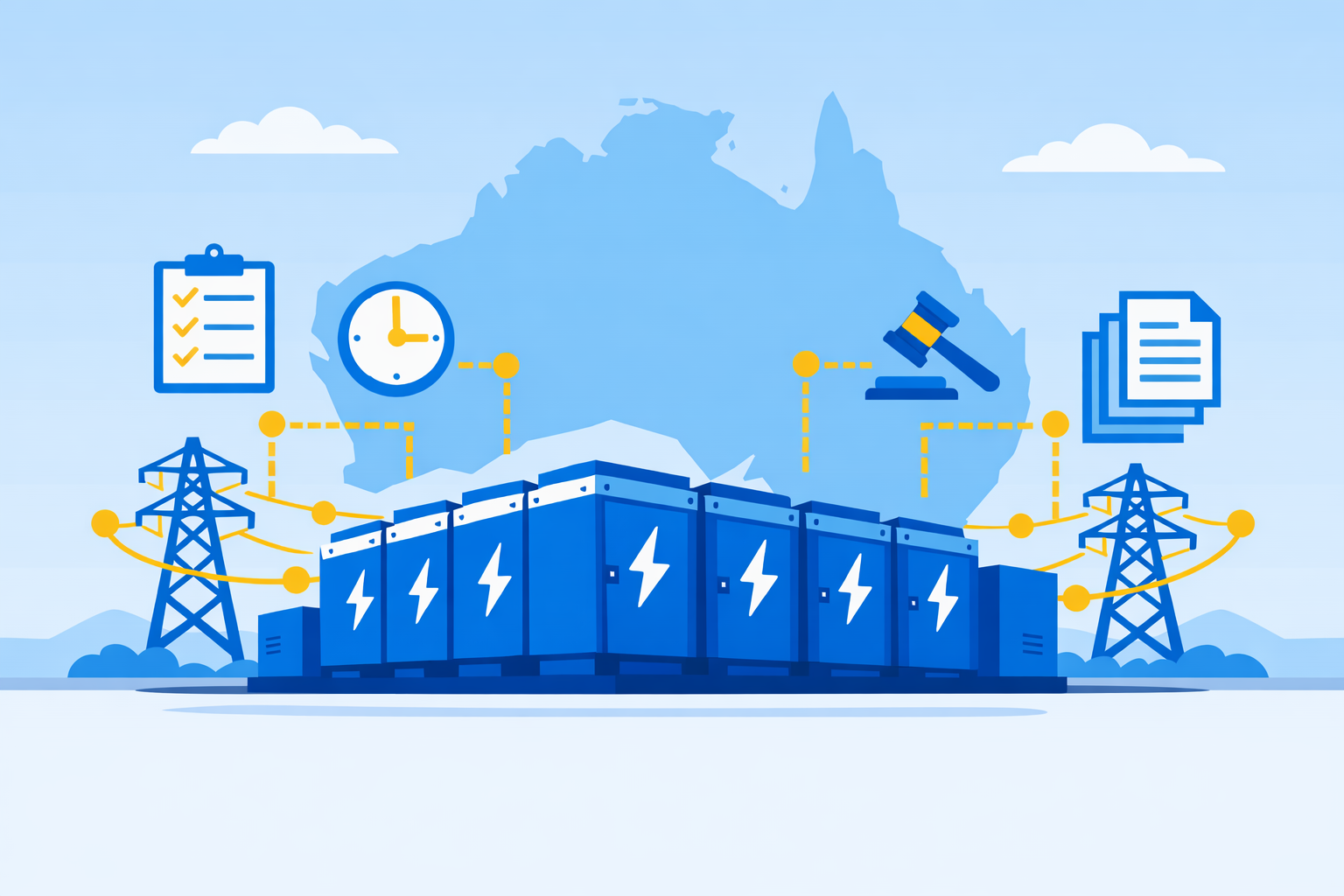
Battery energy storage developers are deploying artificial intelligence tools to sharpen dispatch, charging, and revenue forecasting. Yet a deepening interconnection queue backlog and evolving wholesale market structures constrain how quickly optimization gains translate into operational projects. The collision between software-driven efficiency and physical grid constraints has emerged as a defining tension in U.S. storage markets as capacity demand accelerates.
Background
The scale of the deployment challenge is substantial. Approximately 12 GW of utility-scale storage capacity was deployed in the United States in 2024, with roughly 19 GW forecast for 2025-one of the largest annual increases on record. Industry projections indicate approximately 93 GW of storage could be installed over the following five years through 2030. The grid infrastructure needed to accommodate that pipeline is not keeping pace.
Roughly 2 terawatts (TW) of utility-scale solar and battery storage projects currently sit in U.S. interconnection queues. According to Power Magazine, the new power sector bottleneck is "not capital, but execution: interconnection, equipment, and build-out rate." The median time from an initial interconnection request to commercial operation has grown to over five years. The resulting capacity scarcity is already visible in wholesale pricing: PJM capacity auction prices for the 2025-2026 delivery year soared from approximately $29/MW-day to $270/MW-day across most of the PJM footprint, with two zones clearing near $466/MW-day.
Details
AI-based optimization systems embedded in battery management and energy management platforms are increasingly designed to exploit these price signals. AI-based predictive analytics increase grid flexibility by forecasting demand trends, renewable generation, and market prices, enabling optimized energy trading and dispatch. Research using ensemble learning and deep learning models has demonstrated improvements in wind forecasting accuracy from 72% to 96% and solar from 68% to higher ranges, according to published findings in a peer-reviewed grid integration review.
Contract formats are also shifting on the market structure side. According to Morgan Lewis, power purchase agreements remain the dominant procurement model, often as tolling arrangements where utilities manage charging costs, while hedging contracts are growing-particularly in Texas-offering financial stability in the energy-only ERCOT market. Contracts have evolved toward performance-based agreements to ensure accountability and optimal operation. However, the absence of more granular locational marginal pricing and standardized performance guarantees in wholesale markets limits how precisely AI dispatch tools can be monetized.
Regulatory responses are beginning to address the queue problem directly. In April 2025, Google announced a partnership with PJM Interconnection and its Alphabet subsidiary "Tapestry" aiming to cut the interconnection approval process from years to months by using AI to automate and optimize the study of new power projects. On the regulatory front, FERC issued an order on December 18, 2025, directing PJM to reform its tariff governing co-location of generation with large loads such as data centers-finding PJM's existing tariff unjust and unreasonable due to insufficient clarity on rates, terms, and conditions for such arrangements. The order created three new transmission service categories and set compliance filing deadlines for PJM in early 2026. FERC Commissioner Judy Chang noted in a concurrence, however, that the order does not address the clogged interconnection queue that has driven interest in co-location arrangements in the first place, and that solving this foundational problem requires a durable fix allowing resources to interconnect at a much more efficient pace.
Analysts have quantified the cost of inaction. Research commissioned by GridLab and executed by Aurora Energy Research in October 2025 found that if just 10% of the 107 GW of land-based renewables in the queue before 2024 had been built in time for the 2026-2027 PJM auction, it would have added 1.5 GW of net supply and saved consumers approximately $3.5 billion. Battery pack prices for stationary storage fell to $70/kWh in 2025, a 45% decrease from 2024, making stationary storage the lowest-cost lithium-ion application for the first time, according to BNEF. These cost reductions amplify the opportunity cost of delayed grid access.
Outlook
Experts are pressing for reforms that go beyond existing FERC rules, including proactive transmission planning, queue automation, enhanced data transparency, and refined cost-allocation methodologies. Grid Strategies' November 2025 report projects that more than 150 GW of additional capacity will be needed in the United States within five years to meet rising electricity demand. Whether performance-based contracting and faster interconnection studies can unlock that pipeline depends on regulatory action moving beyond queue management to address the broader transmission planning and market design gaps that AI optimization tools alone cannot bridge.