California has enacted reforms to expedite permitting for residential battery storage systems, targeting the interconnection queue delays affecting homeowners and small developers. Key measures include updated fire-safety standards, streamlined plan reviews, and new digital permitting tools to compress approval times, reduce soft costs, and enhance grid reliability.
Background
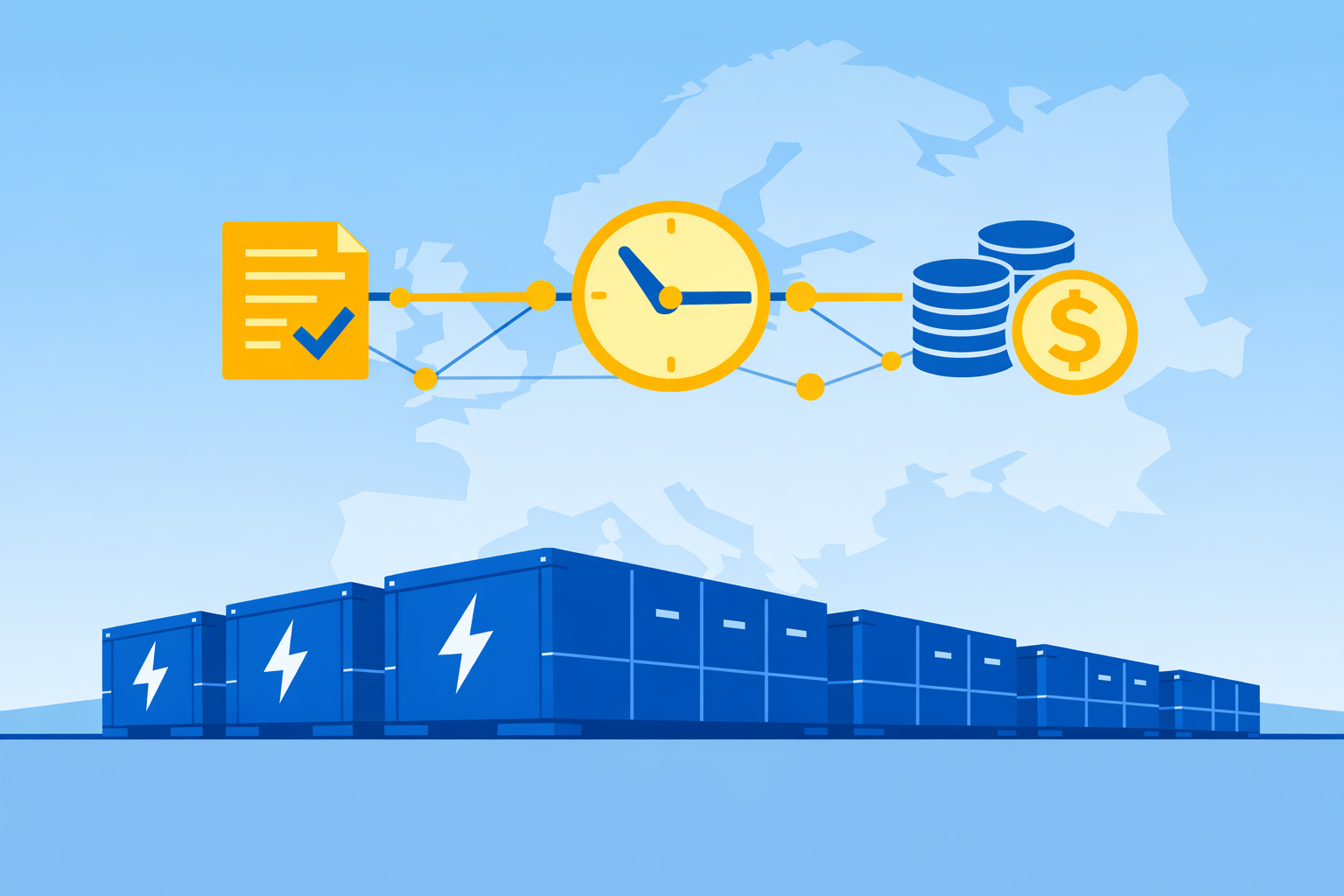
California's project interconnection backlogs have increased significantly. The California Independent System Operator (CAISO) recorded 541 interconnection requests in 2023, up from 373 in 2021, leading to a pause in new submissions to address congestion. The queue's total capacity exceeded what is required for the state's 2045 clean energy goals by a factor of three. CAISO has since adopted a zonal prioritization scoring system and implemented process changes approved by the Federal Energy Regulatory Commission (FERC) to eliminate non-viable projects and accelerate progress on viable ones. CAISO received 541 interconnection requests in 2023, up from 373 in 2021, prompting a pause in new submissions (CPUC annual report) The CAISO interconnection queue contained more than three times the capacity expected to achieve state policy objectives (CPUC grid report)
The California Energy Commission (CEC) has introduced an "Opt-In Certification" option under AB 205 for larger storage projects. This pathway allows eligible projects to bypass slower local permitting if they meet specified environmental review deadlines. CEC's Opt-In Certification Program holds environmental review to 270 days for eligible storage projects (CEC release)
Details
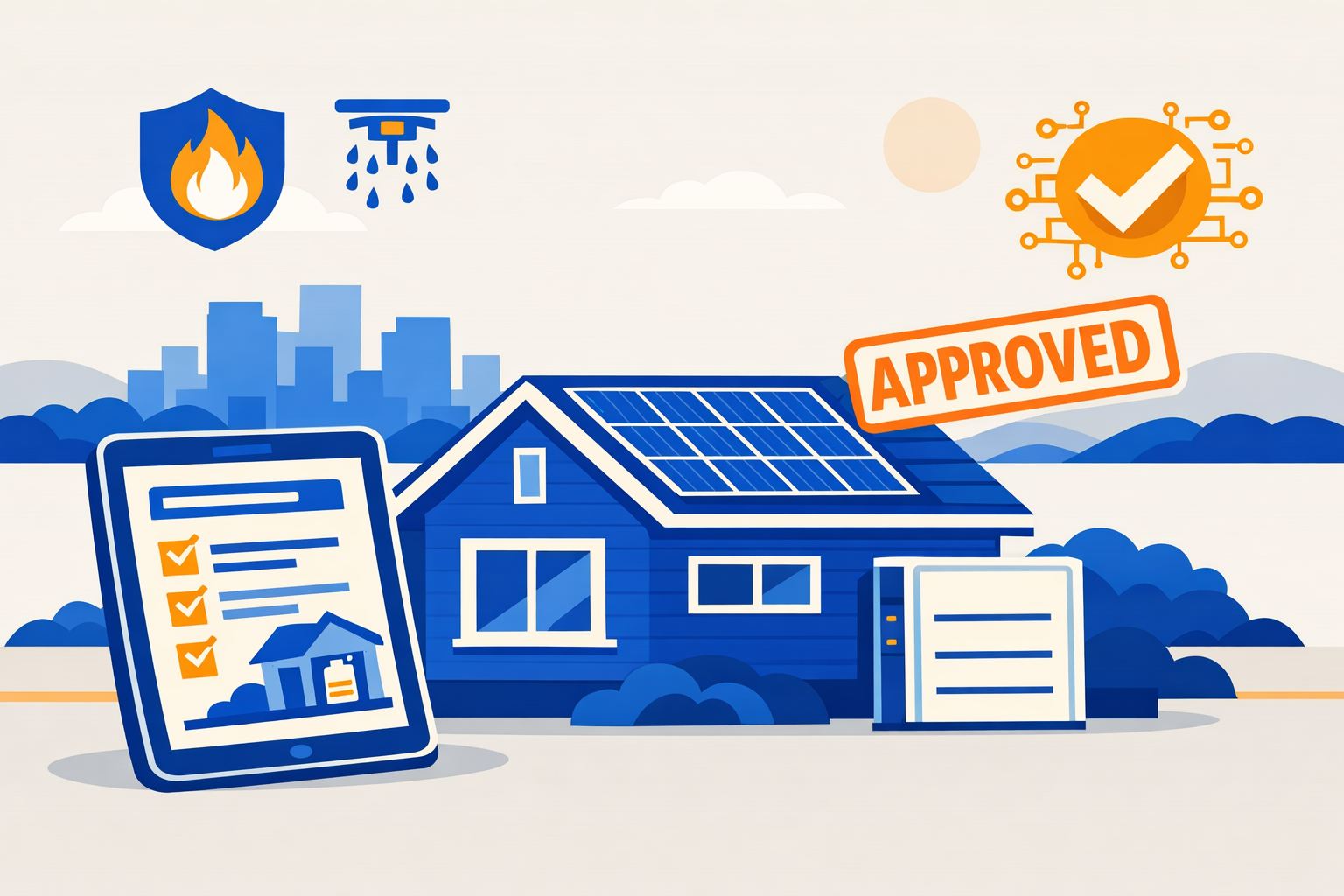
Senate Bill 283, signed by Governor Newsom in October 2025, updates fire-safety standards for battery storage and requires local fire official input during permitting. The State Fire Marshal has adopted the latest National Fire Protection Association (NFPA) 855 code, effective January 1, 2026, to standardize safety regulations statewide. SB 283 incorporates NFPA 855 standards adopted by the State Fire Marshal, effective January 1, 2026 (Sen. Laird press release)
Changes to the Opt-In process establish clearer timelines and requirements. The CEC must now adhere to a 270-day environmental review period, require applicants to consult fire officials at least 30 days prior to submission, and mandate post-construction inspections before operational approval. Applicants must consult with fire authorities at least 30 days before submitting and cannot operate until post-construction inspection is complete (JDSupra legal alert)
Statewide deployment of digital permitting tools is underway. Software using artificial intelligence to automatically verify building plans against local codes, originally developed for wildfire recovery in Los Angeles, is now available to local governments across California. This platform aims to accelerate residential battery plan approvals by providing automated pre-submission validation. AI-powered e-check software is now available statewide to streamline plan review processes (Public Affairs governor's office)
Outlook
The coordinated reforms aim to reduce permitting timelines for home battery installations, lower soft costs, and enable quicker interconnections. If the approach proves effective, it may provide a blueprint for other regions working to clear solar and storage backlogs.