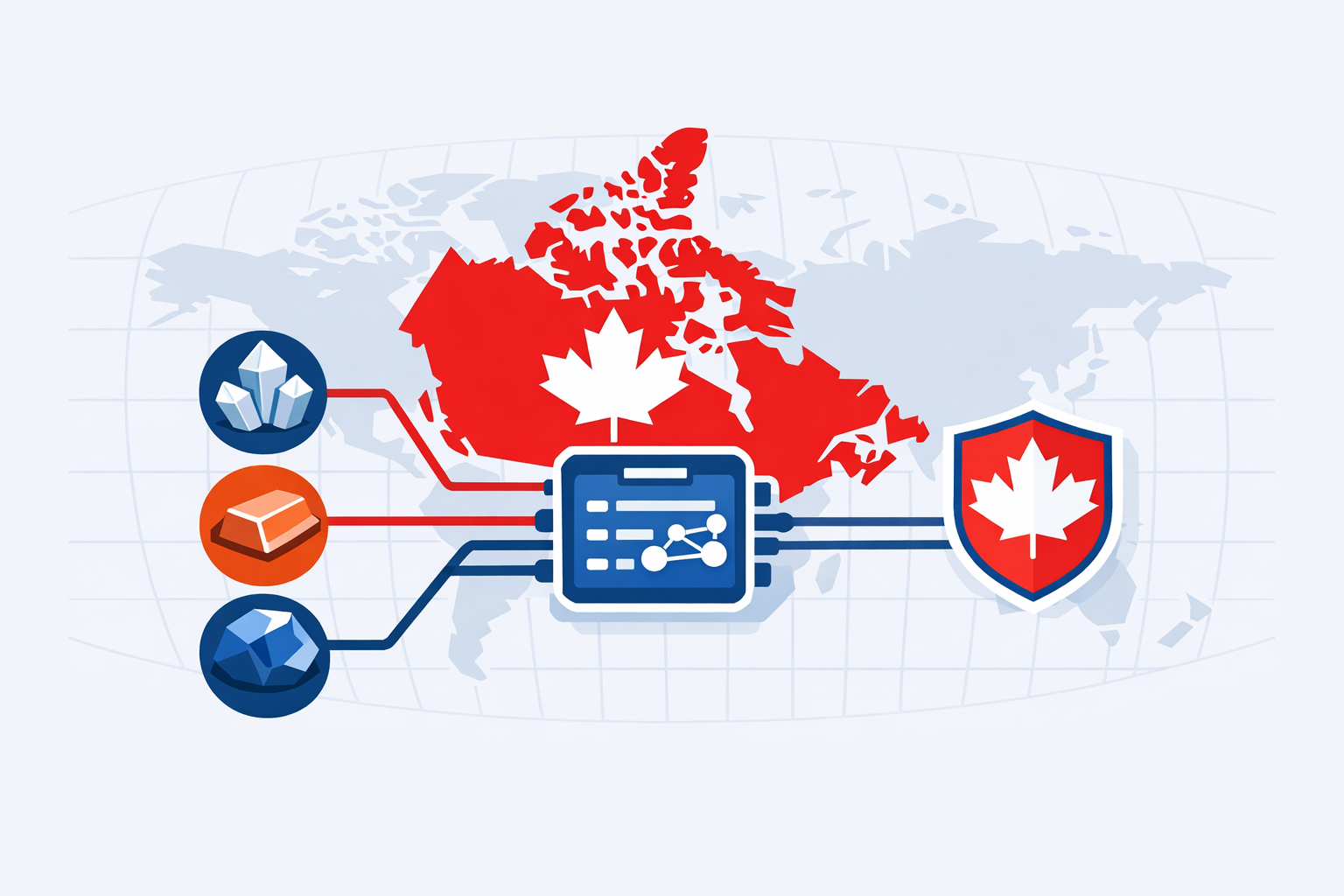
Canada is accelerating a coordinated regulatory push to mandate disclosure of battery mineral provenance, shifting from voluntary frameworks toward binding requirements that could fundamentally reshape sourcing strategies for battery manufacturers and energy storage developers worldwide.
Background
The drive stems from converging domestic legislation and multilateral commitments under Canada's 2025 G7 presidency. At the G7 Leaders' Summit in Kananaskis on June 17, 2025, G7 nations announced the Critical Minerals Action Plan (CMAP), tasking ministers with developing a roadmap to advance standards-based markets for critical minerals. Canada then led publication of that roadmap in October 2025, which explicitly commits member governments to progressively increase supply chain traceability, including through the use of interoperable traceability systems.
On the domestic front, Canada's Fighting Against Forced Labour and Child Labour in Supply Chains Act came into force on January 1, 2024, requiring companies to report annually on steps taken to eliminate forced and child labour across their supply chains - a framework that directly implicates battery mineral sourcing from higher-risk jurisdictions. Canada's Fighting Against Forced Labour and Child Labour in Supply Chains Act also bans the importation of goods produced with child labour, making Canada the first country to do so.
Meanwhile, the Canadian Sustainability Standards Board released Canada's inaugural Sustainability Disclosure Standards (CSDS) in December 2024, effective on a voluntary basis for annual reporting periods beginning on or after January 1, 2025. The Canadian Securities Administrators paused work on a mandatory climate disclosure rule in April 2025 amid geopolitical uncertainty but confirmed that existing securities law already requires issuers to disclose material sustainability-related risks.
Details
Legal and industry analysts confirm Canada has not yet codified battery-specific mineral traceability requirements equivalent to those in the United States or the European Union, but regulatory direction is clear. According to Gowling WLG, Canada's Critical Minerals Strategy "expressly emphasizes its commitment to traceability technologies to prevent products linked to conflict, child labour, or unsustainable practices from entering supply chains." In August 2024, Accelerate Alliance, with funding from Natural Resources Canada, published the Canadian Battery Innovation Roadmap, a 94-page document calling for increased investment in transparency and traceability tools to verify the origin of battery materials.
The G7 Roadmap published in October 2025 specifies concrete deliverables, including commitments to publish results of pilot studies testing the feasibility of data collection requirements, identify gaps in data needs, and provide recommendations for the interoperability of digital credentials between G7 members and partners. Governments are also directed to propose a data governance framework for digital traceability tools.
For battery manufacturers and energy storage developers, the practical compliance challenge is substantial. A 2026 IEA report drawing on responses from more than 80 companies active across supply chains of six focus minerals - copper, lithium, nickel, cobalt, graphite and rare earth elements - identified high implementation costs, limited interoperability between systems, and challenges in transmitting information along geographically concentrated supply chains as the primary barriers to wider traceability adoption. The IEA and OECD jointly recommend targeted financial support for upstream and smaller actors and better alignment of international standards to improve data comparability.
The pressure extends beyond Canada's borders. In Europe, the EU Battery Regulation (Regulation 2023/1542) imposes strict supply chain due diligence obligations on businesses supplying the EU market, and covers the entire battery life cycle including sustainability, safety, recycling and information disclosure. In the United States, manufacturers of battery materials classified as "impracticable-to-trace" - including graphite in anode materials - face a compliance transition deadline at end of 2026, after which they must meet Foreign Entity of Concern (FEOC) traceability requirements and submit detailed plans to the U.S. Department of Treasury.
According to Natural Resources Canada, Canada established formal bilateral mechanisms for critical mineral cooperation with Germany, Australia and other partners as of February 2026, and between 2020 and 2024, reduced its net import reliance for 38% of critical minerals that had been net import reliant between 2018 and 2022.
Supply chain due diligence practitioners identify structural weaknesses within corporate compliance systems as the principal obstacle. According to SLR Consulting's analysis of leading battery manufacturers in 2025, "the greatest sources of delay and stress during due diligence preparation consistently come from weaknesses in supply chain mapping, constrained overall supply chain transparency, and incomplete disclosure." Many existing management systems lack the capacity to systematically identify ESG risks across multi-tier supply chains, meaning material issues are detected late or not captured clearly in audit outputs.
Outlook
Canada announced in October 2025 a first round of 26 new investments, partnerships and measures under the Critical Minerals Production Alliance that will unlock $6.4 billion in critical minerals projects. The government has also committed to establishing a Critical Minerals Sovereign Fund providing $2 billion over five years for strategic equity investments, debt instruments and offtake contracts, and a First and Last Mile Fund totalling $1.5 billion between 2026 and 2030 to support strategic mining and infrastructure projects. As Canada moves to formalize traceability requirements aligned with its G7 commitments, battery manufacturers and energy storage developers sourcing globally will face compounding compliance obligations - requiring investment in digital tracking infrastructure, third-party verification capacity, and deeper supplier engagement across upstream mineral supply chains.