Europe's rapidly expanding renewable energy fleet faces a hard infrastructure constraint: aging transmission grids, chronic interconnection delays, and uneven storage financing are compounding into a systemic bottleneck that threatens both the reliability and economics of the energy transition.
Background
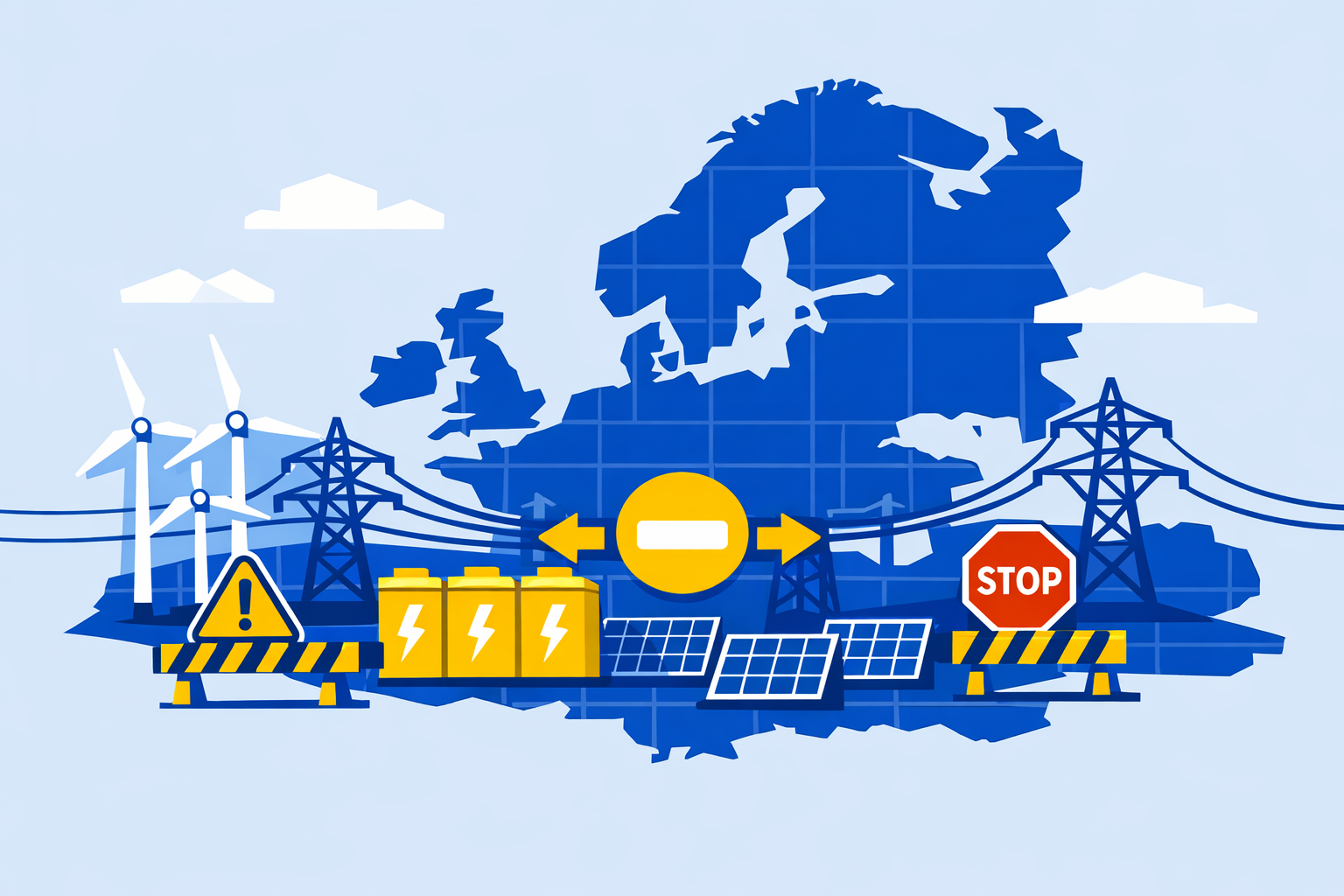
More than 1,700 GW of renewable and hybrid projects are waiting for grid connections across Europe. Stalled and speculative projects occupy scarce capacity, preventing ready-to-build, system-relevant projects - especially energy storage - from connecting. These bottlenecks drive higher curtailment, rising system costs, and slower progress toward climate and security-of-supply goals.
More than half of Europe's grid has operated for over 20 years and was not designed to incentivize grid-forming assets like energy storage. Such assets are needed to absorb and store excess energy from non-dispatchable sources like wind and solar, helping avoid curtailment. Up to 310 TWh of renewable energy could be curtailed annually by 2040 due to insufficient grid capacity.
Despite record deployment momentum - Europe reached 100 GW of installed energy storage capacity in late 2025, according to analysis by LCP Delta and Energy Storage Europe - the gap between pipeline and operational capacity remains stark. Europe's utility-scale energy storage pipeline exceeds 130 GW across more than 3,000 projects spanning 37 countries, yet only about 19 GW is operational today - a sevenfold expansion still waiting to materialize.
Details
The severity of the bottleneck varies sharply by market. Nine of eleven major European markets already face saturated grids, resulting in long waits for connection approvals and growing uncertainty around project viability. Germany's situation is the most acute: transmission operators received 226 GW of new grid-connection requests in early 2025, far exceeding available capacity. One grid operator confirmed no further capacity until 2029.
Spain's grid crisis crystallized most dramatically after a nationwide blackout on April 28, 2025, which exposed chronic underinvestment in storage and cross-border links. Limited battery deployment - around 28 MW at the time - constrained rapid response capabilities, while low interconnection with neighboring systems restricted external support. In 2025, an average of 3.11% of renewable electricity could not be integrated into the grid, with peaks exceeding 10% in July; a total of 5,414 GWh of renewable electricity was curtailed. Spain's limited interconnection with the rest of Europe remains a structural constraint. Cross-border exchange capacity still represents only about 4% of installed generation capacity, well below EU recommendations.
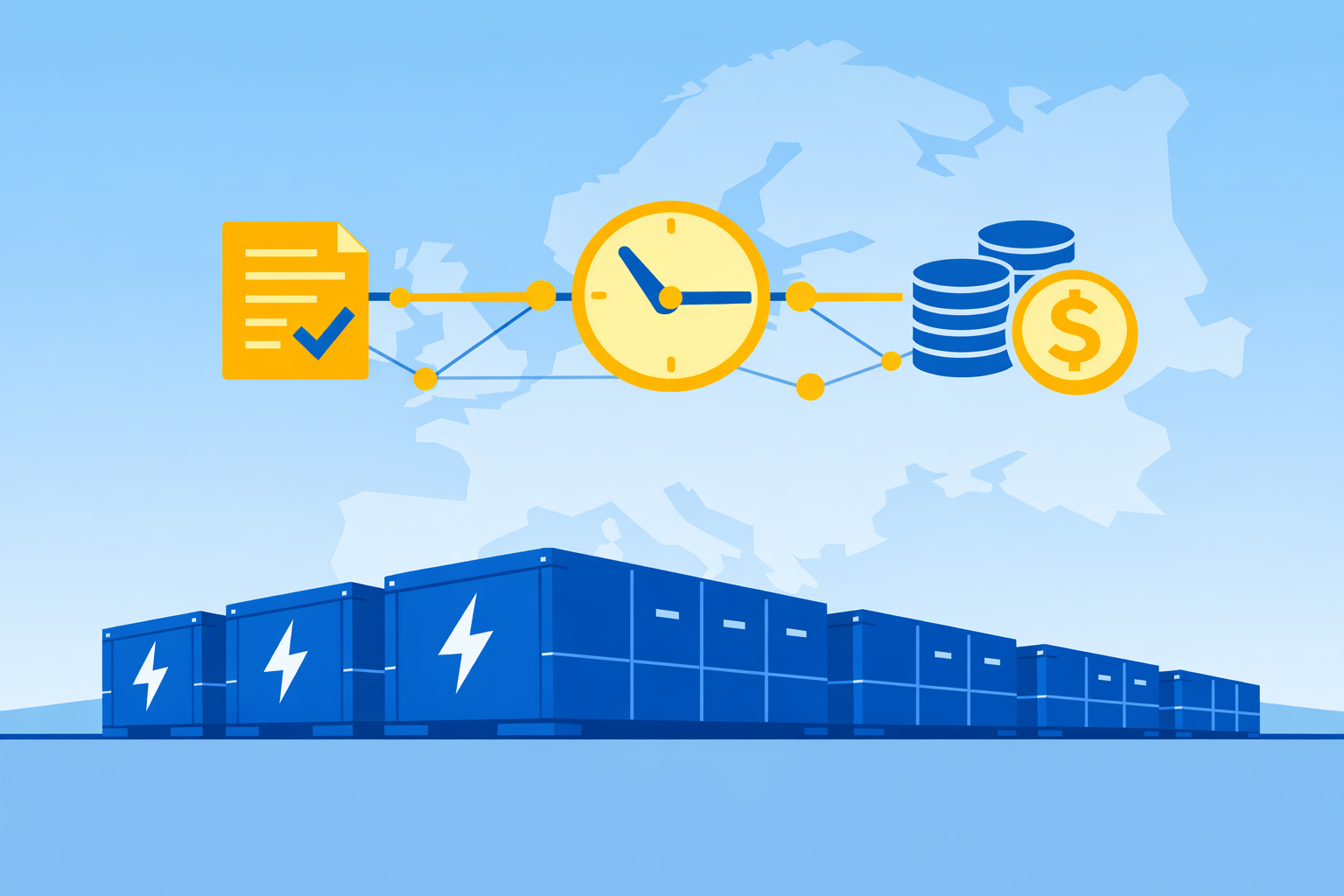
The financing and permitting environment compounds physical constraints. Permitting delays remain among the most severe obstacles to grid deployment. According to the European Commission, even Projects of Common Interest (PCIs) frequently take five years or more to secure permits, with renewable projects sometimes approaching a decade. Energy Storage Europe Senior Policy Officer Daniel Vig stated that current permitting procedures for storage projects "can take as long as seven years." The association's position paper warned that "high-value projects like storage are often delayed behind slower-moving or less impactful ones, undermining storage's potential to support the energy transition."
On the investment side, backers want to support Europe's storage buildout but need certainty. Clearer planning timelines, transparent grid-connection rules, and consistent compliance requirements would unlock billions in private capital, according to Fieldfisher's Daniel Marhewka.
A separate report warned that only five grid operators in Europe are modeling a 100% renewable system by 2035, while €7.2 billion in renewable generation was lost by 2024 due to a lack of grid capacity.
Outlook
The European Commission presented its European Grids Package in December 2025, identifying eight key bottlenecks representing the continent's most urgent energy infrastructure needs. The proposed Permitting Acceleration Directive introduces, for the first time, binding EU-level time limits for permitting procedures covering grid infrastructure, renewables, battery storage, and EV charging stations. A central element is the proposed shift from "first come, first served" to "first ready, first served" access regimes, designed to eliminate so-called "phantom projects" that reserve grid capacity without progressing to construction.
The proposed directive would cap the permitting period at six months for standalone energy storage above 100 kW - excluding hydrogen - and at two years for pumped hydro energy storage. Europe needs a fast, fair, and future-proof permitting framework to unlock the estimated 200 GW of energy storage required by 2030. The proposals require approval by the European Parliament and Council before entering national implementation, leaving a critical execution gap that industry groups warn must be closed without delay.