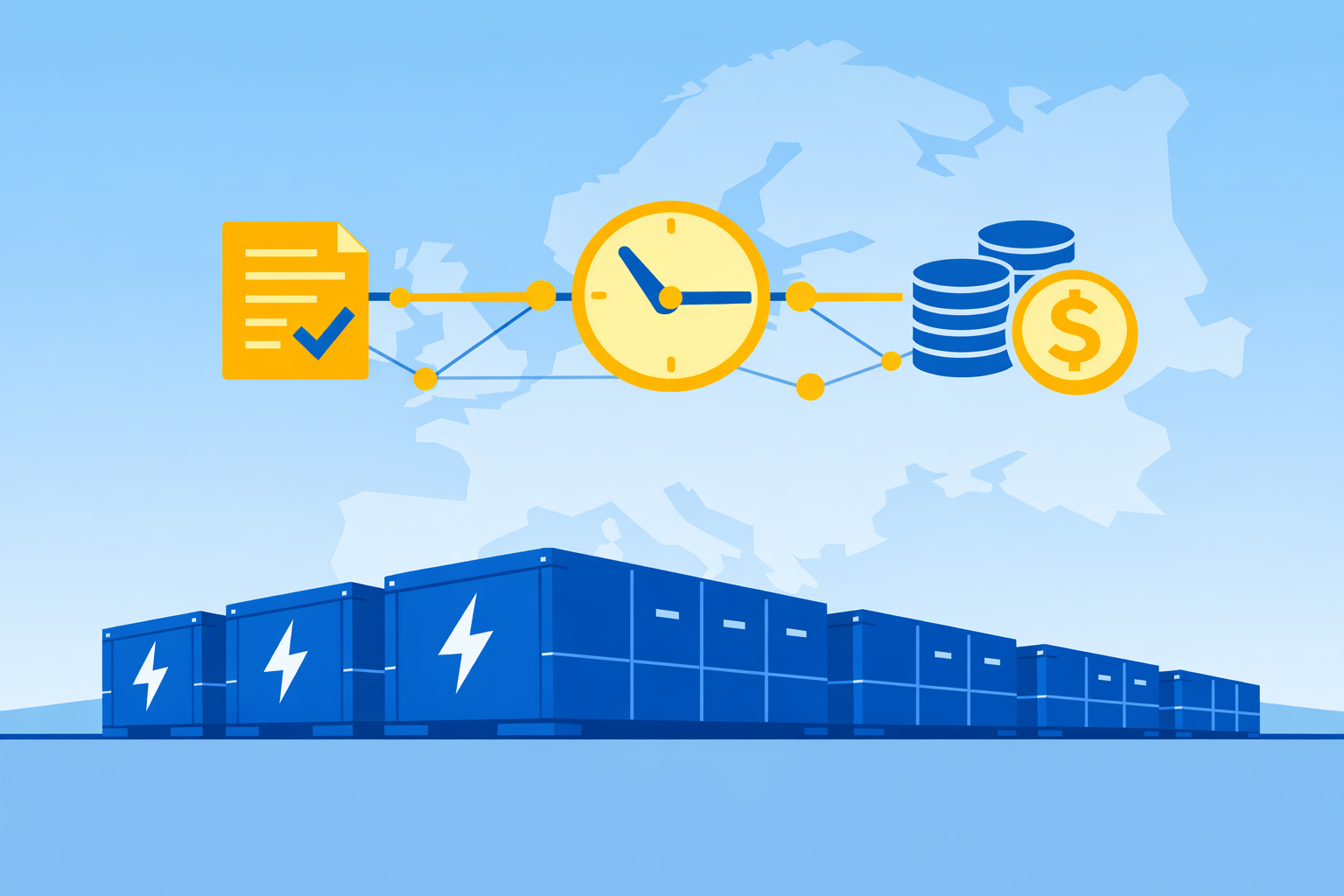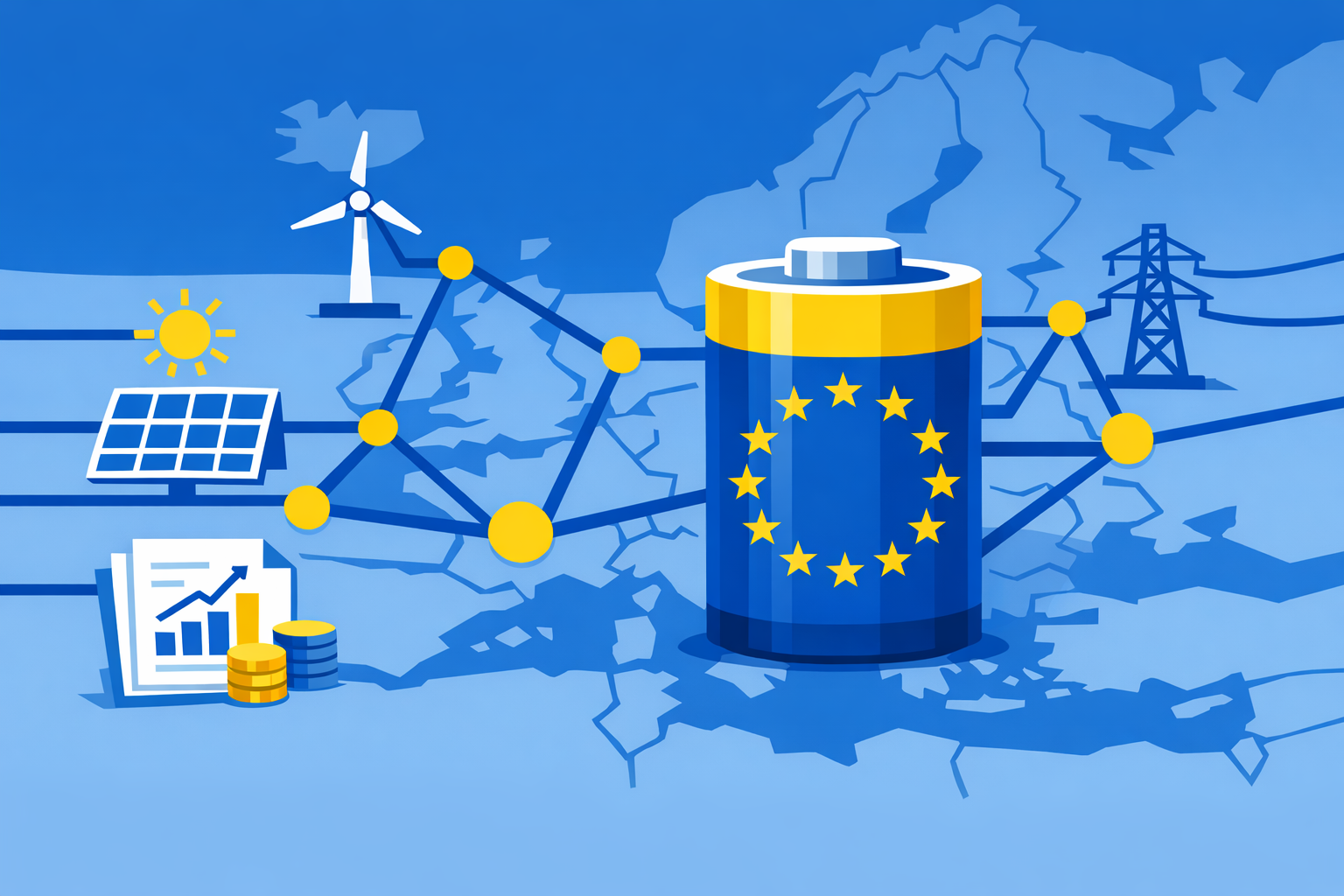
The European Commission's December 2025 Grids Package sets the stage for a significant overhaul of how cross-border battery storage projects are planned, permitted, and financed. Industry groups warn, however, that structural gaps in the revised Trans-European Networks for Energy (TEN-E) framework still leave storage developers at a disadvantage.
Background
The Commission presented the European Grids Package (COM/2025/1005) on 10 December 2025, following the EU Action Plan for Grids adopted in November 2023. The package consists of a proposal to revise the TEN-E Regulation and a proposal to accelerate permit-granting procedures by amending the Renewable Energy Directive, the Electricity Market Design, and the Gas Directive.
The TEN-E framework governs Projects of Common Interest (PCIs) - cross-border infrastructure projects eligible for accelerated permitting and Connecting Europe Facility (CEF) funding - and has been central to EU energy infrastructure planning since 2013. The Commission acknowledged that TEN-E remains "largely valid," but that shortcomings must be addressed "to ensure the framework is fit to support a decarbonised, competitive and resilient energy system towards 2050, in line with the Clean Industrial Deal objectives and the European Climate Law."
The financing stakes are substantial. ENTSO-E estimates Europe's grids require over €800 billion in investment by 2050 for cross-border and hybrid offshore projects, and argues that current EU instruments such as the CEF and InvestEU fall short of that demand. In response, the Commission has proposed a fivefold increase in the CEF Energy budget for 2028-2034, from €5.8 billion to €29.91 billion.
What the Package Changes for Storage
New Grid Connection Guidance includes specific consideration of energy storage assets for the first time, including co-located renewable-plus-storage plants. SolarPower Europe CEO Walburga Hemetsberger described the Grid Connection Guidance as "the highlight of the package," noting that member states now have "clear instructions on how to design effective rules for connecting grid-friendly projects like hybrid solar + storage projects."
The TEN-E revision also introduces a new governance layer for EU-level network planning. For the first time, the European Commission will be responsible for ensuring that cross-border grid planning aligns with the EU's energy and climate goals. Reforms include a "gap-filling process" to identify and address shortfalls in cross-border electricity transmission planning that national regulators lack jurisdiction to resolve.
On cost sharing, the proposals would facilitate improved cross-border cost and benefit allocation, partly by requiring transmission system operators (TSOs) to direct 25% of their congestion income toward reducing cross-border congestion. The package also targets more effective permitting tools for storage projects and requires grid operators to apply a "first-ready, first-served" principle with transparent maturity criteria for all connection requests.
On financing, projects that receive cross-border renewable energy (CB RES) status become eligible for CEF Energy funding for studies and works, with additional benefits including higher visibility, increased investor certainty, and stronger support from EU countries. A fourth CEF call for works and studies was published in November 2025, with an available budget of €150 million, opening for submissions on 5 February 2026 with a deadline of 12 March 2026.
Industry Criticism: Storage Still Faces Structural Barriers
Despite the broadly positive reception, energy storage associations flagged persistent limitations. Energy Storage Europe noted that battery storage projects still struggle to achieve PCI status. The new proposal makes no changes to size thresholds for energy storage PCIs, which the group said remain "prohibitively high," and there is "still no tailored methodology to value storage's cross-border system benefits."
On the financing side, national-level reforms are also addressing the policy gap. A reform of France's capacity mechanism, expected to enter into force in 2026, would introduce multi-annual contracts of up to 15 years for new projects, extend eligibility to cross-border capacity, and establish a centralized levy to finance the scheme.
Across Europe, more than 80 GWh of battery storage capacity was awarded through national auctions in 2025, according to Strategic Energy Europe. The awarded volume came from a wide range of mechanisms including capacity markets, state aid schemes, EU-funded programs, and national initiatives. Poland (20 GWh), the United Kingdom (18 GWh), Bulgaria (13.7 GWh), Italy (10 GWh), and Spain (9.4 GWh) accounted for the largest volumes. Many schemes require commercial operation between 2026 and 2030, placing pressure on developers, while some awarded prices - particularly in Italy - could complicate final investment decisions without regulatory stability or complementary revenue streams.
Outlook
With the Commission's proposals now published, the European Parliament and the Council will advance the package under the ordinary legislative procedure. The Grids Package appears in the Joint Declaration of the three institutions as a priority file for 2026, suggesting it is likely to be fast-tracked. The discussion will continue in 2026 with, among other initiatives, the revision of the TEN-E Regulation and the EU Electrification Action Plan, expected in the first quarter. For storage developers seeking PCI status and the CEF financing it unlocks, the legislative outcome will determine whether the revised framework delivers materially improved cross-border investment conditions - or preserves the structural barriers that have long constrained the sector.