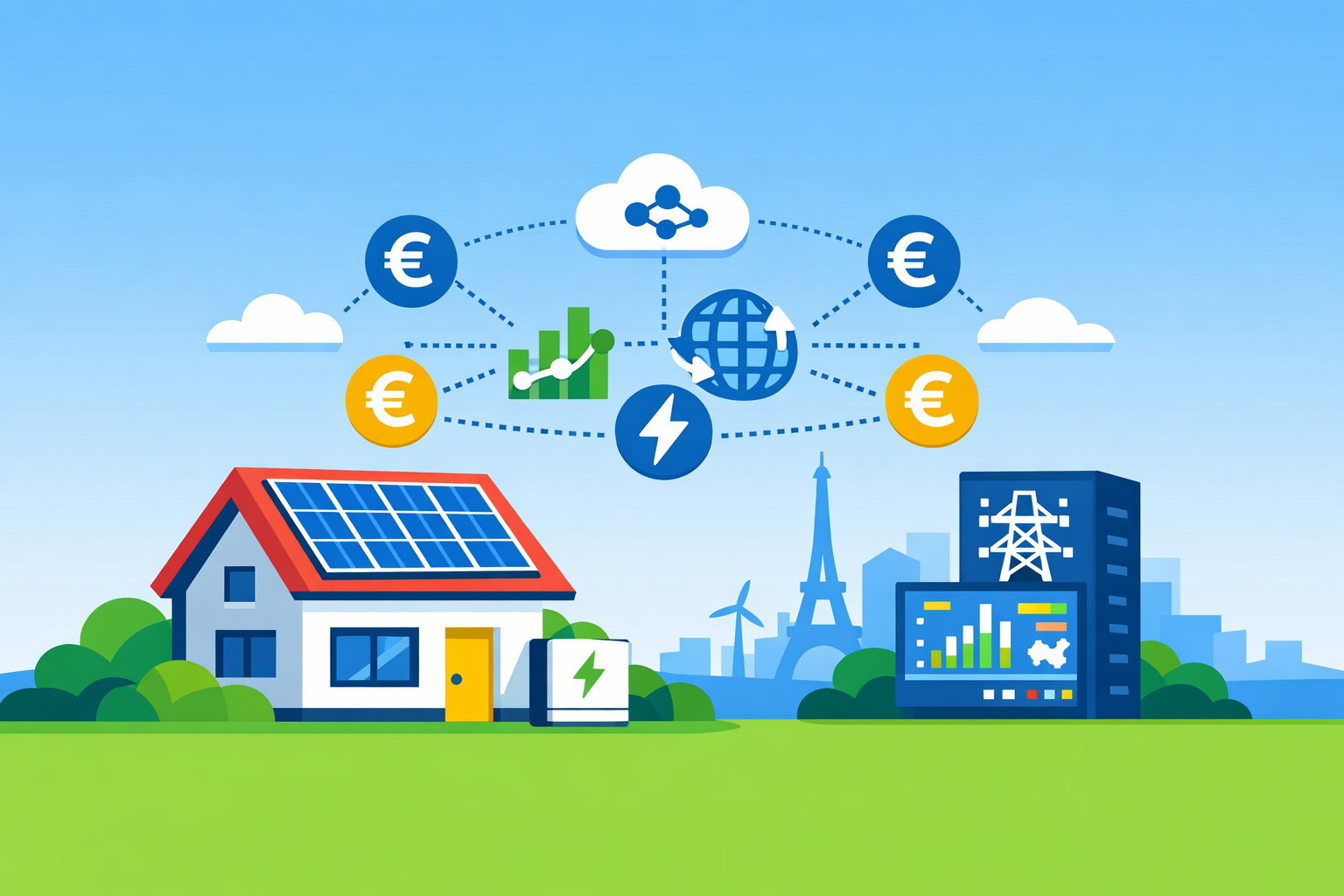
European energy regulators have enacted reforms allowing residential batteries to deliver grid services and generate revenue for homeowners. In Germany, the 2025 amendment to the Energy Industry Act (EnWG) permits installation of "plug-and-play" storage units with up to 2 kW DC input and 800 VA AC output without smart meters. This change reduces barriers for owners to benefit from dynamic pricing and arbitrage opportunities. Germany's EnWG amendments in 2025 allow plug-and-play home batteries under defined technical limits without smart meters. Homeowners can now benefit from dynamic pricing and arbitrage. The European Commission's 2024 guidance on metering data interoperability instructs EU member states to create a data repository under implementing regulation 2023/1162. This move improves cross-border access to consumer electricity data and supports energy service providers' participation in retail markets. The EU published guidance in July 2024 to streamline metering data interoperability and support access to consumption information. Germany's Federal Network Agency has also proposed new rules to distinguish on-site solar generation from grid electricity, enabling both residential battery and vehicle-to-grid (V2G) systems to access energy markets. The Bundesnetzagentur's MiSpeL proposal aims to separate on-site and grid energy flows to enable home battery and V2G participation in market operations.
Background
Europe's residential battery market has expanded amid supportive regulations and declining costs. In 2025, residential behind-the-meter storage is expected to grow by 18 percent, rebounding from a 3 percent decline, while commercial and industrial (C&I) installations are forecast to increase by 33 percent. SolarPower Europe forecasts 2026 residential storage growth at 18 percent and C&I growth at 33 percent. Germany leads these deployments, accounting for 55 percent of new residential battery installations, with total European residential battery capacity reaching 4.1 GWh in 2025. Germany accounted for 55 percent of Europe's 4.1 GWh residential storage deployments in 2025. Homeowners supplying virtual power plants (VPPs) via platforms such as Sonnen earn €150-€300 annually by providing grid balancing, frequency regulation, or peak shifting, while retaining self-consumption benefits. Sonnen's community network provides VPP services and pays participating households €150-€300 per year.
Details
Germany's home battery growth reflects the removal of logistical and technical barriers following recent policy changes. In early 2025, plug-and-play systems became widely feasible, and by mid-2025, nearly two million home battery systems (≤ 20 kW) were registered, amounting to about 18.3 GWh of usable capacity. Germany's registry listed nearly 2 million home battery units totaling about 18.3 GWh by mid-2025. Since January 2024, German distribution system operators (DSOs) have been authorized to remotely control home batteries as "controllable consumer devices" under §14a of EnWG, permitting curtailment during grid stress in exchange for compensation. As of 1 January 2024, households' home batteries qualify as remotely controllable devices under §14a EnWG, allowing DSO throttling during stress with tariff incentives. The EU's interoperability repository legislation under Implementing Regulation (EU) 2023/1162 requires consistent mapping of national practices by January 2025, with reporting due by July 2025. This measure aims to reduce administrative burdens and enhance energy service providers' market access. Article 10 of Implementing Regulation 2023/1162 requires member states to report interoperability data by July 2025.
Outlook
Interoperable metering standards, streamlined plug-and-play rules, and DSO control frameworks position residential storage as a critical flexibility resource. Utilities and grid operators are likely to further incorporate home batteries into grid management strategies. As deployments expand, financial incentives for homeowners in VPPs or ancillary service markets may increase, driving continued regulatory development.