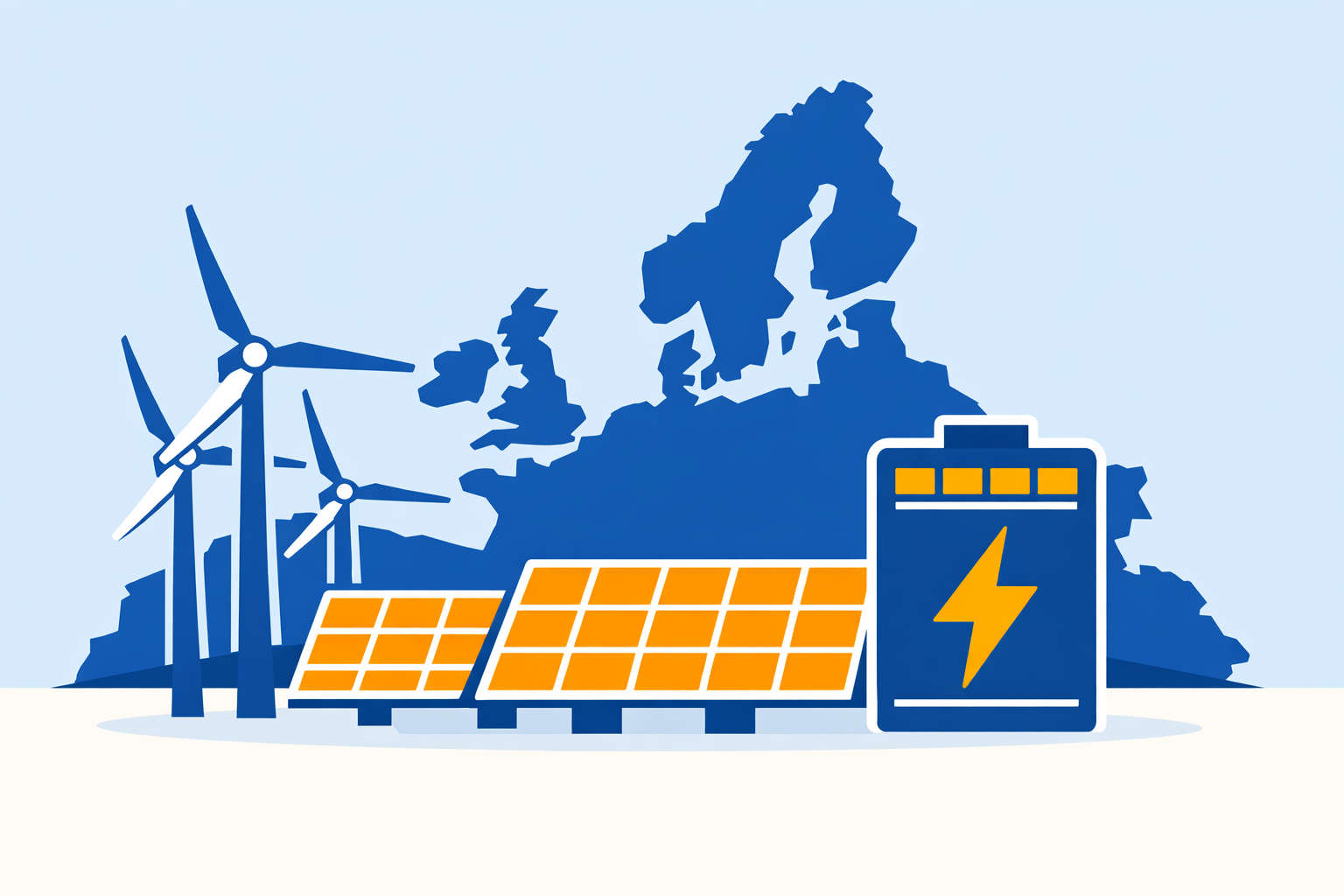
Europe's co-located renewable and battery storage market is set for dramatic expansion this decade. New research projects capacity will surge more than 450% by 2030 as grid pressure, price volatility, and curtailment risk accelerate the shift toward hybrid project structures.
Background
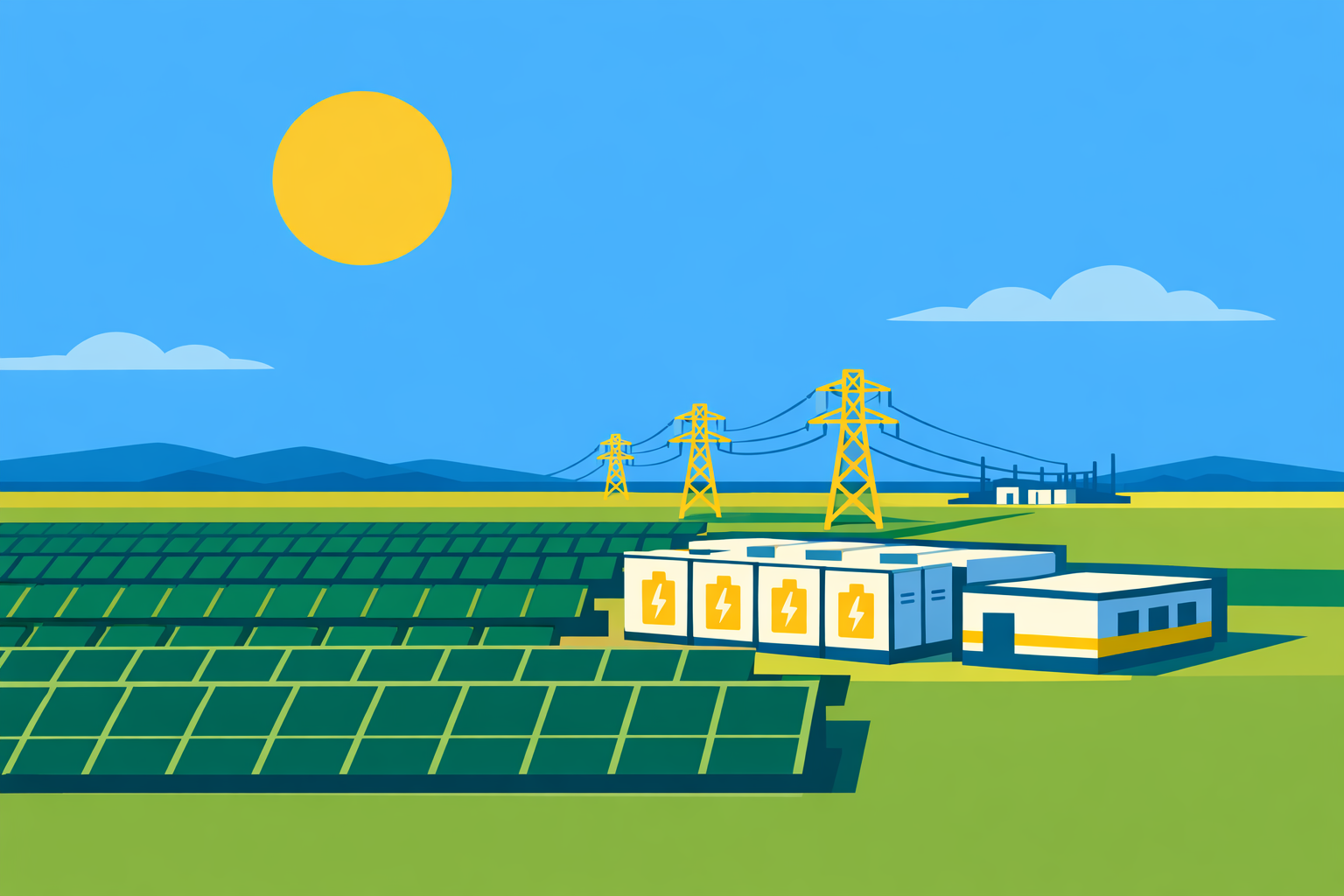
Renewable projects such as wind and solar in Europe are increasingly developed alongside battery storage, allowing generators to store power rather than sell at a loss during periods of oversupply and discharge when prices recover. The trend reflects structural changes in European electricity markets: negative pricing has grown more common as renewable generation expands, with Spain, the Netherlands, and Germany each recording more than 500 hours of negative prices in 2025. Meanwhile, more than 1,600 GW of renewable and storage capacity awaits grid connections across the continent, including roughly 550 GW in Great Britain alone.
Details
According to Aurora Energy Research, Europe's co-located renewable and battery capacity is projected to increase by more than 450% by 2030, reaching approximately 35 GW. Co-located renewable capacity stood at 6.3 GW in 2025, led by solar-plus-storage projects, which account for more than 60% of deployments.
The research assessed 20 European markets for co-location attractiveness, identifying Germany, Great Britain, and Bulgaria as the most favorable investment destinations. Great Britain benefits from substantial installed capacity and a project pipeline backed by contracts for difference that could help offset grid connection delays. Spain, Hungary, and France were flagged as markets to watch amid ongoing regulatory reform.
The investment rationale varies by geography. The driver behind co-location of renewable-plus-storage projects differs across Europe, according to Jörn Richstein, Research Lead, Pan European Power Markets, Policies & Technologies, at Aurora Energy Research. "In some markets it is driven by merchant upside, in others by subsidy-supported stability, and elsewhere by the need to overcome grid constraints and limit curtailment," Richstein said.
Curtailment - the forced reduction of renewable output to prevent grid oversupply - represents a growing financial and operational risk. Curtailment is expected to more than triple from over 10 TWh in 2024 to around 33 TWh by 2030 across key markets, according to Aurora Energy Research. Aurora forecasts that solar capture prices in Iberia could fall by nearly 50% by 2030, while onshore wind discounts in Germany may exceed 25%.
Aurora Energy Research senior analyst Sameer Hussain said: "As renewable penetration accelerates, grid congestion, curtailment and price volatility are becoming defining features of Europe's power markets. Co-location is no longer a niche solution: it is increasingly critical to protecting project economics and sustaining investment momentum."
On the financing side, hybrid investment portfolios - often structured to include both generation and storage - primarily support the financing of standalone battery systems. Co-located projects typically face fewer financing barriers, as they inherently combine generation and storage, making them more straightforward from a risk and revenue standpoint. Declining battery costs provide an additional tailwind: according to the International Renewable Energy Agency (IRENA), storage costs have dropped 93% since 2010, making hybrid renewable systems increasingly competitive with fossil fuel generation.
Outlook
The Aurora report outlines two possible paths for the sector by 2030. In one scenario, faster policy alignment across Europe drives co-located renewable capacity beyond 35 GW and makes hybrid projects the industry standard. In another, regulatory delays and supply chain constraints slow deployment and concentrate growth in a handful of leading markets. Aurora's analysis also highlights the need for €1.5 trillion of investment in grid infrastructure by 2040, underscoring that the co-location surge alone will not resolve Europe's broader transmission planning challenges.