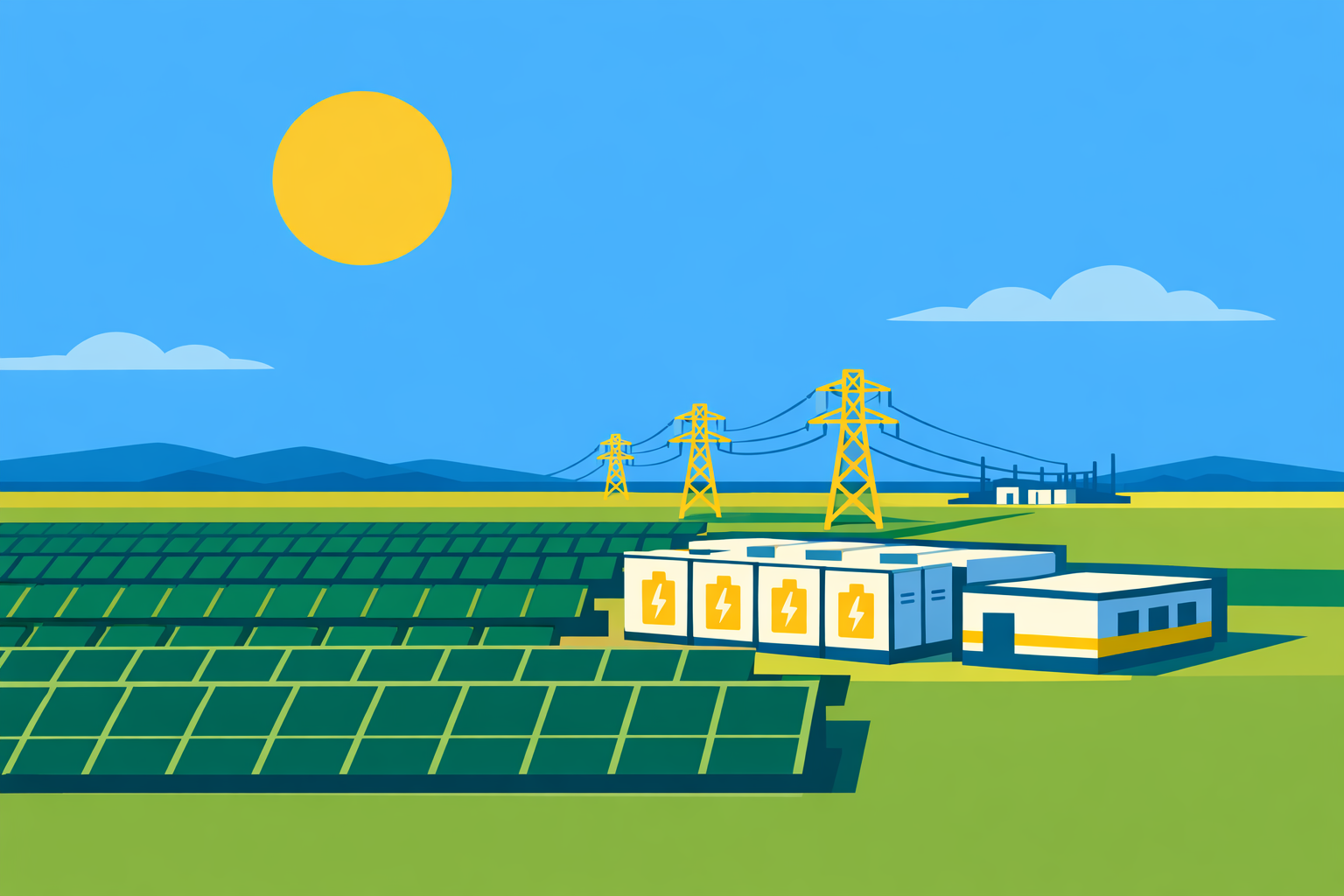
Ford Motor Company has formally unveiled Ford Energy, a wholly owned subsidiary that will manufacture and sell U.S.-assembled battery energy storage systems (BESS) for utilities, data centers, and large industrial customers. The new unit plans to produce at least 20 GWh of energy storage annually from its Glendale, Kentucky gigafactory, with first customer deliveries targeted for late 2027. The launch formalizes a strategic pivot away from underperforming electric vehicle battery operations into the rapidly expanding grid-scale storage market.
Background
Ford Energy's formation follows the December 2025 dissolution of the BlueOval SK joint venture-a planned $11.4 billion partnership with South Korean supplier SK On to produce traction batteries for Ford's EV lineup. Under the wind-down agreement, a Ford subsidiary took independent ownership of the Kentucky battery plants, while SK On retained full ownership of the Tennessee facility. The split left Ford with substantial manufacturing infrastructure and no primary customer, prompting a redirection toward stationary storage.
Ford reported a $19.5 billion charge in 2025 related to rationalizing its EV-related assets as consumer demand fell materially short of earlier projections. Rather than idling the Glendale facility, Ford committed approximately $2 billion to convert and equip the site for a full BESS production sequence-covering electrode coil manufacturing, cell production, module assembly, and containerized system assembly. An agreement with the Commonwealth of Kentucky is expected to support at least 2,100 new jobs at the Glendale operation.
The move reflects a broader automaker-led realignment across the sector. As reported previously in our analysis of battery maker EV-to-storage pivots, declining EV demand has prompted multiple manufacturers to redirect licensed lithium iron phosphate (LFP) capacity toward utility-scale BESS applications.
Details
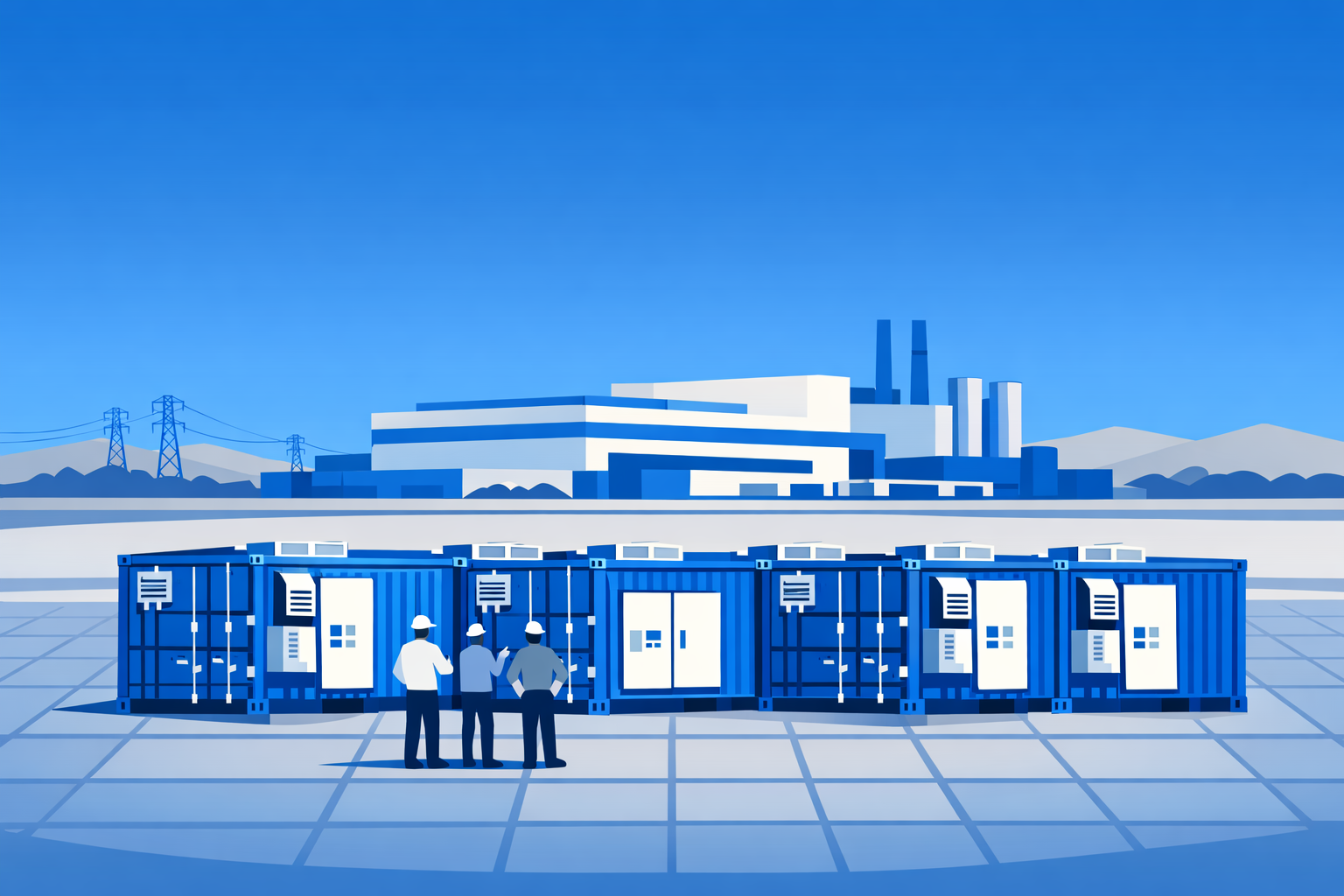
Ford Energy's flagship product, the DC Block, is a standardized 20-foot containerized system built around 512 ampere-hour LFP prismatic cells, available in two configurations: the FE-250 (two-hour system) and the FE-450 (four-hour system), each delivering 5.45 MWh per unit. Both integrate liquid-cooled thermal management and are designed for a 20-year service life. Ford is emphasizing LFP chemistry-the same formulation that dominates the global grid-scale storage market-for its superior thermal stability and cycle longevity compared with nickel manganese cobalt alternatives.
Lisa Drake, appointed president of Ford Energy, oversees end-to-end operations and reports to Ford Vice Chair John Lawler. "U.S. demand for dispatchable, bankable energy storage is accelerating," Drake stated at the launch, adding that "utilities and developers need storage systems they can finance, insure, and depend on for decades."
Ford's domestic manufacturing footprint serves as a deliberate commercial differentiator. The company said its manufacturing and supply chain strategy is structured to meet Investment Tax Credit (ITC) requirements and domestic content standards under Section 48E applicable to grid-scale storage, a feature utility buyers and project finance teams have increasingly prioritized amid trade policy uncertainty.
The competitive landscape is formidable. Tesla deployed a record 46.7 GWh of energy storage in 2025 and is preparing volume production of its next-generation Megapack 3 from its Houston gigafactory, which carries a stated 50 GWh annual production capacity. Ford's 20 GWh annual target represents less than half of Tesla's planned Megapack output, though market demand is expanding fast enough to support multiple large suppliers. The U.S. is expected to add approximately 24 GW of new utility-scale battery storage in 2026, nearly double the record 15 GW installed in 2025, with industry projections pointing to more than 600 GWh of cumulative BESS capacity on the U.S. grid by 2030.
Outlook
Ford Energy faces a tight execution timeline. The late-2027 first delivery date leaves approximately 18 months from formal launch to commission and prove an industrial BESS operation at scale. If Ford meets the 20 GWh target, it would capture a meaningful share of the projected U.S. storage installation pipeline and establish a new class of automaker-led energy infrastructure supplier competing directly with purpose-built storage OEMs. Procurement officers and project developers will evaluate Ford Energy's bankability, warranty framework, and interconnection readiness ahead of any long-term offtake commitments.