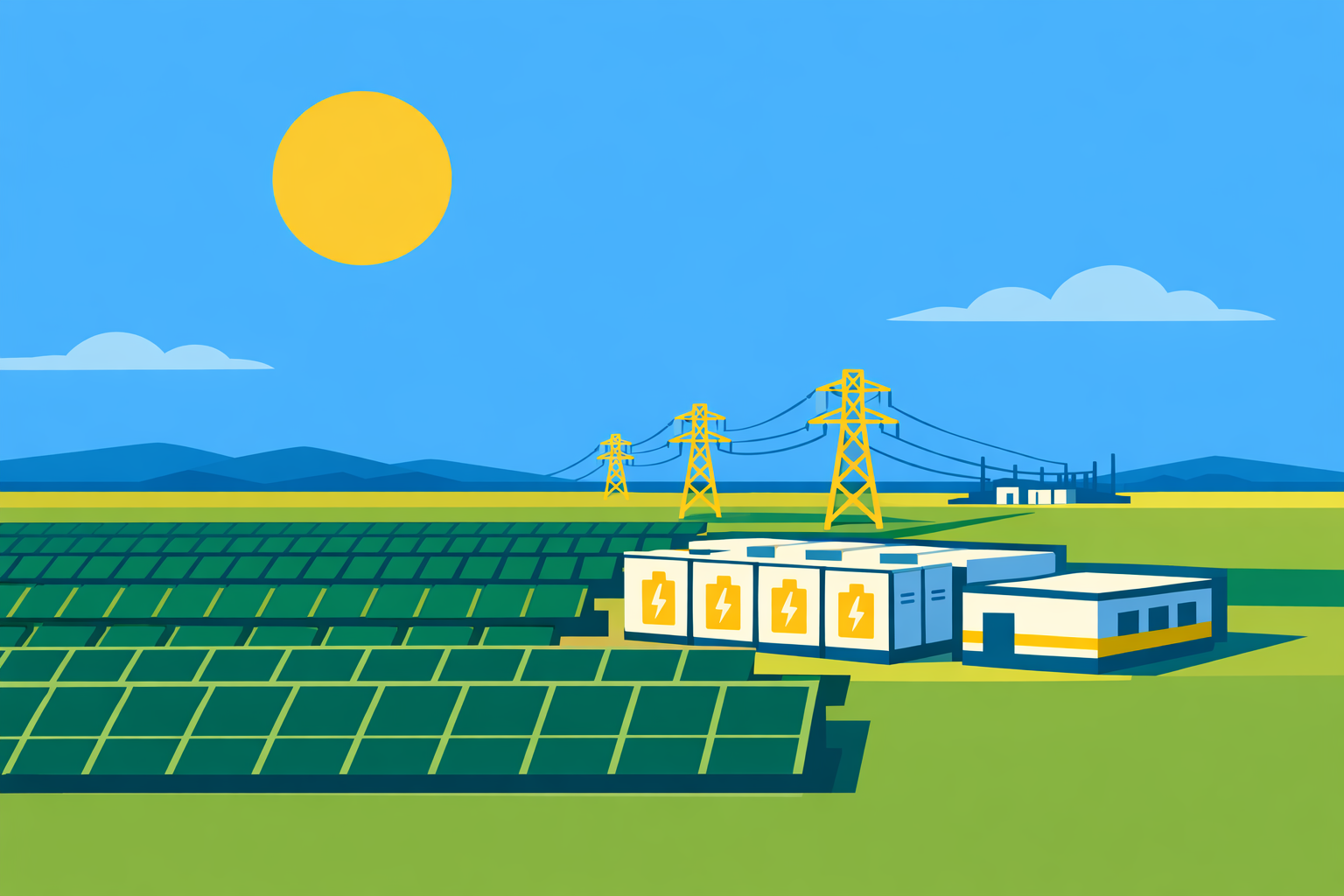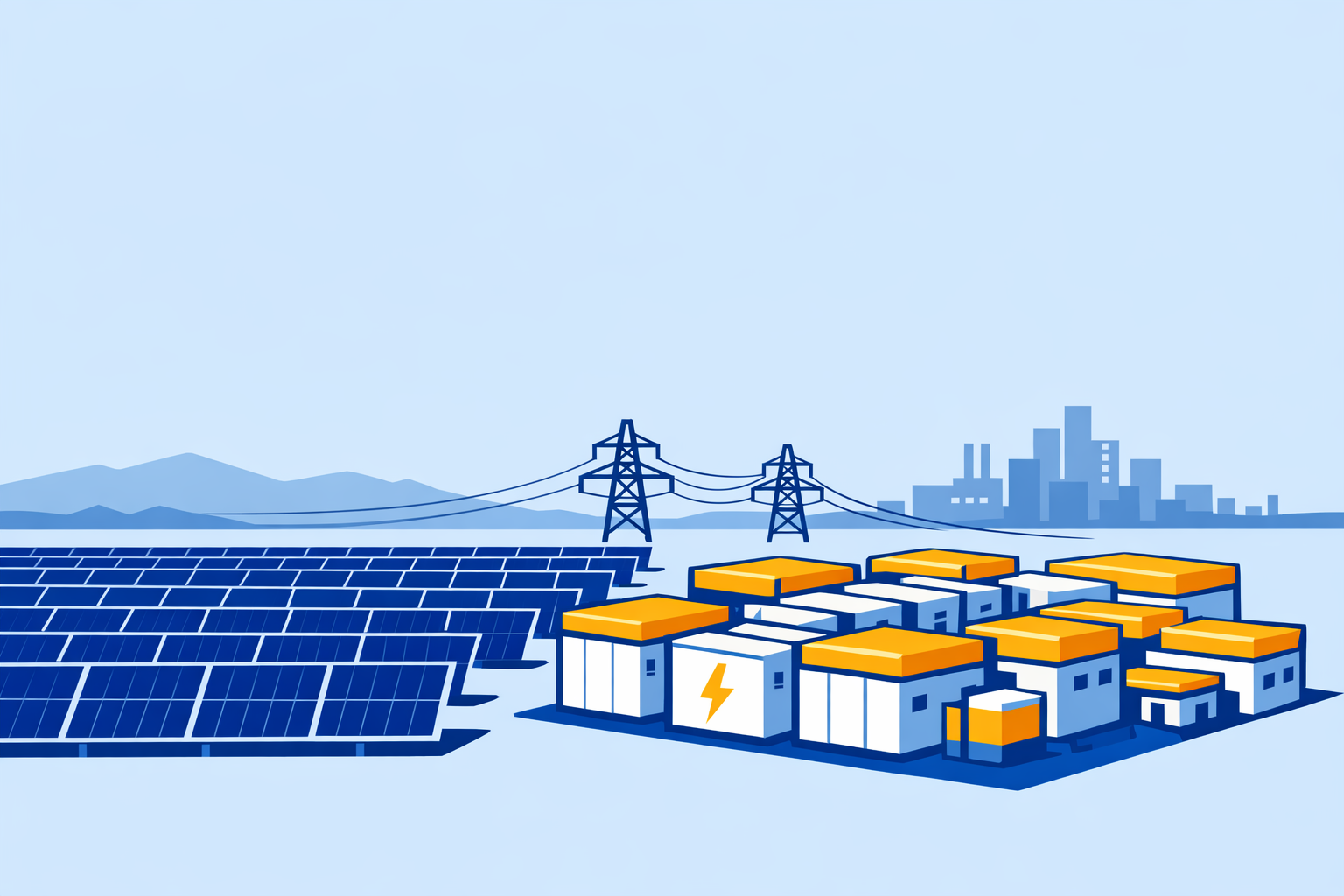
India has begun construction on a hybrid solar-storage project that combines gigawatt-scale solar capacity with megawatt-scale battery energy storage, aiming to establish a global benchmark for large-scale hybrid renewable grids. The development follows a nationwide effort to embed energy storage into solar tenders, supported by financial incentives and recent grid regulatory reforms. The facility is designed to enhance grid stability, support frequency regulation, and provide dispatchable renewable power to a system heavily dependent on coal.
Background
In early 2025, India's Ministry of Power issued an advisory mandating all new solar tenders include co-located energy storage with at least two hours' duration, representing 10 percent of the associated solar capacity. This positions battery energy storage systems (BESS) as key infrastructure for grid integration and reliability . The directive could prompt the deployment of approximately 14 GW of solar-tied storage systems, equating to around 28 GWh by 2030 [1]. Additional policies include viability gap funding schemes targeting up to 43 GWh of BESS capacity, a complete waiver on inter-state transmission charges for co-located projects through 2028, and incentives under production-linked schemes for domestic BESS manufacturing[2].
Project Details
The hybrid project integrates a multi-gigawatt solar farm with a megawatt-scale battery complex, designed to mitigate fluctuating solar output and provide long-duration storage. Although exact capacity details remain undisclosed, the project ranks among the largest integrated solar-storage facilities globally. It reflects a national trend prioritizing grid flexibility and decarbonization. Experts note that such hybrid models can manage daily load shifts, support frequency regulation, and provide contingency responses in systems with high shares of variable renewables[3].
Policy and Financing Landscape
The project benefits from a comprehensive financial and regulatory framework. The Viability Gap Funding program covers up to 40 percent of BESS capital costs, distributed across project milestones to increase financial viability [4]. Inter-state transmission charges are waived for hybrid systems through mid-2028, decreasing operational expenses and supporting more competitive tariffs [4]. Production-linked incentives offer ₹18,100 crore for 50 GWh of advanced chemistry cell manufacturing, with 10 GWh allocated for grid-scale storage, bolstering supply-chain resilience [2].
Grid Implications
India's solar capacity surpassed 180 GW in 2025, increasing the need for storage integration to address intermittency and maintain grid reliability, especially in regions such as Gujarat and Rajasthan with high renewable penetration[5]. The hybrid project will enable round-the-clock renewable power, reduce dependence on coal during non-solar hours, and enhance frequency regulation. Its scale is expected to inform future transmission planning and support resilience modeling for integrating variable renewable energy.
Outlook
Commissioning of this hybrid solar-storage project is anticipated to proceed in phases, following detailed engineering, procurement, and construction schedules and extending into the latter half of the decade. Its performance may encourage the development of similar megawatt-scale hybrid systems, strengthened by robust policy frameworks and competitive tariffs, and provide insights into integrating storage as a vital element in national transmission and distribution strategies.