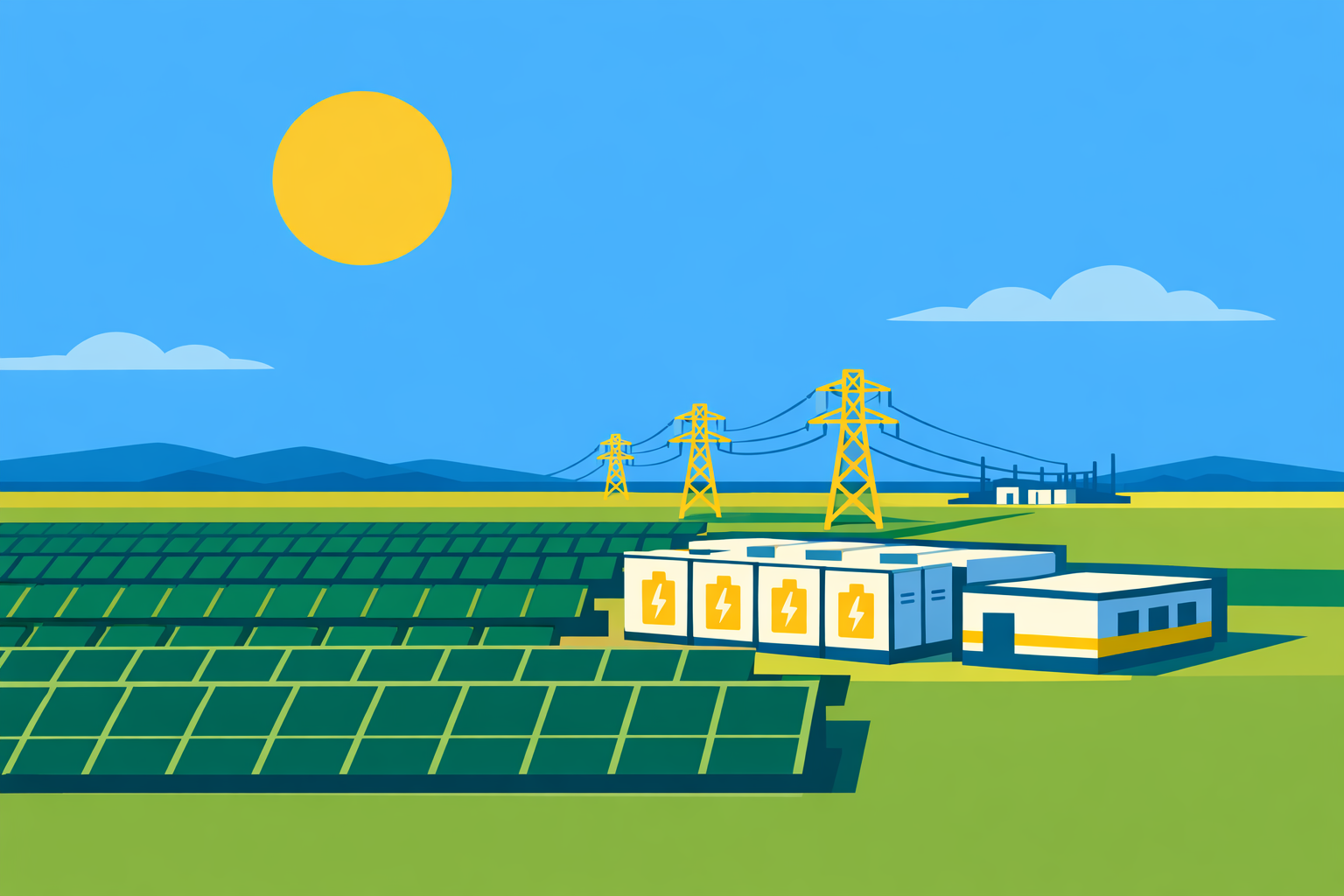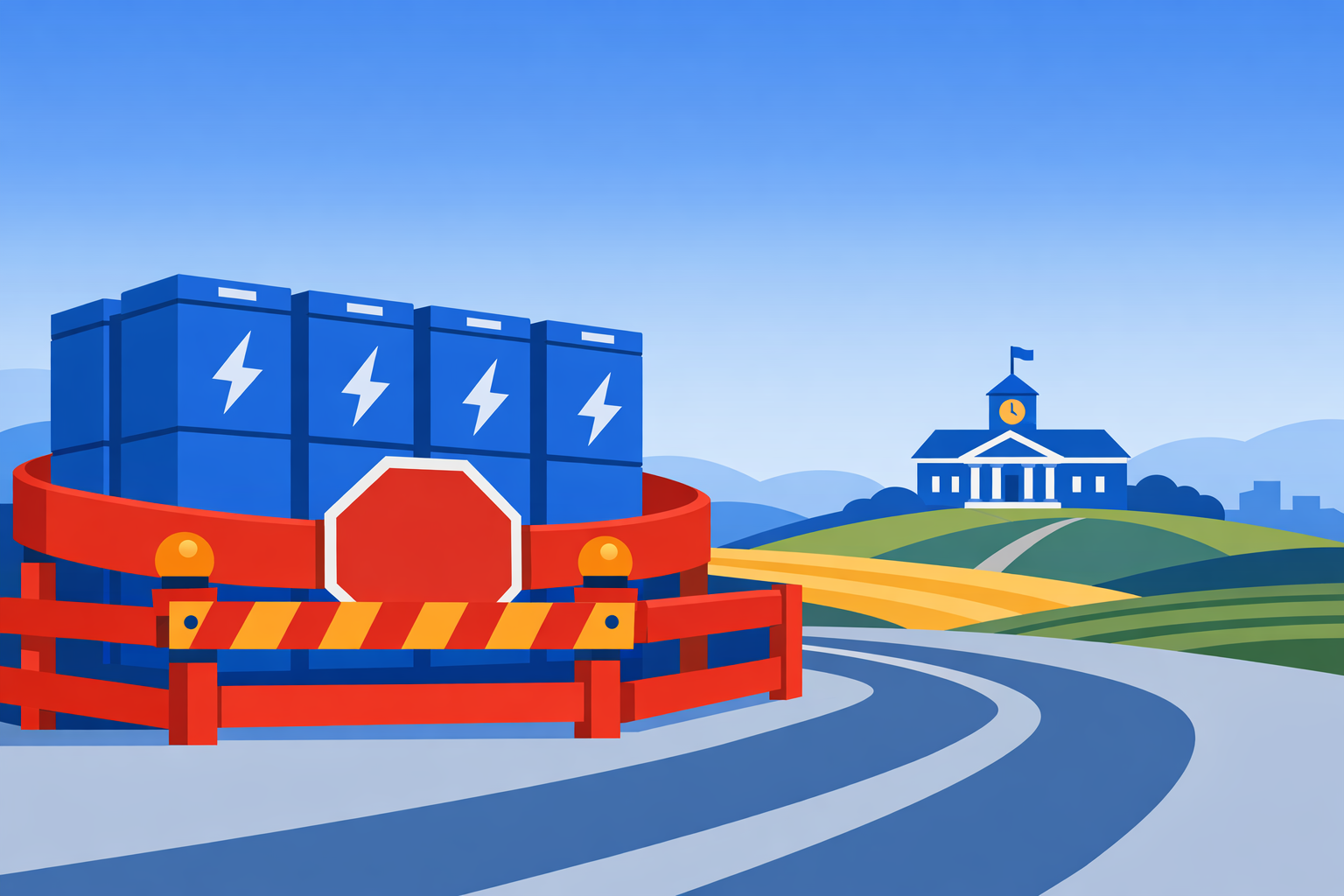
At least 150 local governments across 17 U.S. states have enacted moratoriums, bans, or restrictive ordinances targeting battery energy storage systems, according to a nationwide database published by Carina Energy in March 2026. The data reveals a rapidly expanding pattern of rural resistance to large-scale battery installations, forcing the energy storage industry to confront siting and community engagement as front-line deployment risks. The trend pits the grid's growing need for storage capacity against rural landowners' concerns over safety, property values, and the conversion of agricultural land to industrial use.
Background
New York leads the country with 98 moratoriums - 65% of the national total - concentrated in the Hudson Valley, Capital Region, and Long Island. States including Indiana, Michigan, Iowa, and Maine are seeing a rising wave of new restrictions as utility-scale battery projects expand beyond traditional renewable energy markets.
The friction reflects a broader land-use conflict playing out across rural America. In Oklahoma, residents argue NextEra's Skeleton Creek solar project occupies land zoned for agricultural use, not industrial development. Farmer Lea Smith, whose 480-acre cattle and grain operation sits roughly a mile from the project, told Investigate Midwest that NextEra removed terraces built to control water flow across the land, and the resulting drainage changes damaged her crops. Meanwhile, according to Heatmap News, the number of counties restricting renewable development has nearly doubled since 2022.
The opposition is not purely reactionary. As a relatively new technology, battery energy storage often arrives in communities that lack familiarity with its safety profile, zoning requirements, and community outreach norms. Devyn Powell, an economist at Pacific Northwest National Laboratory, found that these information gaps can make it difficult for communities and local planners to evaluate proposed projects or develop appropriate zoning ordinances.
Details
The economic picture is contested. Renewable energy and battery storage development generate tens of billions of dollars in tax revenue and landowner payments, 60% of which benefits rural counties, according to a report by the Texas Association of Business. In Texas, a single 100 MW energy storage project would generate $3.8 million to $4.7 million in added tax base over its lifetime, according to the same report authored by Dr. Joshua Rhodes of the University of Texas at Austin. However, a 100 MW storage project would yield only $260,000 to $1.2 million in direct landowner payments - far less than the $5.2 million to $27.7 million range for a comparable solar project - because storage facilities require substantially less acreage.
Safety and emergency response remain central concerns. One Ontario farmer leader warned that rural BESS sites could tie up emergency services and fire assets, leaving surrounding communities vulnerable and creating additional financial burdens for training and equipment. Zoning standards can reference NFPA 855 and the International Fire Code to ensure battery installations meet safety best practices, according to the American Planning Association. Most ordinances require BESS to meet general structure setback standards, while those with BESS-specific setbacks use distances of 50 to 150 feet from property lines.
States are responding with new legislative frameworks. In Michigan, Public Act 233 established a siting pathway for large wind, solar, and battery projects, allowing local governments to retain decision-making authority by adopting a Compatible Renewable Energy Ordinance aligned with state-defined criteria for setbacks and noise. Seven states have enacted legal pathways allowing developers to bypass local moratoriums under certain conditions, including New York's Office of Renewable Energy Siting process for projects exceeding 25 MW. The American Clean Power Association released an updated model ordinance in 2026 offering stakeholders a modernized framework for siting, safety, and community engagement that reflects evolving industry consensus on decommissioning, emergency response coordination, and hazard mitigation.
Outlook
Malaquias Encarnacion, Managing Director of Carina Energy, said in March that "the moratorium problem is growing faster than the industry realizes" and that "finding 150 tells you that local opposition to battery storage is becoming systemic." Developers routinely commit capital to interconnection deposits and land options before discovering that the host jurisdiction has restricted battery storage construction. How the industry and policymakers resolve the tension between grid reliability imperatives and rural land-use concerns will shape the pace of U.S. energy storage deployment for years to come.