Battery storage has transitioned from a lithium-dominated benchmark to a fragmented field defined by various technologies, durations, and revenue models. As flow batteries, sodium-based chemistries, and long-duration solutions scale alongside traditional lithium systems, pricing is diverging by application, duration, and value stream instead of converging on a single cost curve. This shift is redefining battery storage economics, reshaping profit allocation in the sector, and prompting investors and policymakers to reassess pricing signals and mechanisms.
A New Phase for Energy Storage Pricing
For a decade, lithium-ion (Li-ion) set the standard for grid-scale energy storage pricing, with a narrow cost range and a focus on 1-4 hour systems. The International Energy Agency (IEA) reports average lithium-ion pack prices dropped from about USD 1,400/kWh in 2010 to below USD 140/kWh in 2023[1]-one of the fastest declines in energy technology.
That trajectory has now split. BloombergNEF's 2024 survey put global average lithium-ion pack prices at USD 115/kWh, with Chinese packs as low as USD 94/kWh and substantially higher costs in the US and Europe[2]. Simultaneously, a range of non-lithium long-duration energy storage (LDES) technologies is emerging, driven by targeted policies and capital.
Multiple structural factors are now driving this pricing fragmentation:
- Sharp cost reductions in conventional 2-4 hour lithium projects.
- Diverging technology profiles (flow batteries, sodium-ion, hybrid chemistries) tailored to different discharge needs.
- Ancillary services market saturation, compressing margins.
- Growing significance of capacity payments, resource adequacy (RA) contracts, and multi-product revenue stacking.
- Market design pilots (cap-and-floor, LDES support) explicitly differentiating between short- and long-duration assets.
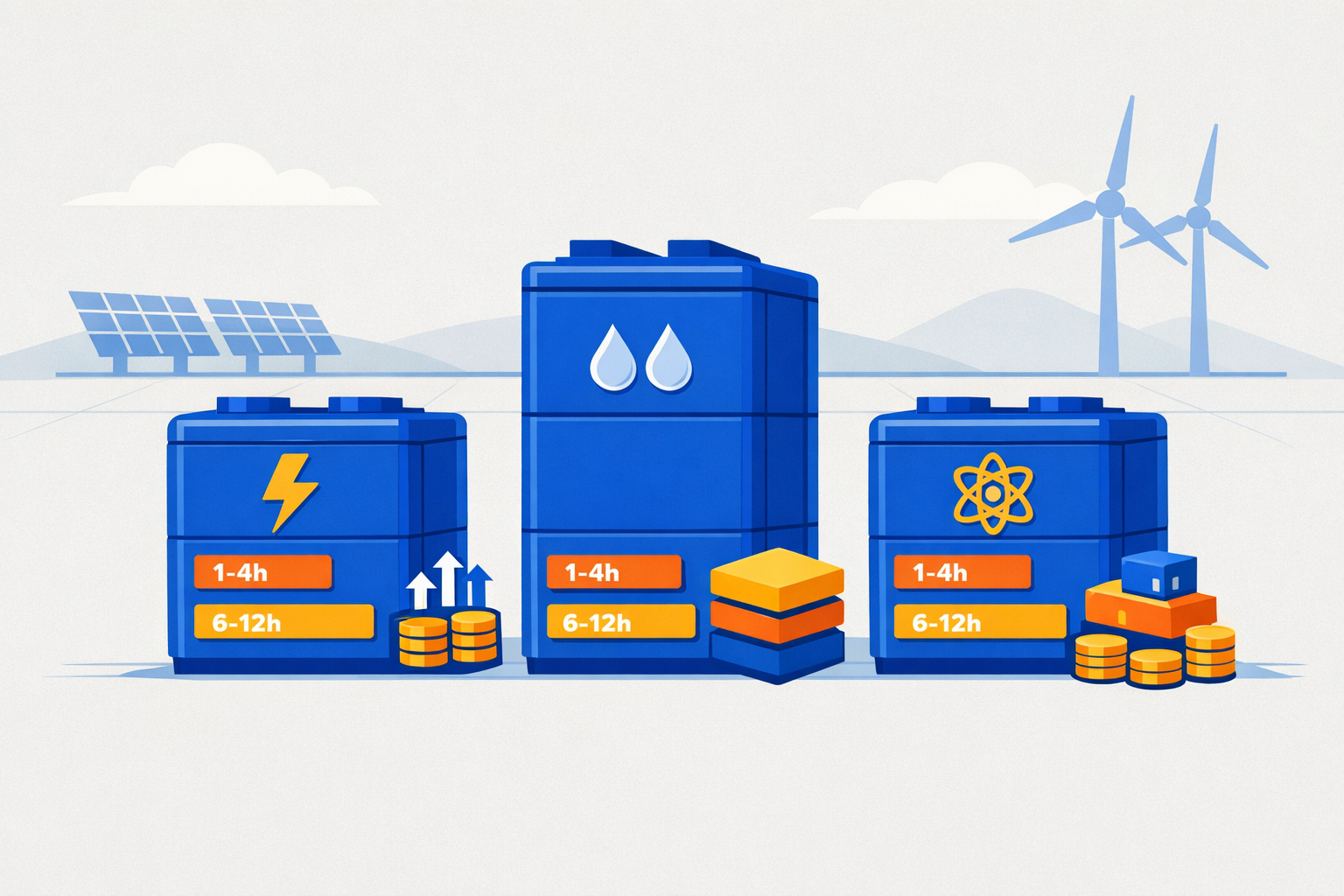
Consequently, identical megawatt ratings do not guarantee similar returns or risks. The same 100 MW can command different price levels depending on configuration-such as a two-hour lithium system for fast response versus an eight-hour flow battery for extended arbitrage and capacity.
Technology Mix Is Reshaping Cost Curves
Lithium Battery Storage: From Benchmark to Baseline
Lithium-ion remains the scale and cost baseline for grid storage. Global lithium-ion manufacturing capacity reached about 3.1 TWh in 2024, more than 2.5 times demand, fueling continued price declines and periods of oversupply[3].
Grid-scale data underscore the new baseline:
- BNEF's global benchmark levelized cost for a four-hour battery project is about USD 78/MWh in 2025, a 27% annual drop[4].
- Commercial and utility-scale Li-ion installations in 2025 are projected at USD 180-280/kWh installed, varying by market and setup[5].
Lithium's established strengths include:
- High round-trip efficiency (85-92%).
- Compact, modular architectures.
- Mature supply chains and bankability, driven by EV-sector scale.
Standard lithium chemistries are optimized for 1-4 hours. Extending beyond that increases capex per kW and accelerates degradation, weakening long-duration economics.
Flow Battery: Duration-Optimized, Capex-Heavy
Redox flow batteries decouple energy and power using electrolyte tanks, distinguishing them structurally from lithium cells. This suits them for long-duration and high-cycling demands.
Comparative cost data highlight a capex premium:
- Recent industry sources estimate flow battery installed costs at USD 300-700/kWh, versus lithium-ion at about USD 150-200/kWh[6].
- Flow batteries target 6-12 hour discharge and 10,000+ cycles with minimal degradation, suitable for daily cycling and extended roles[7].
Flow battery economics improve where:
- Revenue depends on multi-hour capacity or ramping.
- High cycle life over 15-25 years is valued.
- Duration is explicitly rewarded (e.g., capacity contracts scaling with hours).
Developers prioritize lowest lifetime cost (LCOS) for delivered MWh over pure capex/kWh, especially at durations beyond four hours.
Sodium-Based Chemistries and Hybrid Architectures
Sodium-ion and related chemistries offer lower-cost, lower-energy-density alternatives, suited for stationary storage.
IEA notes sodium-ion batteries can be produced up to 30% cheaper than lithium iron phosphate (LFP) batteries, leveraging abundant and inexpensive materials[1]. Commissioned projects include:
- In 2024, a 100 MWh sodium-ion station started operation in Hubei, China, building on a prior 10 MWh pilot with the same supplier[8].
- China Southern Power Grid also launched a hybrid lithium-sodium station as a grid-forming project in Yunnan[9].
Sodium-ion's lower energy density is less constraining for stationary use. Hybrid architectures are emerging, pairing lithium for power and sodium or flow for energy-further complicating the energy storage pricing landscape.
Comparative Technology Snapshot
| Attribute | Lithium-ion (grid-scale) | Flow battery | Sodium-ion (early grid-scale) |
|---|---|---|---|
| Typical discharge duration | 1-4 hours | 4-12 hours | 2-4 hours (targeting longer over time) |
| Indicative installed cost range* | ~USD 150-250/kWh | ~USD 300-700/kWh | Targeting < Li-ion LFP (-10-30%) |
| Typical cycle life (full cycles) | 4,000-8,000 | 10,000-20,000 | Under validation |
| Best-fit applications | Fast response, 2-4h peaks, co-located solar/wind | Long-duration shifting, firming, industrial load management | Low-cost bulk storage, hybrid stacks |
*Ranges from public industry and analyst sources; see citations.
With parallel scaling, market participants now select among differentiated cost-performance profiles, not a single best-in-class technology.
Value Streams Are Fragmenting the Revenue Stack
Initial lithium battery projects focused on high-value services like frequency response and ancillary markets. These revenues plateau as capacity saturates.
Ancillary Services: From Scarcity Rents to Spread Compression
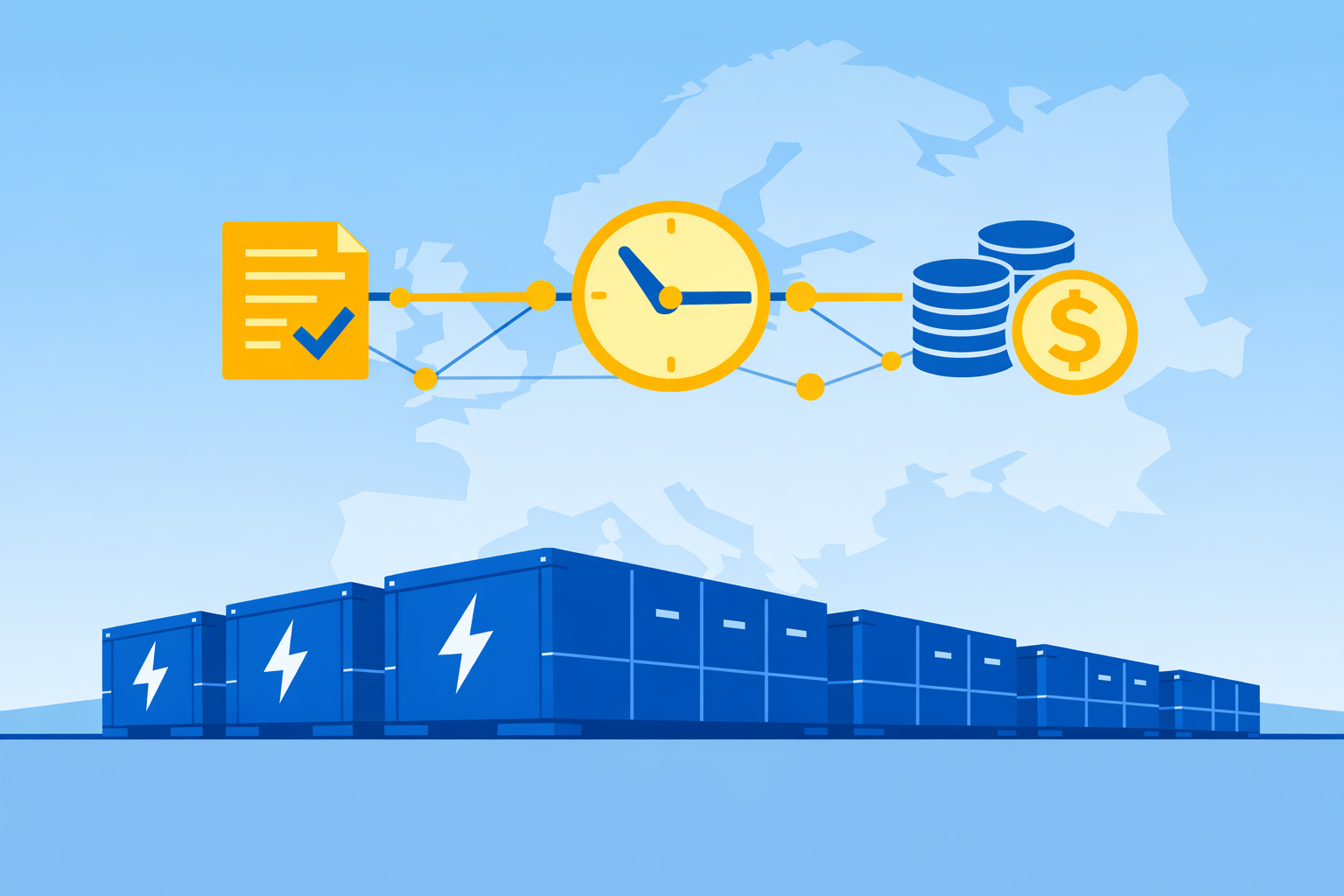
In continental Europe, frequency containment reserve (FCR) and related services still support short-duration storage, but opportunities are decreasing. One major market shows ancillary services are up to 67% of revenue for a typical two-hour battery today, but prequalified capacity will soon surpass FCR demand, shifting reliance to energy price spreads[10].
In Great Britain, the dynamic containment (DC) market is maturing. Storage funds report falling merchant returns, with DC prices stabilizing and a greater share of earnings coming from wholesale and balancing services[11].
As more lithium systems enter, competition lowers prices and compresses margins. Ancillary services remain integral but are no longer a universal high-margin anchor.
Energy Arbitrage: Volatility vs. Competition
Energy arbitrage remains a key revenue source. Volatility has risen with renewables, but so has competition.
In CAISO, this shift is clear:
- Net market revenues for California batteries declined from about USD 103/kW-year in 2022 to USD 78/kW-year in 2023 amid rapid capacity growth[12].
- Modo Energy benchmarking indicates average merchant revenues in CAISO dropped about 35% in 2024, to roughly USD 51,000 per MW-year[13].
Rising negative prices in solar-heavy systems can favor well-sited storage, and European analysis shows more negative-price hours with increased solar and limited flexibility[10]. Longer-duration assets gain in such environments, especially when paired with capacity or ancillary revenue.
Capacity Payments and Resource Adequacy: Repricing Duration
As merchant margins erode, long-term contracts and capacity frameworks are increasingly important, especially for 4+ hour and long-duration assets.
In California, resource adequacy (RA) contracts anchor finance:
- Modo Energy benchmarked average RA capacity prices at USD 8.77/kW-month for H1 2025, up over 12% year-on-year, even as merchant battery revenue fell to about USD 2.33/kW-month[14].
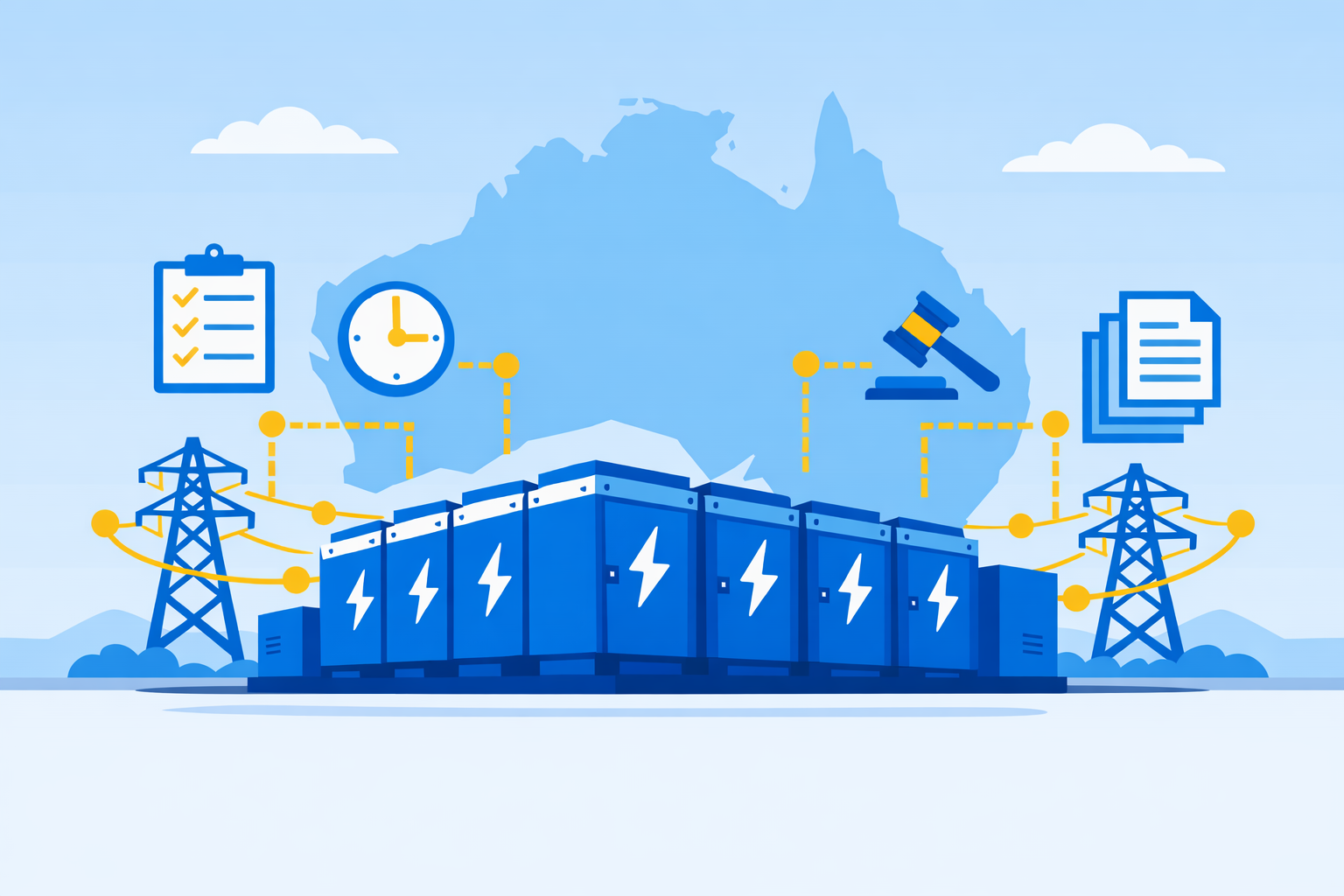
In Great Britain, a cap-and-floor model will support LDES, offering minimum and maximum regulated revenue levels, set by Ofgem from mid-2026[15].
Additionally, capacity mechanisms in the EU and beyond now differentiate by storage duration and stress-event availability instead of purely megawatt terms[16].
Technology selection thus shapes the balance of contracted and merchant revenue, as well as exposure to price risk.
How Fragmented Pricing Alters Battery Storage Economics
Different Technologies, Different Risk-Return Profiles
Fragmented pricing means technology selection now governs capex, operations, revenue mix, and risk profile.
- 2-4 hour lithium storage maximizes near-term frequency response and arbitrage revenue but is susceptible to price compression and saturation.
- 6-12 hour flow battery or LDES assets depend more on capacity and system integrity contracts, with longer tenors but more policy-driven revenue.
- Emerging sodium-ion and hybrids aim to undercut lithium on cost for stationary storage, but face greater technical and bankability risk.
For financing, this leads to different debt structures, merchant risk tolerance, and diligence requirements.
Revenue Stacking Complexity
Revenue stacking-blending capacity, arbitrage, and ancillary products-has grown more complex with fragmented pricing.
- In CAISO, dual market models enable stacking, but performance and scheduling constraints increase dispatch complexity[12].
- In Europe, changing market rules and grid codes affect which technologies can stack products and at what compliance cost[17].
- Cap-and-floor regimes may cap stacking upside to prevent windfall profits, while ensuring investment viability[18].
Optimizing in this environment requires advanced forecasting, dispatch, and risk management.
Market Design: Aligning Price Signals With Performance
Duration-Aware Capacity Frameworks
Jurisdictions are introducing support for long-duration storage. The UK's LDES cap-and-floor scheme anchors this trend, with similar ideas appearing globally.
In the US, the Department of Energy targets a 90% reduction in levelized cost for 10+ hour storage-down to USD 0.05/kWh by 2030[19]-and funds pilots to diversify beyond lithium[20].
EU debates on adequacy and system resilience reference storage for multi-day low-renewable periods, pointing to duration-aware capacity design[21].
Technology-Neutral, Performance-Based Design
Many regulators prioritize technology neutrality, focusing on verifiable attributes:
- Discharge duration at rated capacity
- Response speed and controllability
- Availability during stress events
- Contribution to grid support services
Properly designed markets let lithium, flow, sodium-ion, and others compete on measurable performance, while recognizing their unique cost and duration traits. Misaligned rules risk distorting investment and limiting technology diversity.
Actionable Conclusions and Next Steps
For Project Developers and Owners
- Align technology with revenue stack. Match lithium, flow, or sodium-based storage with dominant market products (e.g., RA, arbitrage, ancillary services).
- Stress-test merchant exposure. Evaluate ancillary and arbitrage risk, especially in oversupplied markets such as CAISO and parts of Europe.
- Prioritize robust guarantees. Degradation and performance warranties are linked to bankability in complex, multi-product markets.
For Utilities, Offtakers, and Grid Operators
- Make tenders duration- and performance-specific. Design capacity and flexibility tenders by effective duration and stress-event capability, avoiding prescriptive chemistries.
- Leverage co-location. Pairing storage with renewables can reduce grid constraints and charges, especially where queues penalize standalones[22].
- Integrate storage into system planning. Explicitly valuing multi-hour and multi-day assets in long-term planning supports differentiated remuneration.
For Policymakers and Regulators
- Clarify interaction of LDES with capacity markets. Transparent rules for cap-and-floor and capacity market participation reduce regulatory risk and enable revenue stacking.
- Harmonize standards. Consistent grid codes, product definitions, and double-charging rules support cross-border investment and reduce costs.
- Enforce technology-neutral, attribute-based markets. Remuneration for measurable services, not technology, accelerates innovation and market adoption.
The single lithium benchmark era has ended. The sector now faces diversified pricing, with technology mix, value stack, and market design determining risk and value allocation. Stakeholders must treat pricing as a dynamic factor, mapping evolving profit pools across technologies.
Frequently Asked Questions
How is energy storage pricing typically structured today?
Pricing is assessed by:
- Capex-USD/kW for power, USD/kWh for energy installed.
- Operating costs-USD/kW-year.
- Levelized cost of storage (LCOS)-USD/MWh over asset life.
- Market revenues-capacity payments, ancillary services, and arbitrage margins.
Fragmentation means each technology interacts differently with these dimensions.
Where are battery storage revenues under the most pressure?
Saturation of short-duration lithium systems in ancillary and arbitrage markets has lowered returns. In CAISO, per-kW net revenues have dropped as capacity increased, with RA making up a larger share[12]. Similar trends are visible in parts of Europe and Great Britain[10].
When do flow batteries become competitive against lithium-ion?
Flow batteries are competitive in long-duration, high-cycling applications. Higher installed costs are offset by 6-12 hour storage, 10,000-20,000 cycles, and low degradation, especially for daily shifting, industrial use, and system services needing sustained output[23].
What role will sodium-ion play in the future energy storage market?
Sodium-ion offers a low-cost, abundant alternative for stationary storage. Early projects in China and pilots elsewhere show promise for 2-4 hour durations and potential cost benefits over LFP lithium[1]. Future impact depends on validating long-term performance and manufacturing scalability.
How should stakeholders approach battery storage economics in a fragmented market?
A portfolio and system approach is now standard. This means:
- Matching technologies and durations to market needs.
- Analyzing revenue stacking and regulatory environments.
- Stress-testing price exposure and contract risks.
- Diversifying across chemistries and regions to manage risk.
Understanding pricing fragmentation is now central to strategy for all energy storage stakeholders.