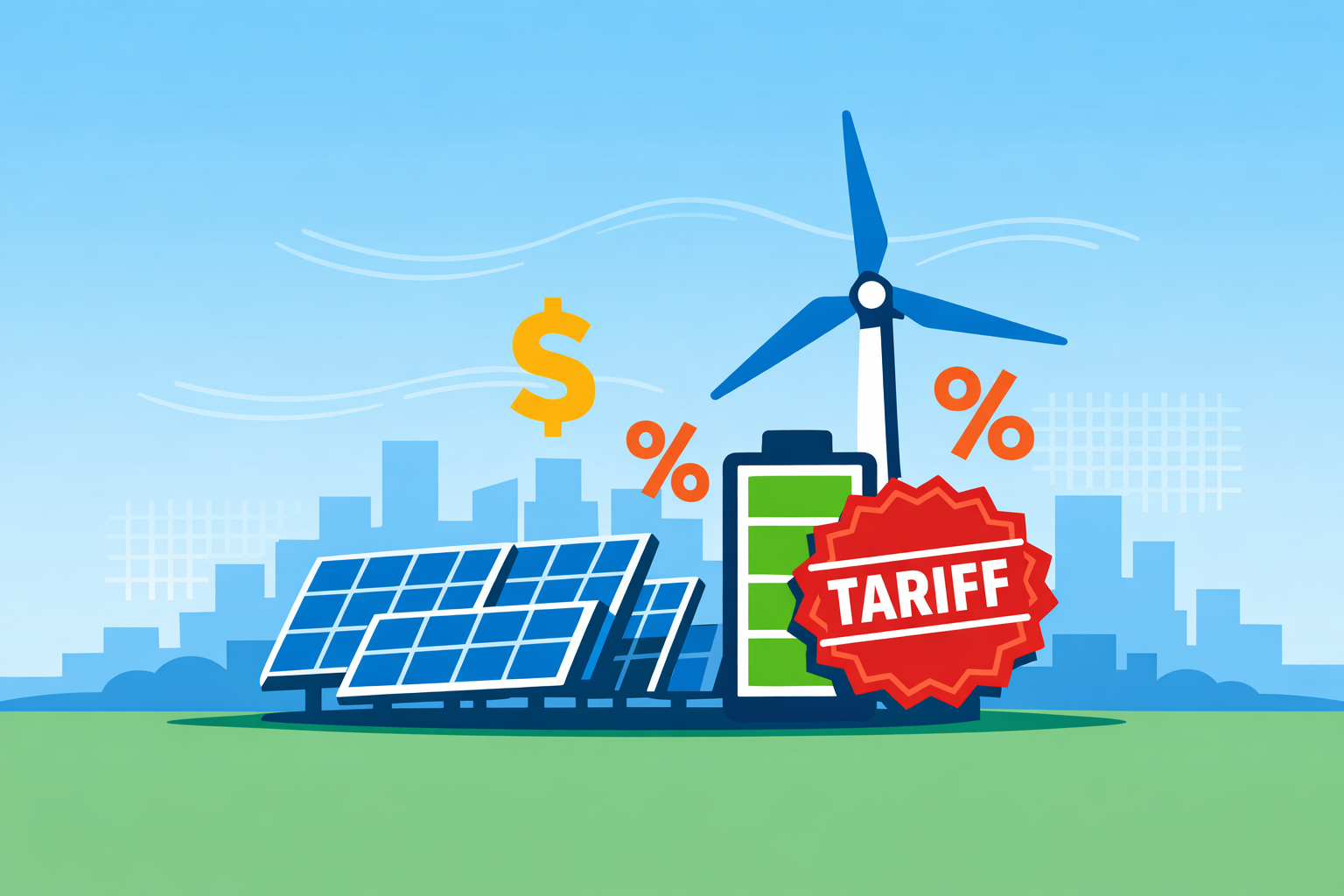
New York clean-energy developers have suspended projects worth billions as rising tariffs on imported solar and battery components increase costs and disrupt financing, affecting the state's clean-energy deployment. Tariffs raised component costs by up to 30%, leading lenders to reassess risks in major segments and causing delays in both solar farms and battery energy storage systems.
Background
New York's clean-energy plan depends on large-scale solar, wind, hydro, and offshore wind initiatives, collectively expected to provide nearly 9.7 GW of capacity. This pipeline is supported by federal tax credits and NYSERDA's 2025 solicitation process. New York's existing pipeline includes 102 large-scale solar, wind, hydro and offshore wind projects, together expected to deliver over 9.7 GW of capacity Federal trade restrictions on imported components are threatening this pipeline by increasing costs and delaying equipment deliveries, undermining project economics and financing.
Details
Tariffs have raised cost projections across the renewable sector. Industry sources report markups up to 30% for imported solar modules, laminates, and batteries, compressing project margins and testing financial models. The New York Solar Energy Industries Association notes that a $50,000 solar laminate shipment now incurs over $100,000 in tariff costs. At SunTegra Solar, "We have a container sitting in Vietnam that we can't ship because the tariff rate has become exorbitant," costing the company twice the component's original value Companies such as Engie have paused U.S. development amid regulatory and trade uncertainty, despite more than 8.5 GW under construction across over 100 solar and battery projects. Engie has over 8.5 GW under construction across more than 100 projects but opted to slow down new developments due to tariff uncertainty Further, federal tax credit changes are putting additional pressure on projects, with new restrictions on imported materials for projects that start after January 1, 2026. Projects that begin construction after January 1, 2026, can only keep the tax credits if they follow restrictions on the use of Chinese materials
Financing partners are increasingly cautious. Tariff volatility complicates cost forecasting and debt structuring, risking the viability of projects previously approved under state solicitations. Interconnection queues and permitting delays, already slowing project schedules, are exacerbated as project budgets become harder to predict amidst tariff increases. Load will increase by 90% by 2042, but transmission, distribution and interconnection bottlenecks are exacerbated by supply chain challenges and tariffs
Outlook
Developers and officials are considering mitigation strategies. New York may revise incentive frameworks to buffer against tariff increases, and regulators are seeking ways to accelerate interconnection timelines. Industry participants are monitoring federal policy developments, particularly regarding tax credits and tariffs, to restore investor confidence and maintain momentum toward decarbonization targets.