The Yakama Nation has intensified its opposition to a federally licensed, 1,200-megawatt pumped storage project in Klickitat County, Washington, after documents revealed that a hyperscale data center - not regional grid demand - may be the project's primary power customer. The dispute has amplified environmental-justice concerns over consent processes and is drawing scrutiny amid broader clean energy siting debates as digital infrastructure increasingly drives large-scale storage demand.
Background
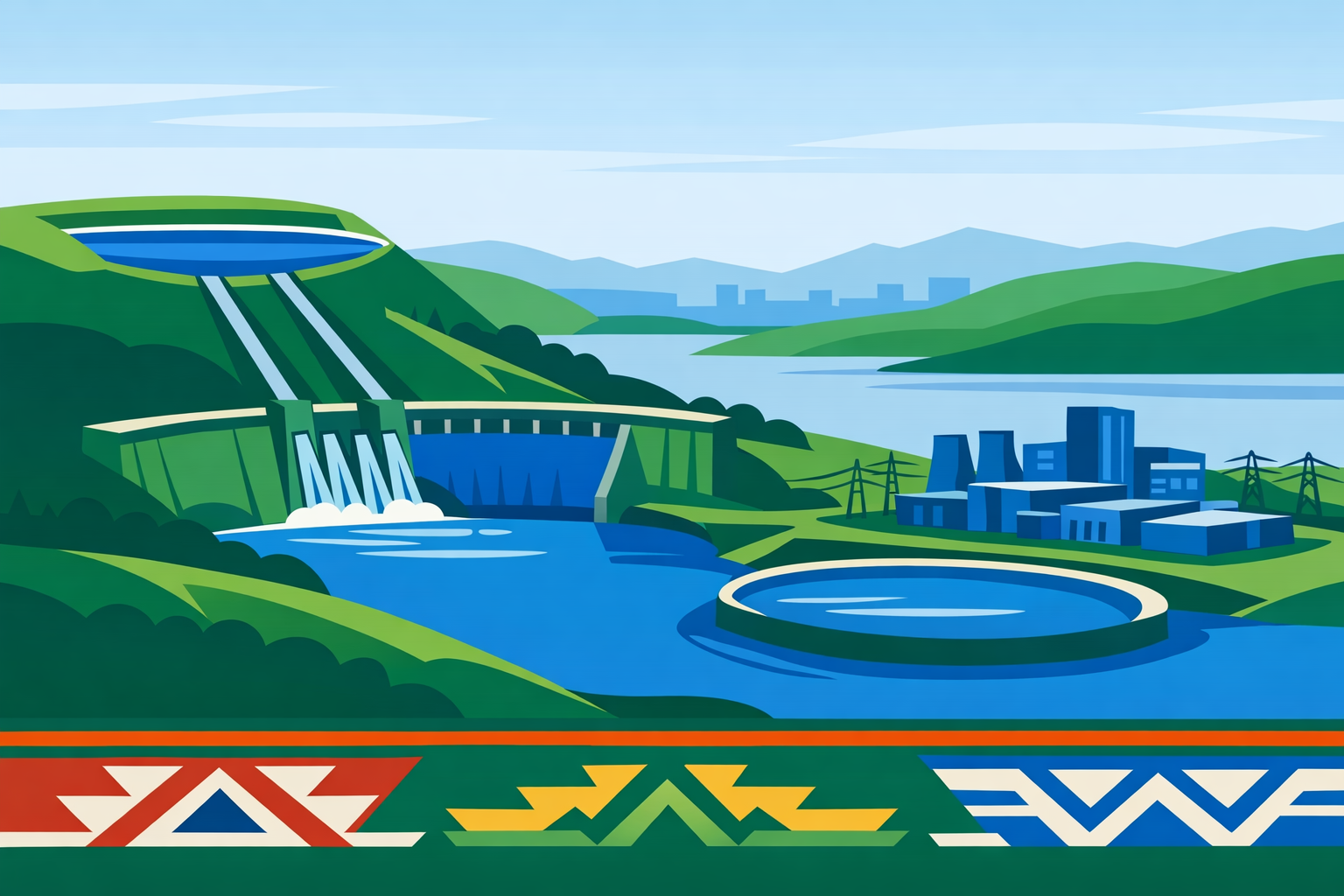
The Federal Energy Regulatory Commission (FERC) issued a 40-year license for the Goldendale Energy Storage Project on January 22, 2026, developed by Rye Development and backed by Copenhagen Infrastructure Partners. The project would occupy 681 acres along the Columbia River near the John Day Dam in Klickitat County, Washington - a site the Yakama Nation calls Pushpum, meaning "Mother of all roots," a traditional food-gathering ground and archaeological landscape protected under the 1855 Yakama Treaty.
The approval drew immediate rebukes. The Yakama Nation and 17 tribal governments, alongside the National Congress of American Indians and the Affiliated Tribes of Northwest Indians, condemned the FERC decision, arguing the licensing process ignored cultural, ecological, and sovereignty concerns tied to the site. A state environmental review had previously found the project would have "significant and unavoidable adverse impacts" on Yakama historic sites and culturally significant plants.
The project is designed as a closed-loop pumped-hydro system, cycling water between upper and lower reservoirs through underground turbines to store and release electricity when wind and solar generation fluctuate.
Details
Opposition escalated publicly on May 8, 2026, when hundreds attended a rally at Pushpum co-hosted by the Yakama Nation and environmental nonprofit Columbia Riverkeeper. Yakama leaders and Columbia Riverkeeper called on Washington Governor Bob Ferguson to intervene after state and federal agencies issued key permits - the culmination of a permitting process that spanned a decade.
Documents surfaced at the rally - and previously reported by Street Roots and Northwest Public Broadcasting - disclosed that the project's power may primarily serve a hyperscale data center on the adjacent former aluminum smelter site. Washington's Department of Ecology confirmed that Denver-based STACK Infrastructure is in talks to build a "data center campus" on land adjacent to the pumped storage project. The landowner's LinkedIn profile described plans to develop "the world's greenest 1GW+ hyperscale data center" in conjunction with STACK Infrastructure and Blue Owl Digital Infrastructure. Neither Rye Development nor Copenhagen Infrastructure Partners responded to requests for comment on the identity of power buyers.
If built to maximum capacity, the proposed data center could consume as much as 80% of the 1,200 megawatts the Goldendale project is designed to generate, according to the Oregon Capital Chronicle. Washington's Department of Ecology noted the project would require a new aerial transmission line connecting to the Bonneville Power Administration's John Day substation.
The project's framing as a community grid resource has also drawn scrutiny. The Klickitat Public Utility District's 2024 projections estimated local industrial and commercial energy demand would grow only 3% over the next decade, raising questions about the rationale cited by developers.
Elaine Harvey, a watershed manager at the Columbia River Inter-Tribal Fish Commission and a member of the Yakama's Kamíłpa Band, framed the dispute in explicit terms: "I know we're in a time when we need renewable energy, but why on our root grounds? Why on critical migratory corridors for hawks, for sage grouse and the deers?" she asked at the May 8 event.
Columbia Riverkeeper senior staff attorney Simone Anter confirmed that federal litigation over existing permits will continue. Rye Development has previously stated that its permitting process included tribal consultation and a public comment period, adding that the company remains committed to a Historic Properties Management Plan to protect cultural and historic resources.
Outlook
The case is likely to set a precedent for how regulators handle tribal consent in clean energy siting decisions, particularly as data centers emerge as anchor offtakers for large-scale storage projects. Columbia Riverkeeper has committed to ongoing federal court challenges, and the Yakama Nation's direct appeal to Governor Ferguson keeps state-level intervention in play. The absence of confirmed power purchase agreements and the opaque link to digital infrastructure demand are expected to intensify calls for greater transparency in the siting and permitting of grid-scale storage assets tied to hyperscale computing campuses.