The Yakama Nation and a coalition of tribal governments are mounting legal challenges against the federally licensed Goldendale Energy Storage Project in Washington state, after new disclosures revealed the $3.3 billion pumped-storage facility may be intended to power a hyperscale data center rather than serve broad regional grid needs.
Background
For nearly a decade, the Yakama Nation and its allies have fought the plan - approved by the Trump administration - to transform a sacred site along the Columbia River into a large-scale renewable energy project. On January 22, 2026, the Federal Energy Regulatory Commission (FERC) issued a 40-year license to build the Goldendale Energy Pumped Storage Project, a 1,200-megawatt energy storage facility southeast of Goldendale in Klickitat County, Washington. The project would be the first major pumped-storage hydropower facility in Washington and the first new major U.S. pumped-storage project in roughly 30 years.
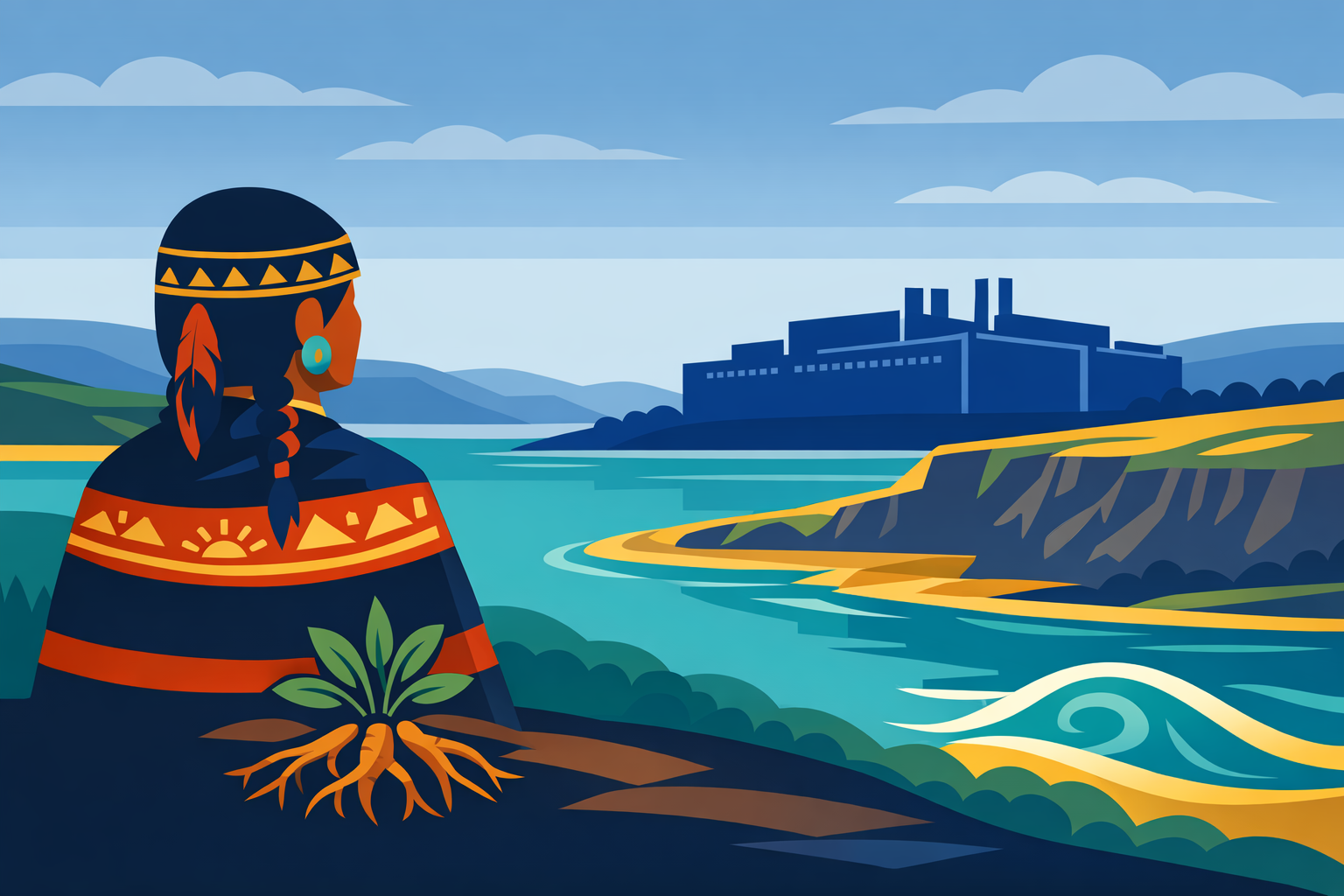
The site, known to the Yakama as Pushpum - or "Mother of All Roots" - sits atop a bluff overlooking the Columbia River. It is used for ceremonies, treaty-reserved fishing, and root gathering, and has served as a village location for the Yakama Nation since time immemorial, according to Elaine Harvey, a conservation scientist and member of the Yakama's Kamíłpa Band. The energy storage site lies on the Yakama Nation's traditional land, part of approximately 12 million acres ceded in an 1855 treaty that guaranteed the nation rights to hunt, fish, and gather at traditional places.[1]
Key Details
New information indicates the project is intended to feed a hyperscale data center planned by the landowner. "We're not going green for Washington and Oregon state mandates. We're going green for data centers," Harvey said. The federal license ruling comes as the Pacific Northwest faces a looming energy crisis, with surging regional electricity consumption - especially from power-hungry data centers - upending demand projections and threatening Washington and Oregon's climate goals.
The FERC approval has drawn rebukes from the Yakama Nation and 17 tribal governments, along with the National Congress of American Indians and Affiliated Tribes of Northwest Indians. The groups argue the licensing process ignored deep cultural, ecological, and sovereignty concerns tied to Pushpum. Yakama Tribal Council Chairman Gerald Lewis called the permit approval "rewarding bad actors who have spent years finding loopholes to target a new wave of industrial development on top of Indigenous sites."
A state environmental and tribal impacts review conducted in late 2022 found the project would cause "significant and unavoidable adverse impacts to Traditional Cultural Properties, archaeological sites, culturally important plants and other tribal resources."[2]
A central fault line in the dispute concerns the consultation process itself. FERC took approximately seven years to approve the Goldendale project, according to Commissioner David Rosner, who suggested the timeline could be shortened if tribal consultation moved faster. The Yakama Nation, Confederated Tribes of the Umatilla Indian Reservation, and environmental groups have insisted consultation timelines should not be compressed. FERC's ex parte rules proved a particular point of contention; the commission cited them as the reason it did not meet privately with the Yakama Nation for government-to-government consultation.
The project still requires additional permits. The Army Corps of Engineers must complete its own consultation process with the Yakama Nation and three other affected tribes to satisfy Clean Water Act requirements. Developer Rye Development, backed by Copenhagen Infrastructure Partners, said it remains committed to engaging tribes. Erik Steimle, who leads the project for Rye, stated: "We understand the value and importance of consultation with tribal nations. Before we even submitted the application to the commission, we communicated with tribal nations to try and understand and address their concerns. The FERC licensing process is one of the most rigorous and lengthy permitting processes for any type of energy project."
Rye promotes the $3.3 billion project as a cornerstone of Washington's clean-energy future. Construction on the nearly 700-acre project is expected to take four to five years, with Steimle anticipating a start in 2027.
Outlook
Columbia Riverkeeper has stated it plans to appeal the FERC approval to the 9th Circuit Court of Appeals in San Francisco as soon as the appeal becomes eligible on May 26. The Yakama Nation has said no mitigation could rectify the cultural and environmental destruction the development would cause. The case is expected to set a significant precedent for how federal regulators balance accelerating clean energy deployment against Indigenous consultation obligations - a tension likely to intensify as data center-driven electricity demand pressures project developers across the Pacific Northwest.