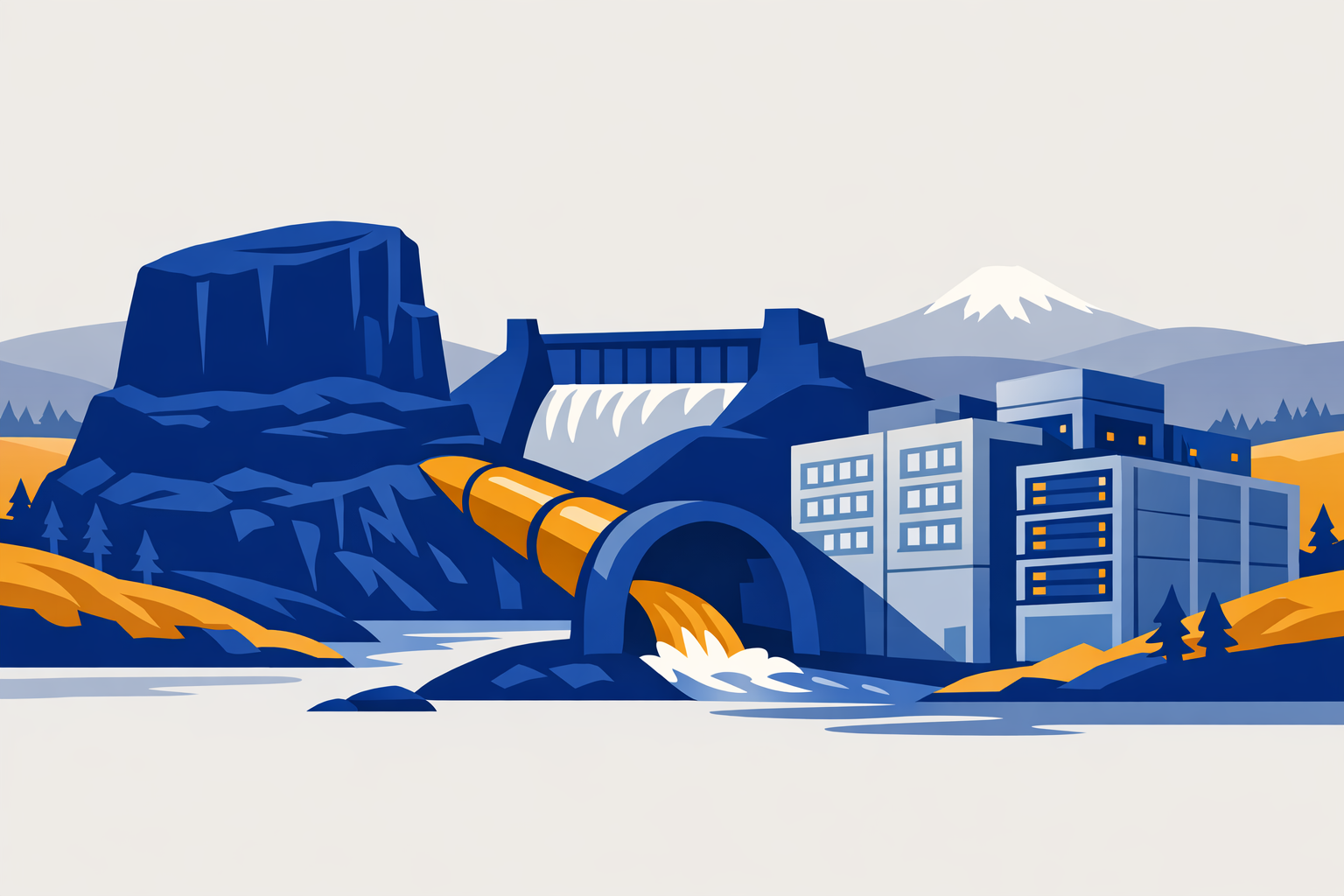
The Federal Energy Regulatory Commission's January 2025 approval of a 40-year operating license for the Goldendale Energy Storage Project - a 1,200-megawatt pumped storage facility in Klickitat County, Washington - has intensified a nearly decade-long conflict between energy developers and the Yakama Nation over a site the tribe considers sacred. The project, developed by Florida-based Rye Development and backed by Denmark's Copenhagen Infrastructure Partners, is now linked to a proposed hyperscale data center campus, adding a new dimension to an already contentious dispute over Indigenous land rights, treaty obligations, and the trajectory of the clean energy transition.
Background
The Goldendale project site, southeast of Goldendale, Washington, near the John Day Dam along the Columbia River, is known to the Yakama Nation as Pushpum - described in tribal accounts as the "Mother of All Roots." For the Yakama Nation, Pushpum is a living cultural landscape embedded in lifeways protected by the 1855 Yakama Treaty, long used for first foods harvesting, hunting, seasonal camps, and spiritual practices. The project area falls within ceded lands of the Yakama Nation and has historically been used by the Confederated Tribes of the Umatilla Indian Reservation, the Confederated Tribes of Warm Springs, and the Nez Perce Tribe for hunting, gathering, fishing, camping, and ceremonies.
Rye Development proposed the current incarnation of the facility in 2017. FERC issued its 40-year license on January 22, making the project one of the largest new pumped-storage energy ventures in the United States in more than a decade. The approval came despite sustained opposition from tribal governments and environmental organizations.
Details
The approval drew rebukes from the Yakama Nation and 17 tribal governments, along with the National Congress of American Indians and the Affiliated Tribes of Northwest Indians, all of which argue the licensing process ignored significant cultural, ecological, and sovereignty concerns tied to the site.
Two environmental impact statements determined the proposed project would cause detrimental resource impacts. In 2022, the Washington State Department of Ecology found in a tribal resource analysis that the project "is likely to result in significant adverse impacts to natural resources and cultural resources" - including "significant and unavoidable" damage to plant and wildlife populations used by tribal cultures and to tribal archaeological and historic sites.
Reservoir construction would remove five archaeological sites and encroach on off-reservation tribal gathering places, including the rock formation at Pushpum, according to a FERC report. The Yakama Nation has requested at least $40 million in compensation to acquire and preserve sacred sites and collect and cultivate native plants.
The proposed project involves digging a tunnel through Pushpum to connect two reservoirs. FERC cited its own rules as the reason it did not hold private government-to-government consultation with the Yakama Nation - a process required by federal law. In 2021, the agency attempted to send the developer as the federal government's representative to the consultation table, but the Yakama Nation refused to accept the corporation in that role.
The project's link to data center infrastructure has sharpened tribal concerns. Government documents and online statements from the landowner indicate the generated power may instead fuel a massive proposed data center on the site. Documents from Washington's Ecology Department show STACK Infrastructure is in talks to build a "data center campus" on the site. "We're not going green for Washington and Oregon state mandates. We're going green for data centers," said Elaine Harvey, a conservation scientist and member of the Yakama's Ḱamíłpa Band.
A spokesperson for Copenhagen Infrastructure Partners did not directly address questions about tribal harms or site access, stating only that the company has consulted with tribes during the federal approval process and over the past nine years. Rye Development did not respond to requests for comment on project costs. Rye promotes the $3.3 billion project as a cornerstone of Washington's clean-energy future.
Outlook
Columbia Riverkeeper, Washington Conservation Action, and the Yakama Nation continue a legal appeal of the water quality permit issued by Washington state. Columbia Riverkeeper senior staff attorney Simone Anter said at a May 8 public event that the organization will continue lawsuits over permits. Yakama Nation Tribal Council Chairman Gerald Lewis stated that "regulators in D.C. do not hold private developers accountable to the laws that are meant to protect the environment, our foods or important historical sites, and instead issue incomplete licenses with only an afterthought of losses and destruction to Yakama resources." The case is drawing industry-wide attention as a test of how consent, treaty rights, and Indigenous cultural impact assessments are weighed against federal energy permitting timelines amid the accelerating clean energy transition.