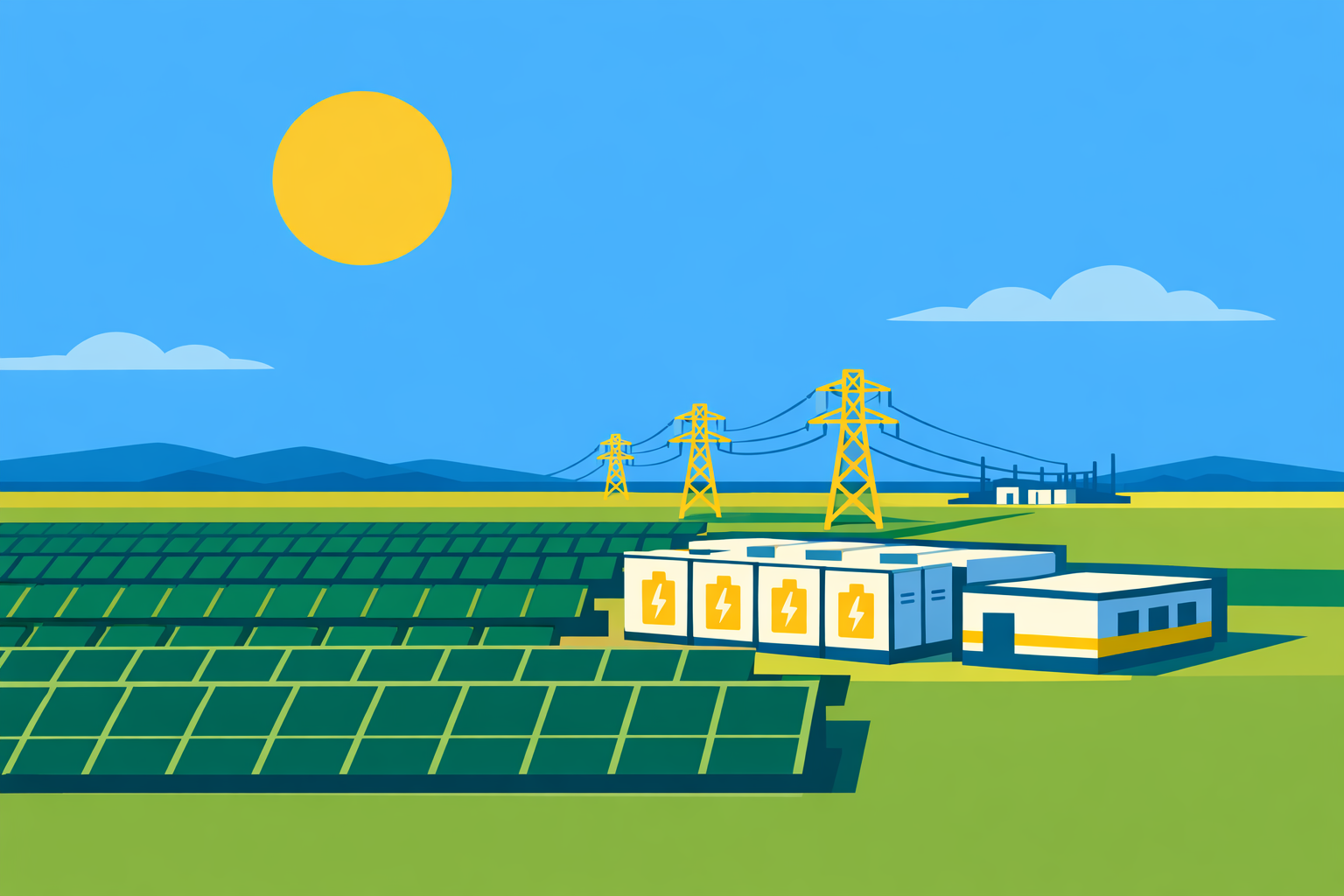
ESS Tech, Inc. (NYSE: GWH) and Massachusetts-based Alsym Energy announced on April 30, 2026, a letter of intent for a strategic partnership adding 8.5 GWh of sodium-ion cells and modules to ESS's portfolio. The deal marks the Oregon-based iron flow specialist's formal entry into the short- and medium-duration battery energy storage system (BESS) market. The agreement positions ESS as a full-spectrum, non-lithium storage provider as supply chain disruptions and regulatory pressure accelerate industry interest in alternatives to lithium-ion technology.
Background
The partnership represents ESS's first move into the short- and medium-duration BESS segment, a market historically dominated by lithium-ion. Until now, ESS's commercial footprint rested on its Energy Base® iron flow platform, engineered for the 8-24 hour long-duration segment, where deep daily cycling, 25-year asset life, and zero capacity degradation deliver the lowest levelized cost of storage.
The timing reflects mounting cost and regulatory pressure on lithium supply chains. Lithium carbonate prices have climbed to a new cyclical high, with LFP cathode materials rising in tandem. Prices of key electrolyte materials and critical auxiliary inputs-including copper foil and aluminum foil-have remained elevated, pushing up cell production costs. In the United States, the Inflation Reduction Act and IIJA domestic content requirements, along with the Foreign Entity of Concern (FEOC) designation-which restricts companies linked to adversarial governments from participating in certain domestic industries-could create near-term supply bottlenecks, stranded asset risks, or other market distortions.
Alsym Energy introduced its Na-Series in October 2025, describing it as non-flammable and non-toxic. The products use materials not sourced from foreign entities of concern and are positioned to support a lower levelized cost of storage (LCOS).
Details
Together, the iron flow and sodium-ion chemistries form a unified, non-lithium platform enabling ESS to meet customers' full storage needs from a single provider-whether the application calls for firming renewables over a few hours, shifting energy across a full day, or pairing both within a single project to optimize economics across the duration curve, according to ESS Chief Commercial Officer Randall Selesky.
Unlike lithium-ion batteries and many other sodium-ion systems, Alsym's Na-Series is non-combustible and thermally stable, which can reduce system complexity and lower total cost of ownership by minimizing fire suppression and HVAC infrastructure requirements, Selesky stated. In accelerated rate calorimetry testing, Na-Series cells were heated from room temperature to 400°C without entering thermal runaway.
Alsym CEO Mukesh Chatter said the deal responds to a structural market gap. "As demand grows, it is increasingly clear that the industry needs solutions beyond lithium-ion to meet the speed and scale projections," he stated. With the combined sodium-ion and iron flow platform, ESS is positioned to serve utilities, independent power producers, data centers, and commercial and industrial customers seeking American-made, flexible energy storage across a wide range of applications.
The pricing environment for alternative chemistries remains a near-term challenge. In 2025, LFP prices in China fell to $44/kWh amid massive overcapacity, while sodium-ion-despite lacking comparable scale-hovers at $59/kWh. For U.S. companies, however, the business model now centers on capturing Section 45X tax credits under the Inflation Reduction Act, driving demand for FEOC-compliant supply chains-an area where Alsym's domestically sourced materials offer a competitive advantage.
Outlook
Alsym is advancing its commercialization roadmap and plans to begin shipping cells and modules to strategic partners in Q3 2026. The partnership also signals a broader industry trajectory: the tightening FEOC compliance environment has generated strong demand for compliant alternatives across the U.S. storage market. Whether the ESS-Alsym platform can close the cost gap with incumbent LFP chemistries at commercial scale will be a key variable for project developers evaluating non-lithium solutions for grid portfolios in 2027 and beyond.