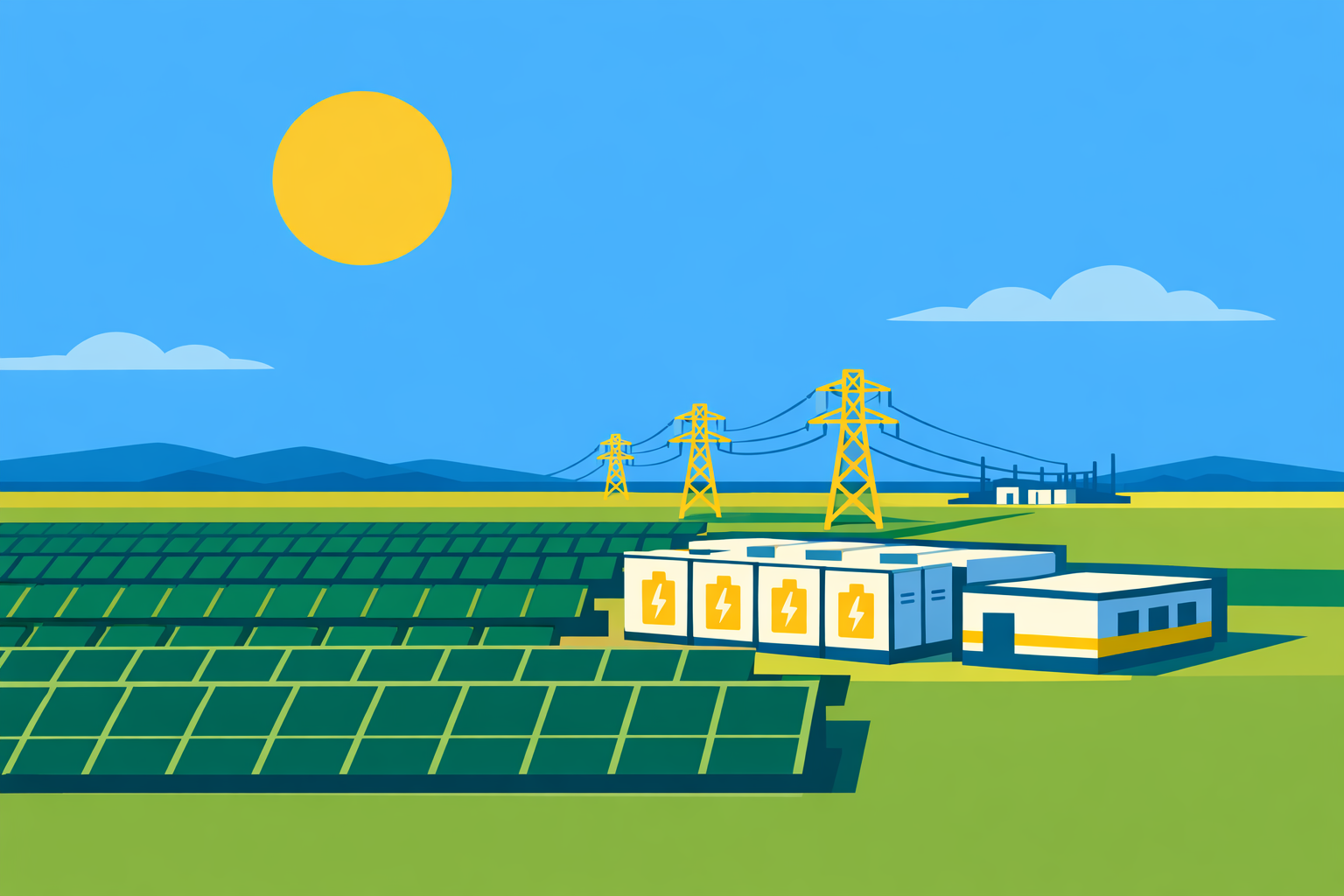
Global long-duration energy storage deployments rose 49% in 2025, exceeding 15 GWh, according to Wood Mackenzie's latest LDES report[1] - yet the market remains firmly in the grip of one chemistry. Lithium-ion still commands roughly 85% of grid storage deployment and is not expected to relinquish that share before 2034. The question for project developers and utility planners is not whether lithium-ion will be displaced, but where its structural limitations create a defensible opening for iron-based alternatives.
That opening is real, growing, and better understood than it was 18 months ago. With iron-flow and iron-air technologies now entering commercial deployment in the United States and Europe, this analysis maps the cost trajectories, performance trade-offs, supply-chain exposures, and practical decision criteria that should guide chemistry selection for specific grid applications.
How the Two Chemistries Work
Lithium-ion batteries store energy in solid electrodes. Energy density is high, response time is fast, and the technology benefits from two decades of cost reduction driven by EV manufacturing scale.
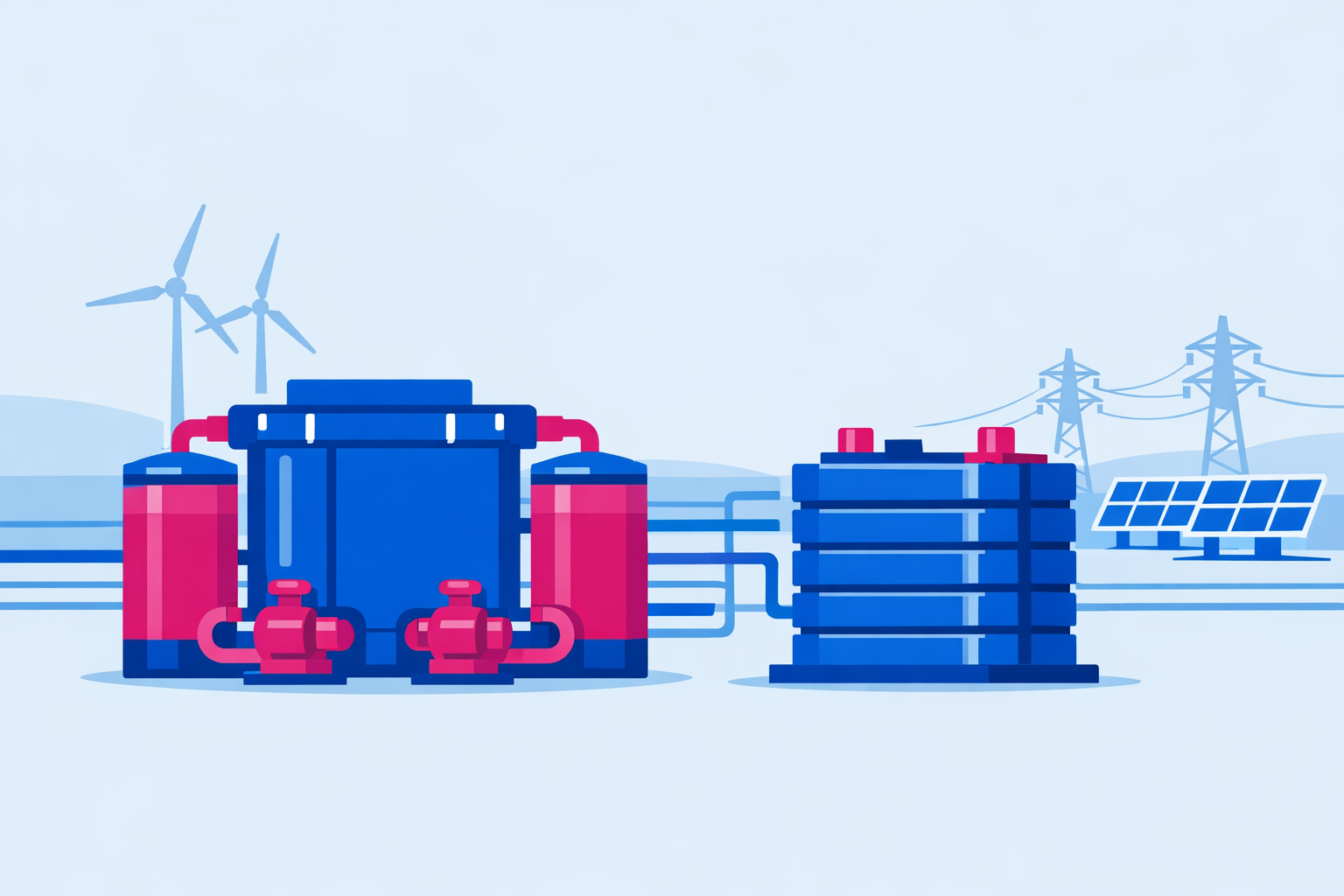
Iron-flow batteries take a structurally different approach. Instead of solid electrodes, they rely on liquid electrolytes stored in external tanks and pumped through an electrochemical stack[2]. This architecture decouples power capacity (the stack) from energy capacity (the tank volume), meaning storage duration can be extended simply by enlarging the tank - without replacing expensive hardware. Iron-air batteries, a related variant pioneered commercially by Form Energy, use reversible oxidation of iron pellets: the battery "rusts" during discharge and de-rusts during charging.
The electrochemical distinction matters commercially: flow architectures exhibit near-zero degradation over time, while lithium-ion cells experience measurable capacity fade with each cycle.
Cost and Total Cost of Ownership
The headline comparison is stark but requires careful interpretation. Lithium-ion battery pack prices for stationary storage dropped to $70/kWh in 2025 - 45% lower than in 2024 - the sharpest drop across all segments, per BloombergNEF's 2025 Battery Price Survey[3]. System-installed costs for LFP run $250-$400/kWh. Iron-flow systems currently sit higher on a per-kWh installed basis, reflecting lower manufacturing scale and greater balance-of-plant complexity.
Pack price, however, is only part of the equation. Levelized storage costs for 8-12 hour iron-flow systems are expected to fall 25-35% versus 2025 levels as manufacturing scales and electrolytes are recycled, according to Energy Solutions analysis[4]. For 100-hour iron-air systems, Form Energy targets a commercial energy cost of $20/kWh[5] - a level that would make multi-day storage economically viable at utility scale. Elestor's hydrogen-iron flow battery has estimated capital costs of roughly $17/kWh at scale, with lifetime storage costs approaching $0.02/kWh[6].
Key distinction: The widely cited 80× raw material cost differential between iron and lithium refers to commodity input cost, not installed system cost. Iron-flow systems carry meaningful balance-of-plant costs - pumps, tanks, membranes, and power electronics - that compress the material advantage at current manufacturing scales. Developers must evaluate total cost of ownership over the project's full lifetime, not raw material prices, when comparing chemistries.
The table below summarizes current and projected performance parameters for both chemistries:
| Metric | Iron-Flow / Iron-Air | Lithium-Ion (LFP) |
|---|---|---|
| Current installed system cost | $300-500/kWh (flow); targeting $20/kWh (iron-air) | $250-400/kWh |
| Round-trip efficiency | 70-80% | 85-95% |
| Cycle life | 10,000-20,000+ cycles (flow); 1,000-5,000 (iron-air) | 4,000-10,000 cycles |
| Optimal storage duration | 8-100+ hours | 1-4 hours (cost-effective) |
| Annual degradation | Near-zero | ~2-3%/year capacity fade |
| Thermal runaway risk | None (aqueous electrolyte) | Present; active thermal mgmt required |
Performance Characteristics by Application
Short-Duration Storage (1-4 hours)
Lithium-ion's advantages are decisive here. Traditional lithium-ion batteries, while excellent for short-duration applications of 2-4 hours, become prohibitively expensive for storage needs extending beyond eight hours, according to grid storage analysis[2]. High round-trip efficiency (85-95%), fast response time, compact footprint, and a fully mature supply chain make LFP the default choice for peak shaving, frequency regulation, and capacity market participation at durations under four hours.
For daily cycling applications - where a system completes 365+ full cycles per year - lithium-ion's higher efficiency directly reduces levelized energy costs per MWh delivered. Every percentage point of round-trip efficiency represents real economic value at scale.
Long-Duration Storage (8-100+ hours)
Iron-based architectures hold structural advantages at longer durations. Flow batteries are specifically suited for long-duration applications of 8-12 or more hours, offering minimal degradation over time, per industry analysis[2]. Because capacity scales with tank volume rather than electrode mass, iron-flow systems can provide 10- or 12-hour discharge without the cost penalty lithium-ion incurs at longer durations.
Safety permitting also differs substantially. Unlike lithium-ion, iron-based systems carry no risk of thermal runaway or fires, making them significantly easier to permit and install. This translates to lower insurance costs, reduced siting constraints, and faster interconnection approvals - factors that carry real project finance value.
When paired specifically with wind resources, Invinity CEO Larry Zulch has noted that flow batteries can deliver power at 25-30% lower cost than lithium-ion systems[7] for interday (10-36 hour) applications.
Supply Chain and Commodity Exposure
This dimension may be the most consequential for long-term project risk.
China manufactured more than 80% of all batteries in 2025, and more than 90% of battery storage systems worldwide depend on LFP cells produced in China, according to IEA data cited by Supply Chain Digital[8]. Lithium-ion batteries imported from China could face combined tariffs of up to 82% by 2026, with the potential to reach 132% if additional planned tariffs take effect, per Energy Storage News analysis[9].
Iron-based chemistries present a structurally different risk profile. Iron sulfate, the primary precursor for iron-flow electrolytes, is an industrial byproduct available at a fraction of lithium carbonate's price[10]. Lithium carbonate has swung between roughly $7,000 and $80,000 per metric ton over the past five years, creating significant commodity-price risk that iron-based systems effectively eliminate. Iron is the most abundant metal on Earth, widely distributed geographically, and embedded in existing industrial supply chains across every major market.
For developers and utilities prioritizing supply chain resilience - particularly in the U.S. and Europe, where policy actively incentivizes non-Chinese material sourcing - iron-based storage offers a long-run structural advantage that falls outside conventional levelized cost models.
Deployment Case Studies
Real-world deployments are moving beyond the pilot phase, though scale remains limited compared to lithium-ion.
Form Energy (Iron-Air, U.S.): Form Energy broke ground on its first commercial-scale iron-air battery manufacturing facility in West Virginia in August 2025, targeting 100-hour discharge systems[11]. The company has announced an 85 GWh project pipeline through 2028[5] and is fulfilling orders for Xcel Energy and Georgia Power. Its first 1 MW/100 MWh deployment is operational with Georgia Power.
ESS Tech / Salt River Project (Iron-Flow, Arizona): In October 2025, Salt River Project announced a 5 MW/50 MWh iron flow battery project with ESS Tech under a 10-year energy storage agreement, evaluating the technology's real-world performance in Arizona's climate[12]. ESS Tech's system uses iron, salt, and water as its core active materials.
Ore Energy (Iron-Air, Netherlands): In mid-2025, Ore Energy connected the world's first grid-linked iron-air battery in Delft[13], demonstrating that iron-air systems can integrate into dense urban grid environments using a fully European supply chain.
These deployments complement the broader lithium-focused market transformation covered in the analysis of how battery makers are pivoting to grid-scale storage.
Decision Criteria for Utilities and Developers
The optimal chemistry is project-specific. The framework below identifies the key variables:
Choose Lithium-Ion (LFP) when:
- Storage duration requirement is 1-4 hours
- Daily or twice-daily cycling is expected
- Speed to commercial operation is paramount
- Footprint constraints favor compact containerized systems
- Project lifetime is under 10 years (upfront cost minimization dominates)
Choose Iron-Flow or Iron-Air when:
- Storage duration requirement exceeds 8 hours
- Project lifetime is 15-25 years (degradation advantage compounds)
- Supply chain diversification is a board-level or regulatory priority
- Permitting in fire-sensitive environments (urban or wildland-urban interface zones)
- Capacity markets reward multi-day or seasonal storage
Consider a hybrid approach when:
- Duration requirement falls in the 4-8 hour zone
- Fast-response ancillary services are required alongside bulk energy shifting
- Portfolio diversification and technology risk hedging are priorities
Research from Wood Mackenzie[1] frames this well: "emerging LDES technologies are better suited for multiday, multiweek and seasonal storage applications," while the multiday storage market currently lacks sufficient demand signals and pricing mechanisms without ongoing policy support.
Outlook
The long-duration energy storage market was valued at $3.6 billion in 2025 and is projected to grow at a CAGR of 10.5% from 2026 to 2035, per Global Market Insights[11]. Under conservative assumptions, flow batteries are expected to reach 8-12% of global installed grid storage by 2030, equivalent to 70-120 GWh[4], with potential to exceed 15% in policy-driven long-duration scenarios across Europe, China, and select U.S. states.
The critical inflection point for iron-based technologies arrives in 2027-2028, when Form Energy's systems are expected to enter commercial operation at scale and field performance data from early deployments becomes available for bankability assessments.
Meanwhile, lithium-ion's cost trajectory has not stalled. Continued manufacturing overcapacity and LFP adoption ensure the baseline comparison will keep moving. Developers who treat the chemistry decision as a continuous evaluation - rather than a fixed assumption - will be best positioned to capture the full value of both technologies as the LDES market matures.
Frequently Asked Questions
Q: Can iron-flow batteries compete with lithium-ion on upfront capital cost today? Not on a per-kWh installed basis for short-duration applications. Lithium-ion LFP systems remain significantly cheaper at current manufacturing scale. Iron-flow systems become cost-competitive on a lifetime levelized cost basis for durations above 8 hours, where lithium-ion's degradation and replacement costs erode its upfront advantage.
Q: Are iron-based batteries commercially bankable? Early-stage bankability is being established through projects like the SRP/ESS agreement and Form Energy's utility contracts. Lenders will increasingly require multi-year field performance data from these deployments before offering project finance on standard terms.
Q: How does the IRA or EU policy environment affect the chemistry decision? U.S. and EU policy increasingly rewards non-Chinese supply chains. Iron-based chemistries - drawing on domestically available or allied-country materials - benefit from domestic content incentives that may not apply to LFP systems reliant on Chinese cell production.
Q: What happens to round-trip efficiency losses at grid scale? The 10-20 percentage point efficiency gap between iron-flow (70-80%) and lithium-ion (85-95%) means more generation capacity is required to deliver the same MWh of output. For long-duration systems charged by low-marginal-cost renewables, this penalty is material but manageable. For high-cycling, efficiency-dependent applications, it remains a genuine constraint.