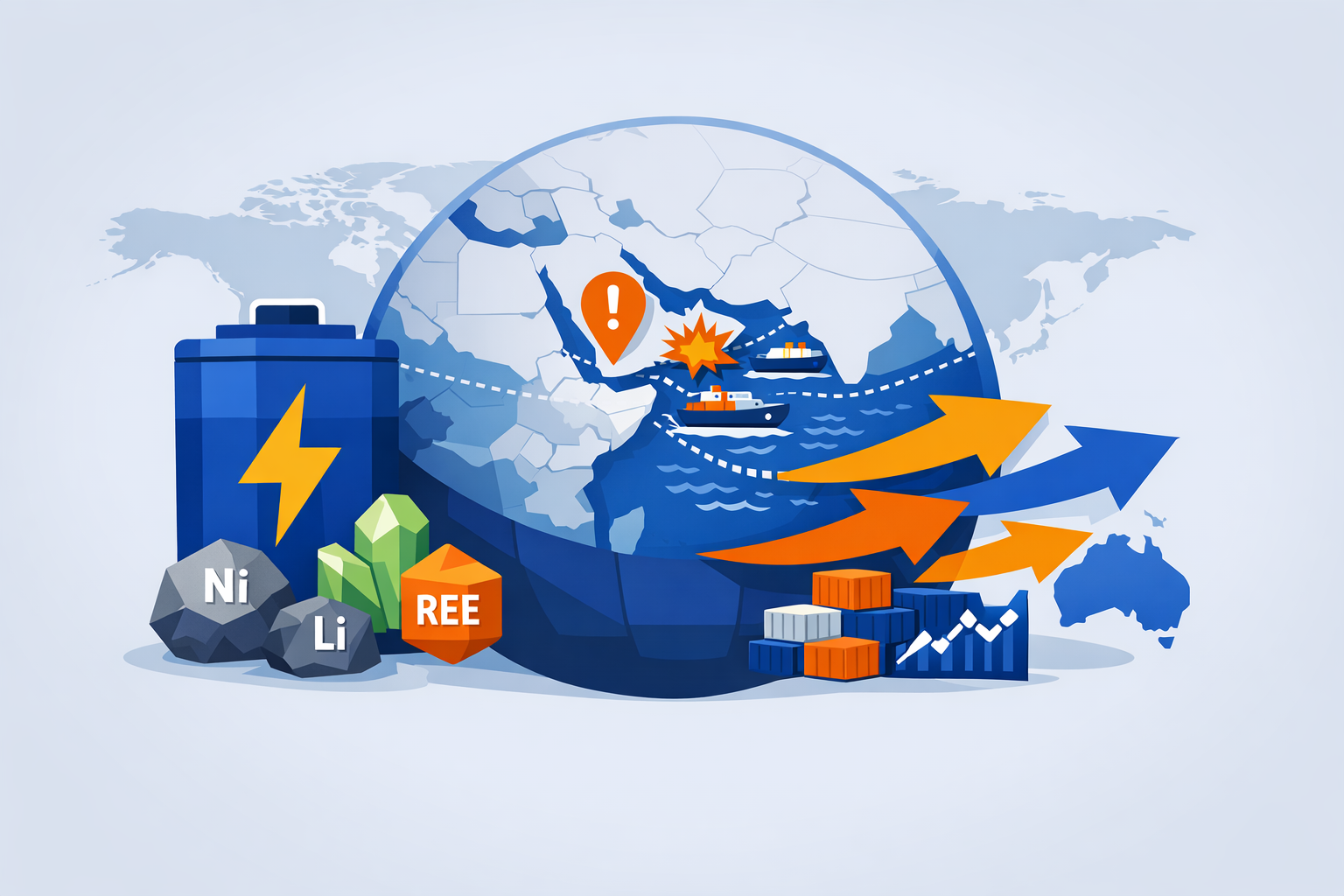
The Iran-U.S.-Israel conflict has intensified geopolitical risks throughout global battery feedstock supply chains, leading developers, utilities, and investors to reassess resilience and sourcing strategies. Heightened threats to lithium, nickel, and rare earth element (REE) exports-coupled with disruptions to shipping via the Strait of Hormuz-are shifting investment toward regional manufacturing hubs and prompting recalibrated procurement policies.
Background
The Strait of Hormuz, a conduit for roughly 20% of global oil and significant battery metal shipments, has been effectively closed since late February as military actions escalated. Tanker traffic fell by about 70%, severely disrupting key logistics for commodities like cobalt and lithium intermediates[1]. Iran possesses large reserves of lithium hectorite and monazite containing neodymium, dysprosium, and terbium. Conflict-related disruptions in mining, processing, and export channels have driven short-term REE price increases of 10-20% and compound global supply risks[2].
Details
Analysts at S&P Global CERA report Iranian primary aluminum output-critical to energy storage infrastructure-is constrained by domestic facility damage and logistics bottlenecks, worsened by dependence on imported alumina. This stress has contributed to a global aluminum supply squeeze amid broad metals scarcity[3]. BMO Capital Markets notes that nickel production, particularly sulfur-acid-dependent processes, faces rising risks as sulfur and sulfuric acid supplies are affected by regional instability[4].
Shipping costs have surged. Insurance premiums and war-risk surcharges for vessels in the Strait of Hormuz have increased by 20-50%. Some estimates put REE shipping delays at up to two months, raising logistics costs and causing material delays for electric vehicle and battery storage deployment[2].
Investors and policymakers are shifting focus to alternative sourcing regions. Contracts and capital are moving away from the Middle East toward mining and processing centers in Australia, Africa, and Latin America. Simultaneously, governments and utilities are considering strategic stockpiling and advancing battery recycling to reduce reliance on single-region supply chains[2]. The International Energy Agency (IEA) emphasizes the need for policy frameworks that support emergency preparedness, critical mineral diversification, and strategic reserves[5].
Outlook
Supply chain diversification and feedstock security will likely inform procurement strategies for battery project developers and utilities in the near term. Investors may increasingly favor vertically integrated regional production and enhanced recycling infrastructure to mitigate the effects of sustained disruptions. Policies advancing domestic processing capacity and inventory buffers are positioned to reshape investment flows in storage and cleantech sectors.