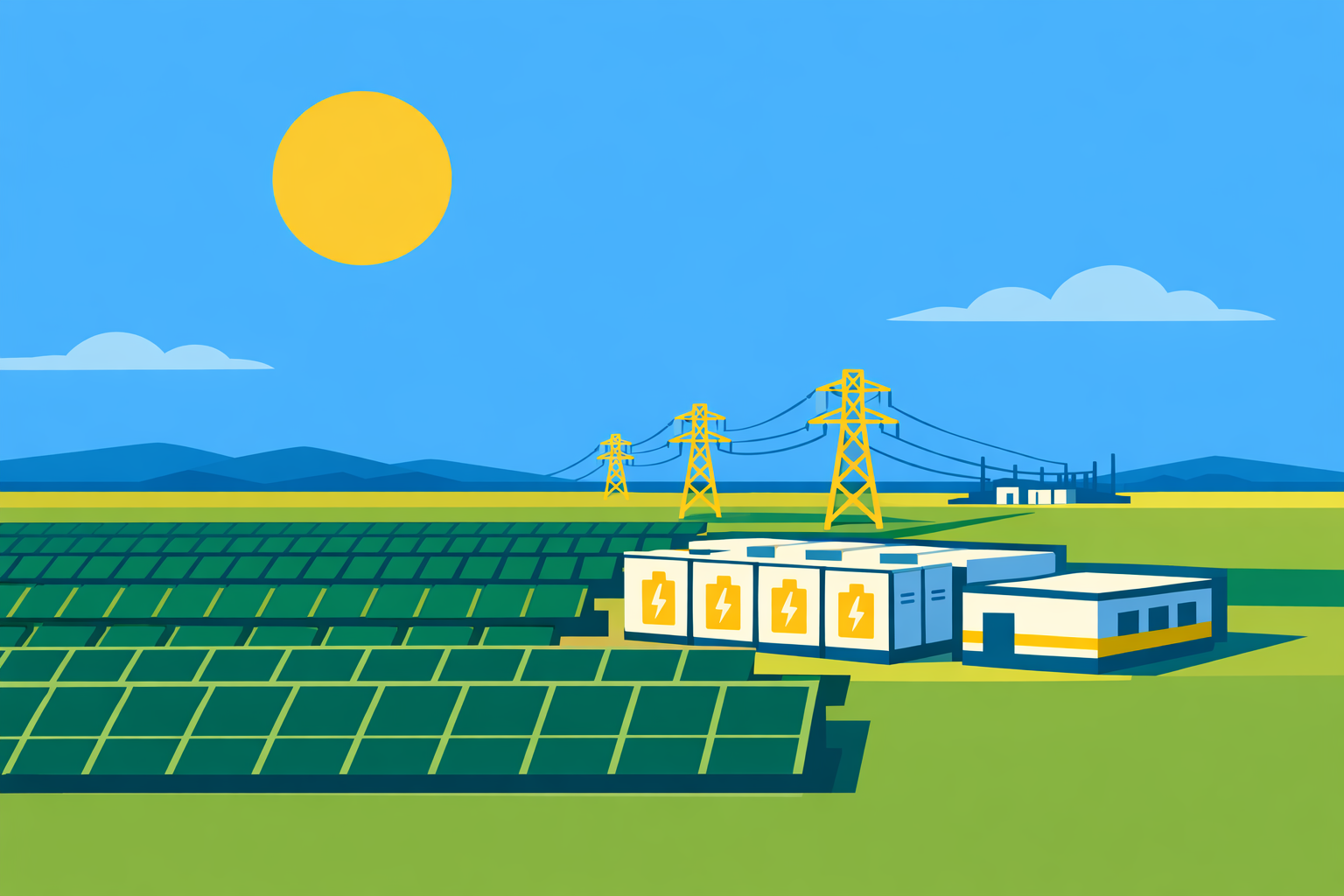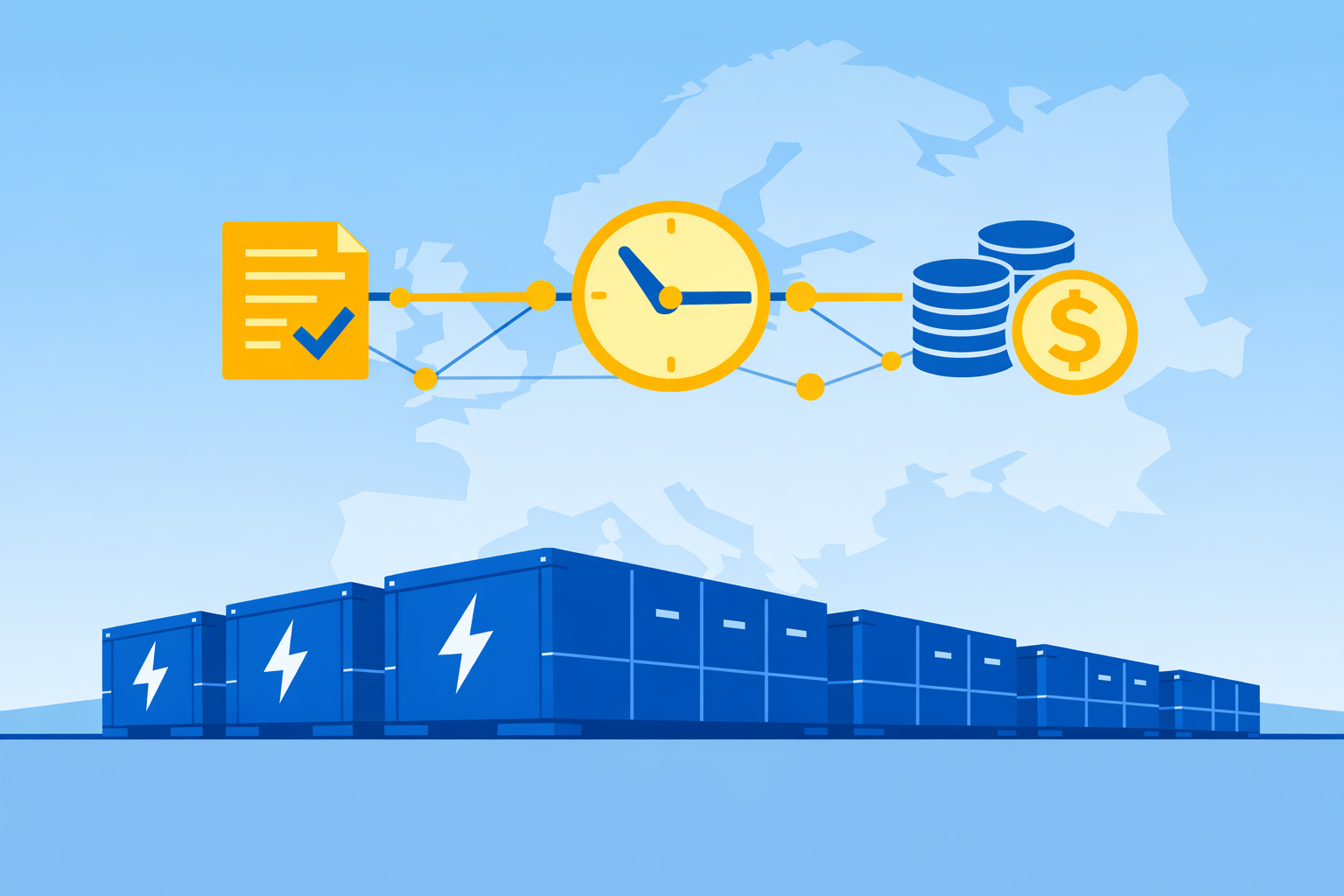
Turkey has approved more than 33 GW of battery energy storage capacity since 2022, surpassing individual EU member states. Regulatory incentives and increased investment are driving rapid deployment and attracting international partnerships.
Background
Turkey is establishing itself as a regional clean-energy hub by requiring renewable generation projects to pair with equivalent storage capacity. The "storage-first" policy, introduced in 2022, provides preferential grid access for projects co-locating storage with renewables. This streamlines licensing procedures and increases investor confidence. The Energy Market Regulatory Authority (EMRA) has pre-licensed over 25.6 GW of co-located storage, representing approximately US $35 billion in potential investment. These incentives align with the broader HIT-30 high-tech investment program and a July 2024 US $30 billion clean-tech package, which sets aside US $4.5 billion for battery production capacity. These measures have led to agreements exceeding US $1 billion to build new cell and battery facilities in Ankara, Kocaeli, Istanbul, and Izmir. Regulatory certainty has been enhanced by the 2021 Regulation on Storage Activities (RSAEM) and subsequent 2022 legal updates, which streamlined pre-licensing for co-located projects and incorporated storage into the YEKDEM support scheme. Local manufacturers, investors, and global companies-including BYD and Rolls-Royce-are engaging across the evolving supply chain ecosystem.
Details
According to Ember, Turkey has approved over 33 GW of storage capacity since 2022. In comparison, late-deploying EU markets such as Germany and Italy have a combined 12-13 GW. By the end of 2024, the entire EU will have installed 61 GWh of battery energy storage capacity. Turkey's 33 GW pipeline is equivalent to around 83 percent of its current wind and solar capacity, underscoring the nation's ambitions. Within this pipeline, one-hour battery systems account for 37 GWh. In 2026, Turkey plans to commission 2 GW of storage capacity and is considering the introduction of Storage Resource Zones (DEKAs), modeled on Renewable Energy Zones, to expedite deployment. Financial support is progressing, notably through a US $1 billion joint program from development banks, the World Bank, and the Climate Investment Funds aimed at grid modernization, supporting distributed solar and EV charging, and delivering 7.5 GW of battery capacity. Turkey's renewable strategy also includes expanding electrification, scaling green hydrogen, and implementing regulatory sandboxes for flexibility services and storage participation in ancillary markets.
Outlook
Turkey's integration of storage incentives, grid reforms, and factory investments is strengthening its industrial base for battery technologies. These measures are projected to attract additional global capital and influence regional supply chain dynamics. Turkey is positioned to impact pricing, technology transfers, and cross-border infrastructure as EU peers experience slower rates of storage deployment.