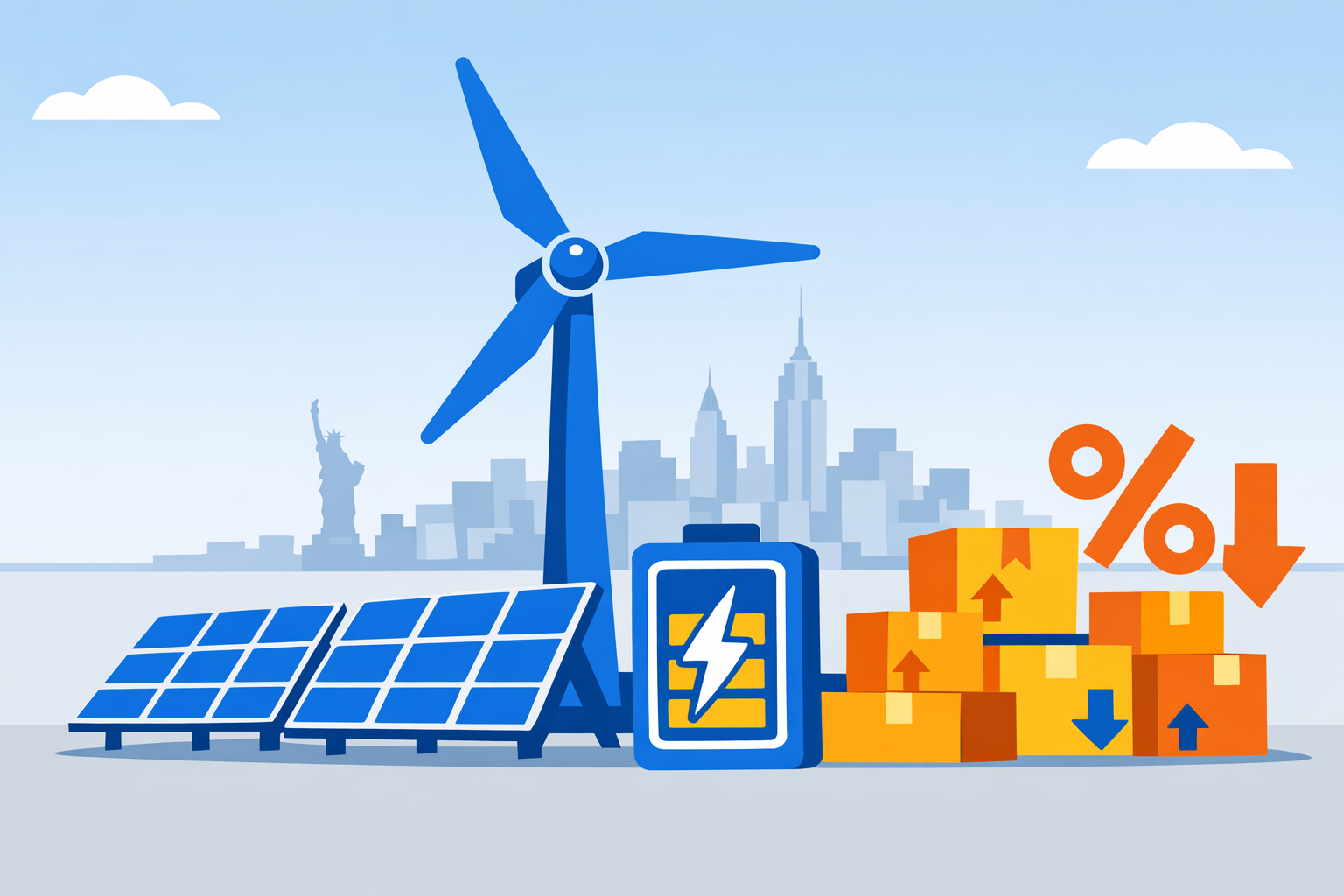
New York's clean energy infrastructure, set to supply approximately 2 million homes, faces significant risk due to increased tariffs on imported components. These tariffs threaten project financing, scheduling, and supply chain continuity. Industry analysts report that rising costs have delayed procurement and could push back construction timelines, particularly amid high interest rates. Developers report postponed interconnection studies and commercial operation dates for major wind, solar, and energy storage projects across the state.
Background
Tariffs on key imported clean energy components-including solar panels, polysilicon, wafers, modules, steel, aluminum, transformers, and batteries-have raised costs for both developers and grid operators. Beginning January 2025, a 50% tariff applies to Chinese solar panels and components, with rates reaching up to 175% on finished panels and 195% on polysilicon and wafers. Tariffs on imports from Vietnam and Cambodia range from 46% to 49%[1]. Steel, aluminum, and copper-accounting for 20% to 30% of transmission project budgets-are also affected by 50% tariffs, impacting grid modernization and critical equipment procurement such as transformers[2].
Details
Analysts from Taiyang News, quoting Wood Mackenzie, forecast that new tariffs may lead to a 30% rise in module and inverter prices and nearly a 10% increase in utility-scale solar project costs[3]. WINS Solutions estimates tariffs will boost costs for solar mounting systems by 18%, aluminum frames by 25%, and imported solar cells by 20%. These increases may jeopardize projects capable of powering up to 1.8 million homes[4].
Cost pressures are already slowing procurement and extending project schedules. Importers are rerouting shipments to avoid tariffs, causing delays in material delivery and discrepancies in project planning[2]. The combination of limited supply, rising expenses, and policy uncertainty is delaying interconnection studies and compelling developers to extend financing and construction timelines.
Outlook
Policymakers, project sponsors, and financial institutions are assessing measures such as domestic content requirements, phased tariff relief, and exemptions for essential grid and energy projects to sustain investment confidence. Resolving tariff policy and stabilizing procurement processes remain critical to supporting New York's clean energy goals amid ongoing cost and scheduling challenges.