A surge in project announcements is masking a deepening crisis beneath the surface. More than 12 GW of generation and storage capacity was announced in the first quarter of 2026-enough to power more than 2 million homes annually. Yet the same quarter told a starkly different story on the other side of the ledger: nearly 8 GW of generation capacity and more than $14 billion in planned investments were canceled, closed, or downsized through March-already more than half of all generation capacity losses recorded during all of 2025.[1]
The gap between announcements and viable projects is widening, and the cause is unambiguous. The surge in new projects came as companies raced to begin construction before federal clean energy tax credits for solar and wind phase out under recently enacted policy changes.[2] Still, the pace of new project development remains well below the boom years immediately following passage of clean energy policies in 2022.
The Policy Cliff: What the OBBBA Changed
On July 4, 2025, President Trump signed the One Big Beautiful Bill Act (the OBBB), which significantly rolls back core tax incentives that clean energy projects have relied on since the Inflation Reduction Act's passage in 2022. The impact on wind and solar is categorical.
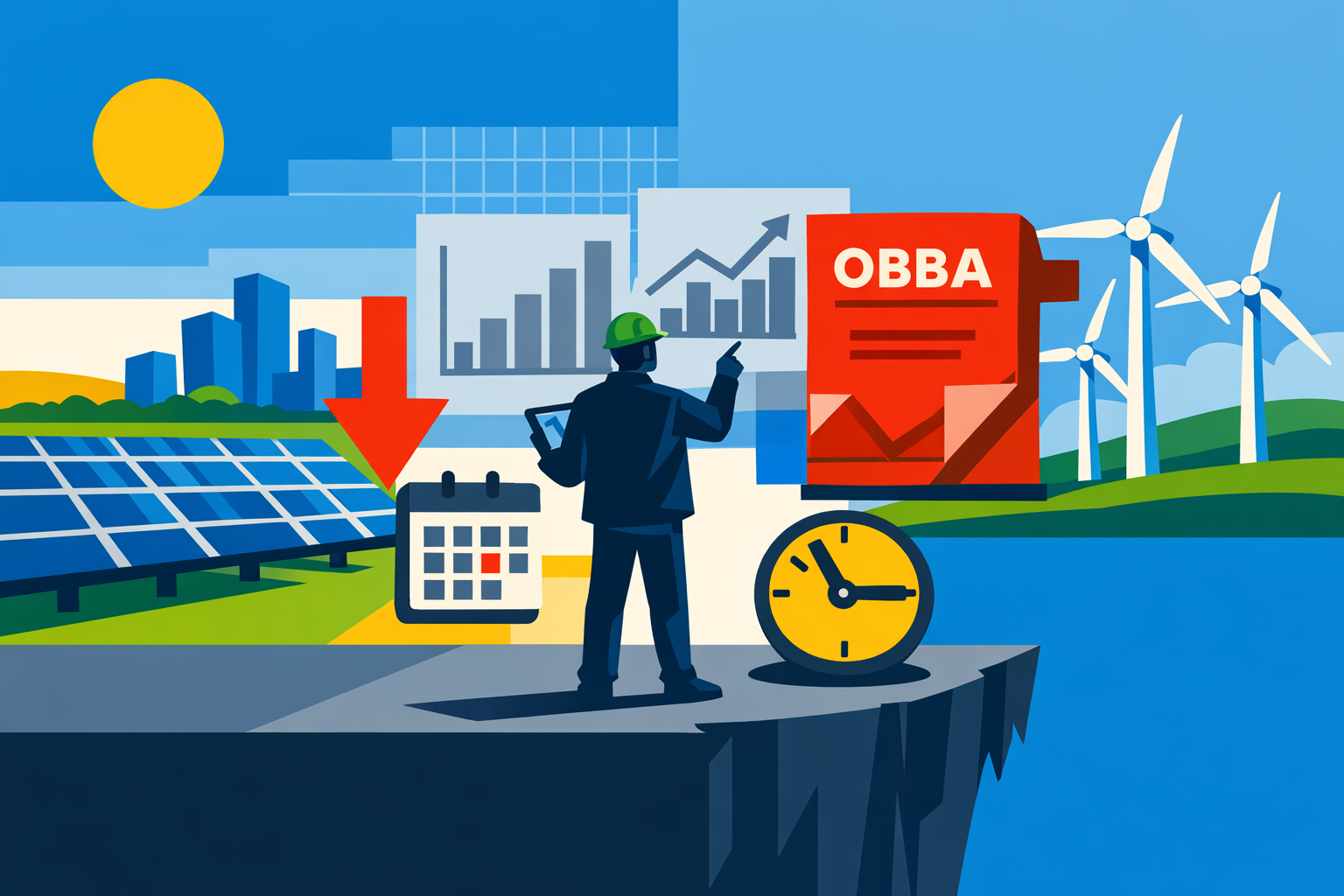
Most significantly, the Bill contains an early termination of solar and wind tax credits (IRC §§ 45Y and 48E). It eliminates a taxpayer's ability to claim 45Y Production Tax Credits and 48E Clean Electricity Investment Tax Credits for any solar or wind project where beginning of construction (BOC) occurs on or after July 4, 2026, and the project is placed in service after December 31, 2027.
{{callout:CALLOUT_PLACEHOLDER}}
The shift marks a fundamental departure from the IRA's long-range framework. The IRA's clean energy investment and production tax credits were originally set to last in full for projects that began construction before the end of 2032, with a gradual phase-out afterward. Most industry observers expected these credits to extend into the 2040s, given built-in provisions that would delay the phase-out if emission reduction targets were not met.
Compounding the timeline pressure, a July 7, 2025, Executive Order directed the Treasury Department to restrict the traditional "5% cost safe harbor" that developers relied on to establish BOC status. Under Treasury Notice 2025-42, solar projects larger than 1.5 MW and all wind projects must begin physical work by July 4, 2026, to qualify for tax credits. The administrative bar is now materially higher.
The OBBBA also layered on stringent foreign-entity rules. It introduces accelerated repeal schedules for most renewable energy tax credits, compresses deadlines for certain projects to qualify, enhances domestic content requirements, eliminates several electric vehicle and residential energy incentives, and implements new Foreign Entity of Concern (FEOC) restrictions barring certain foreign entities from accessing credits.
The Financing Response: Compression, Safe-Harboring, and Credit Transfers
The industry's immediate reaction has been a scramble to lock in eligibility. Investment peaked in Q1 as developers rushed to safe-harbor projects ahead of policy changes. Crux estimates developers safe-harbored approximately 170 GW of wind and solar capacity in 2025, creating a multi-year deployment pipeline and providing stability despite policy tightening.
Tax credit monetization has grown rapidly even as underlying incentives have been curtailed. Crux estimates that total lending to clean power, fuels, and manufacturing projects reached approximately $120 billion in 2025, a 5.8 percent year-over-year increase from 2024. Tax credit monetization across tax equity, hybrid structures, and transfers reached $63 billion, up 27 percent year-over-year.
But the market is becoming more selective. Capital remained broadly available yet grew more selective in the second half of the year, favoring experienced sponsors and advanced projects. Access to traditional tax equity has become a constraining factor. Fewer than one in three developers report that traditional tax equity is generally available for their projects, highlighting the uneven playing field between well-capitalized platforms and smaller independents.
The tech-neutral credits that replaced legacy ITC and PTC face their own headwinds. Investor appetite for tech-neutral credits under §45Y and §48E remained constrained due to a lack of clear FEOC guidance. Only about 10 percent of tax equity investors reported actively pursuing tech-neutral tax credits in 2025; these credits traded at a measurable discount to comparable legacy credits.
The structural consequence: developers are shifting capital stacks toward longer-tenor debt and equipment financing arranged well ahead of construction milestones. In light of recent legislative changes, equipment financing has become a crucial component of early-stage development funding. For solar and wind projects in particular, using debt financing to purchase qualified equipment and begin physical work helps developers meet IRS requirements and preserve eligibility to monetize clean energy tax credits.
PPA Pressure: A New Pricing Regime
The financing squeeze is transmitting directly into power purchase agreement pricing. The average North American solar PPA price rose 4.7% during the first quarter of 2026, while wind prices rose nearly 8%, according to the latest data from LevelTen Energy's marketplace. Solar and wind PPA costs have increased 13% and 24%, respectively, since the same period last year.
{{widget:WIDGET_PLACEHOLDER}}
Project cancellations, increased permitting delays and costs, labor shortages, tariffs, and rising insurance premiums are among the top factors increasing costs for renewable energy developers. However, the current price escalation appears primarily driven by the intensity of demand for electric generation.
Developers are navigating clean energy tax cuts under the OBBBA while preserving tax credit eligibility across significant portions of their pipelines through disciplined development strategies. EIR's analysis shows estimated PPA prices for new solar and onshore wind have risen sharply since their 2020 trough-roughly double the lows of five years ago.
A structural bifurcation is emerging in buyer behavior. Rising energy costs have pushed some smaller buyers out of the PPA market, though demand from data center operators and hyperscalers continues at a fever pitch. Meanwhile, wind is suffering disproportionately: the sector faces severe permitting challenges, with heightened scrutiny and delays, particularly from the Federal Aviation Administration. New requirements around turbine height and location are forcing project redesigns, reducing viability for some developments, and slowing overall project pipelines. As a result, greenfield wind development has dropped to its lowest level in years.
Market Divergence: US, EU, and Australia
The policy cliffs facing U.S. developers have no direct equivalent in the EU or Australia, creating a meaningful divergence in near-term project economics and financing structures.
{{comparison_table:TABLE_PLACEHOLDER}}
United States: The OBBBA creates a binary outcome for developers. Projects that secure a clean construction start before July 4, 2026, have a viable path through tax equity or credit transfers. Those that miss the deadline face materially higher LCOEs without federal subsidies, eroding project returns or rendering assets unfinanceable under current debt terms.
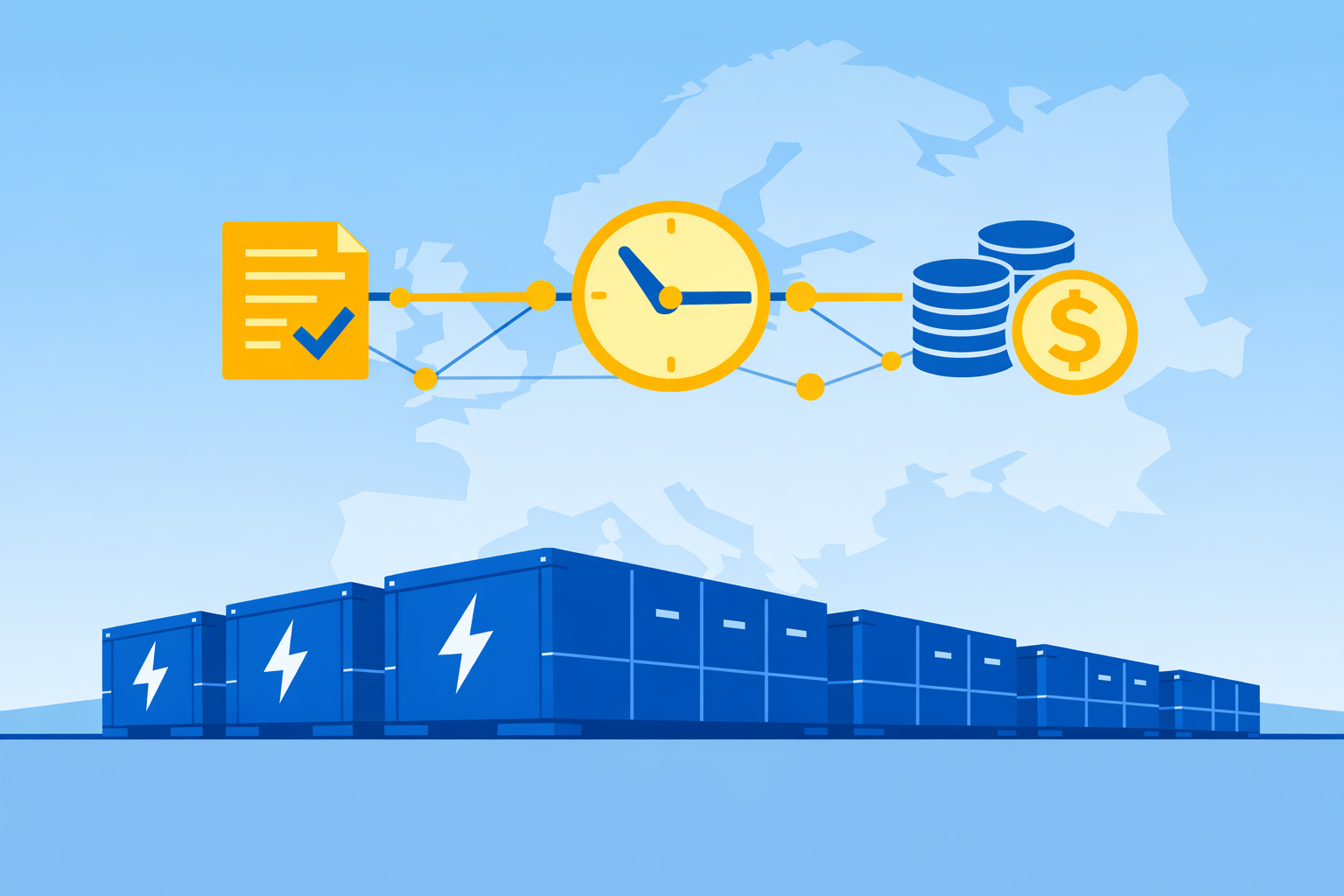
European Union: The EU's subsidy architecture rests primarily on state-administered Contracts for Difference (CfDs) and competitive auctions under national renewable energy frameworks. SolarPower Europe notes that solar capture rates are falling across the continent's most mature markets. In 2025, average capture rates dropped to around 58% in Germany and 52% in Spain, reflecting increased cannibalization during peak solar hours. In response, European M&A activity has increasingly focused on softer PPA pricing, capture-price pressure, and storage-backed structures-quietly becoming the new shorthand for bankability.
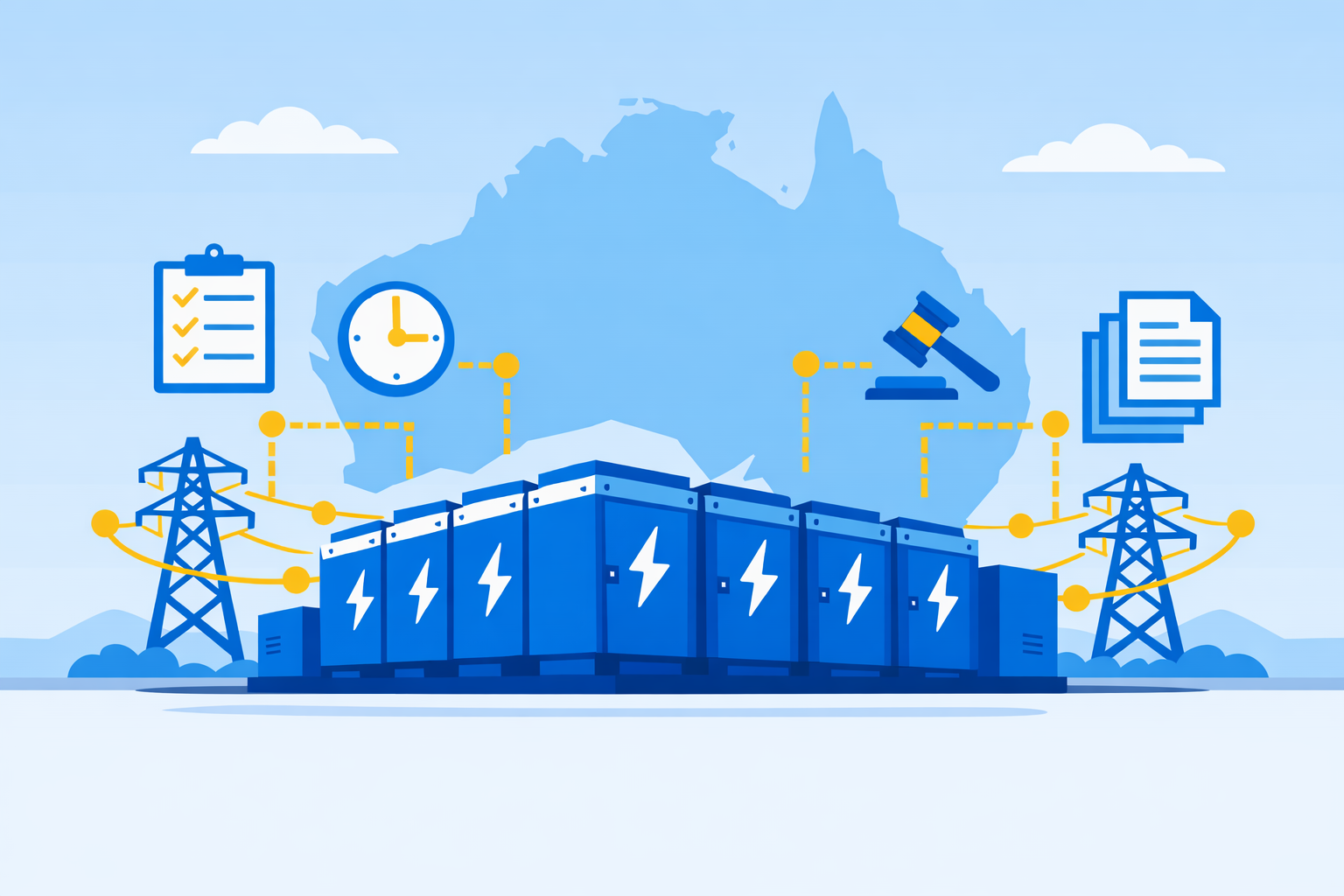
Australia: The Albanese government's re-election in May 2025 locked in the most expansive public-financing posture of the three markets. The federal government increased CEFC's capital allocation by AUD 2.5 billion to AUD 32.5 billion, expected to unlock an additional AUD 8 billion in investment. The Capacity Investment Scheme (CIS) has been expanded from 32 GW to 40 GW and continues to be oversubscribed. The trend of financing multiple renewables projects under a single consolidated portfolio platform has continued in 2025. Portfolio financings involve sponsors aggregating projects into a corporate-style structure for the purposes of refinancing individual single-asset project financings and leveraging existing operating assets to fund new developments in their pipeline.
Solar and Storage as the Resilient Core
Within the U.S. pipeline, one technology profile stands out. Solar developments accounted for the majority of both new announcements and cancellations. Solar or solar-plus-storage projects represented 37 of the 54 new generation projects announced in the first quarter. The pairing logic is financial as well as operational: storage preserves capture value and enhances bankability by smoothing revenue profiles in markets with growing cannibalization risk.
Battery storage's relative resilience under the OBBBA also provides a financing hedge. The OBBB largely preserves tax credits into the next decade for newer clean energy technologies like battery storage and carbon capture. Utility-scale storage deployment reached approximately 19 GW in 2025, up roughly 72 percent year-over-year. Falling costs, rising grid volatility, and demand from large-load customers positioned storage as a central component of new capacity additions.
This asymmetry is reshaping how sponsors structure projects. Solar-plus-storage hybrids pairing generation eligible for the deadline-driven §48E credit with storage assets qualifying under a longer timeline are emerging as a preferred structure for developers seeking to maximize credit capture while extending the effective investment horizon. This structural evolution also intersects with the growing supply-chain compliance burden discussed in coverage of tariff-driven project delays.
What Happens to the 8 GW That Didn't Survive?
Since the start of 2025, Republican-held congressional districts have attracted more than $21 billion in announced clean energy investments while also losing more than $49 billion to project cancellations and downsizing. The political geography of cancellations will shape any potential policy response.
A panel of analysts broadly agreed that clean energy deployment will continue, driven by strong market fundamentals. "Even without the tax credits, the cheapest form of electricity production at this point is solar, followed by natural gas, and then geothermal and onshore wind." But the removal of subsidies widens the gap between announced pipelines and financed projects.
The core developer request, as articulated by industry groups, is not a full restoration of IRA credits but rather stability. The key policy ask "right now is just maintaining policy certainty so companies know the rules of the road." Potential responses-from extending safe-harbor periods to accelerating interconnection approvals-are being evaluated, but no legislative pathway has materialized in the current Congress.
Key Takeaways for Developers and Investors
- The BOC clock is running. Wind and solar projects must begin physical construction by July 4, 2026, to remain eligible for §45Y and §48E credits. Developers without a clear construction-start plan face near-certain credit loss.
- Tax equity is scarce; credit transfers are growing. Only around 10% of tax equity investors were actively pursuing tech-neutral credits in 2025, while the total transferable credit market reached nearly $42 billion. Structuring teams must plan for a hybrid capital stack.
- PPA pricing is not softening. North American solar PPA prices rose 13% year-over-year while wind PPA prices surged 24% in the 12 months to Q1 2026. Offtake agreements signed under old financing assumptions may no longer support project returns.
- Storage is the financing anchor. Battery storage retains longer credit eligibility and stabilizes revenue profiles, making solar-plus-storage hybrids the preferred structure for new capital deployment.
- Australia and the EU offer a policy contrast. Both markets maintain consistent, long-horizon incentive frameworks. Their financing structures-CfD auctions in Europe, portfolio financing and CIS in Australia-provide templates for policy design the U.S. market currently lacks.