Federal policy in the United States is accelerating offshore wind development, reshaping supply chains and port infrastructure while signaling long-term sector growth. New lease sale schedules, domestic manufacturing incentives, and port infrastructure funding are affecting project economics, risk management, and workforce development. These policy measures increasingly intersect with long-duration energy storage initiatives linked to coastal wind power.
Background
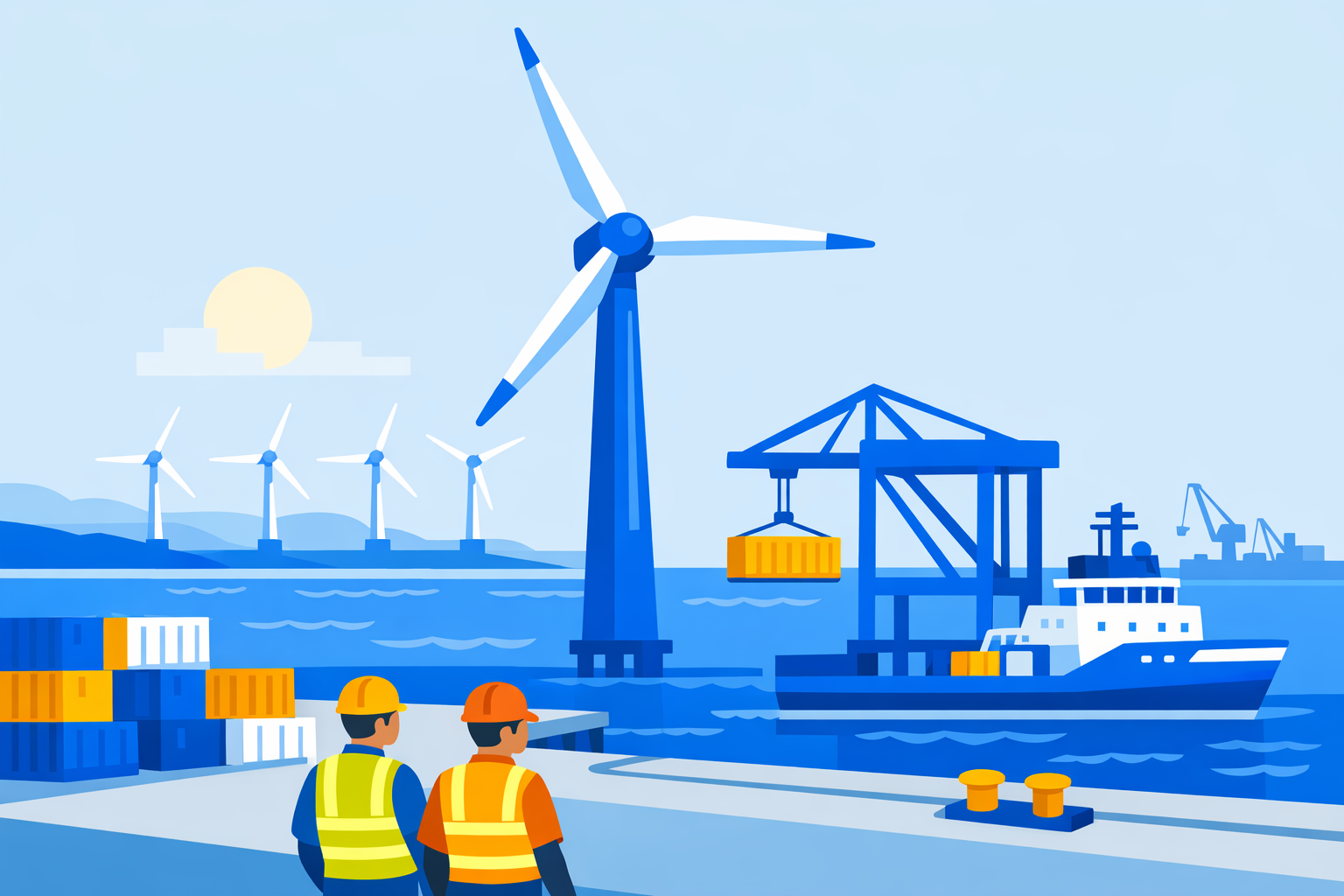
The Biden-Harris administration has set a national target to deploy 30 GW of offshore wind energy by 2030, supported by provisions in the Inflation Reduction Act and Bipartisan Infrastructure Law. These measures include tax credits for manufacturing, grants for port and vessel infrastructure, and bidding credits for developers committing to workforce training and supply chain development. The Department of Energy's 'Wind Energy Supply Chain Deep Dive Assessment' highlights the need for investment in ports, vessels, and component manufacturing to enable a competitive domestic supply chain.
Details
The Department of the Interior's Bureau of Ocean Energy Management (BOEM) recently introduced lease sale bidding credits of up to 20% for proposals featuring supply chain and workforce investments, directing approximately $160 million to these efforts. Several domestic supply chain projects are underway, including a purpose-built wind energy port in New Jersey, a subsea cable manufacturing facility in South Carolina, and a Jones Act-compliant offshore wind installation vessel under construction in Texas using over 14,000 tons of U.S. steel.
States are also using procurement requirements to spur local investment. New York's Offshore Renewable Energy Certificate procurement mandated supply chain investment plans from bidders and allocated $300 million for ports, manufacturing facilities, and supply chain projects. However, a lack of U.S.-built wind turbine installation vessels (WTIVs) remains a constraint. Estimates indicate that at least five WTIVs will be needed by 2030 to meet deployment targets, but only one-Dominion Energy's Jones Act-compliant WTIV Charybdis-is expected to be completed by 2024.
Long-duration energy storage (LDES) is increasingly important for integrating offshore wind. Research shows that storage systems with 10-100 hours of duration will be needed to support electricity supply as wind and solar generation approach 70-90% of annual supply. Hydrogen-based LDES may be critical for managing seasonality and extended periods of low wind, especially in grids with high wind penetration.
Outlook
Upcoming lease auctions and infrastructure funding decisions will shape regional port capabilities and future supply chain projects. Persistent policy clarity and coordinated deployment strategies will be necessary to match manufacturing and storage capacity with offshore wind growth forecasts.