One of America's most prominent battery recycling companies just cut roughly 10% of its workforce - and the move reveals as much about the state of the domestic supply chain as it does about any single company's strategy.
Redwood Materials laid off approximately 135 employees on April 21, 2026, affecting multiple divisions including engineering and operations, according to TechCrunch[1]. The cuts came just three months after the company closed a $425 million funding round at a valuation above $6 billion[1] and mark the second workforce reduction in five months, following a 5% cut in November 2025. The restructuring also triggered the departure of Chief Operating Officer Chris Lister and several other senior executives[2] in supply chain and mechanical engineering.
For stakeholders across the battery materials, EV, and energy storage ecosystems, Redwood's reset warrants close examination.
A Strategic Pivot, Not a Financial Crisis
Redwood founder and CEO JB Straubel framed the layoffs as a deliberate realignment rather than a distress response. In an internal communication, Straubel noted that "parts of the company have expanded faster than needed to support the direction" of the business and said the company was reducing management layers to sharpen strategic focus.
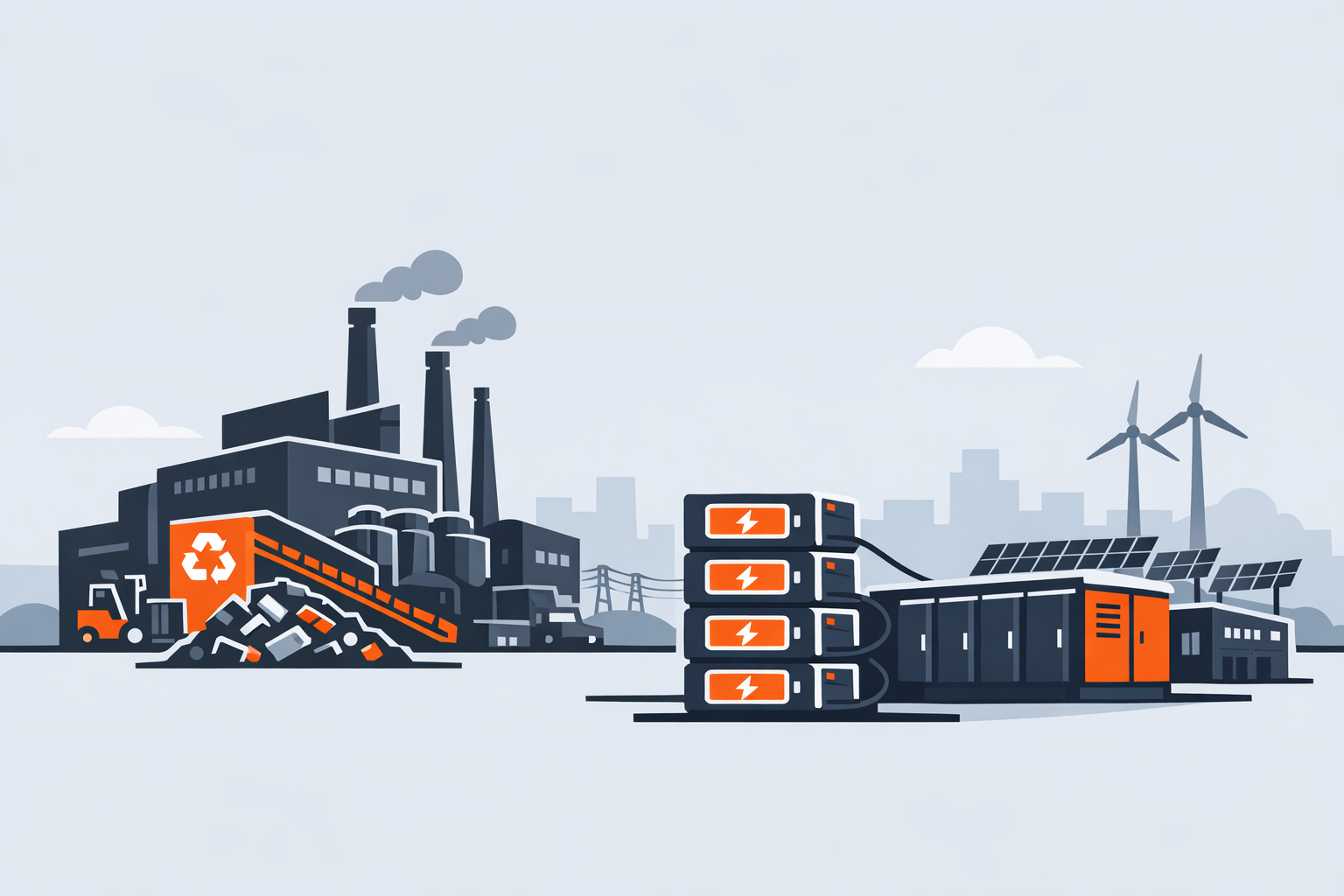
Straubel told employees that Redwood "continues to dominate the U.S. battery recycling market" while touting "great momentum" in its newer energy storage business, according to the TechCrunch exclusive[1]. The cuts across engineering and operations aim to align headcount with the company's evolving priority: a second-life battery energy storage business growing faster than the core recycling vertical.
The timing, however, does not exist in a vacuum. The restructuring unfolds against significant stress across the domestic battery recycling sector - stress that is systemic, not isolated.
Sector-Wide Pressures: Bankruptcies, Grant Cancellations, and a Price Collapse
The most vivid illustration of that stress came just two weeks before Redwood's announcement. Ascend Elements, a Massachusetts-based battery recycler that had raised more than $1.1 billion in equity and grants since its 2015 founding, filed for Chapter 11 bankruptcy on April 9, 2026, according to Bloomberg[3]. CEO Linh Austin described the financial difficulties as "insurmountable," pointing to a canceled $316 million federal grant[4] and broader softening of EV demand as the primary triggers.
Ascend's collapse is not an outlier. SK Battery America cut nearly 1,000 jobs in Georgia in 2026 amid slowing EV production by U.S. automakers, per Resource Recycling[5]. Several other battery manufacturers have restructured or ceased operations as automakers pulled back from ambitious electrification targets.
Underlying these corporate failures is a commodity price environment that has gutted lithium-ion recycling economics. Lithium carbonate, which peaked above $80,000 per metric ton in late 2022, was trading near $12,000 per metric ton in early 2026 - a decline of roughly 85%, according to market analysis[6]. Nickel and cobalt have followed similar trajectories. When virgin materials sourced overseas cost a fraction of domestically recycled alternatives, the business case for domestic processing narrows sharply.
Policy uncertainty has compounded the problem. Federal grant cancellations and program reviews[5] have removed funding that underpinned many recyclers' capital structures. The result is a sector sorting itself, as one industry publication noted, "into operators whose capital structure and feedstock access can sustain the wait, and those that cannot."
Redwood's Differentiator: The Second-Life Pivot
What distinguishes Redwood Materials from its struggling peers is its early, aggressive move into second-life battery energy storage - a business line that generates near-term revenue independent of commodity price cycles.
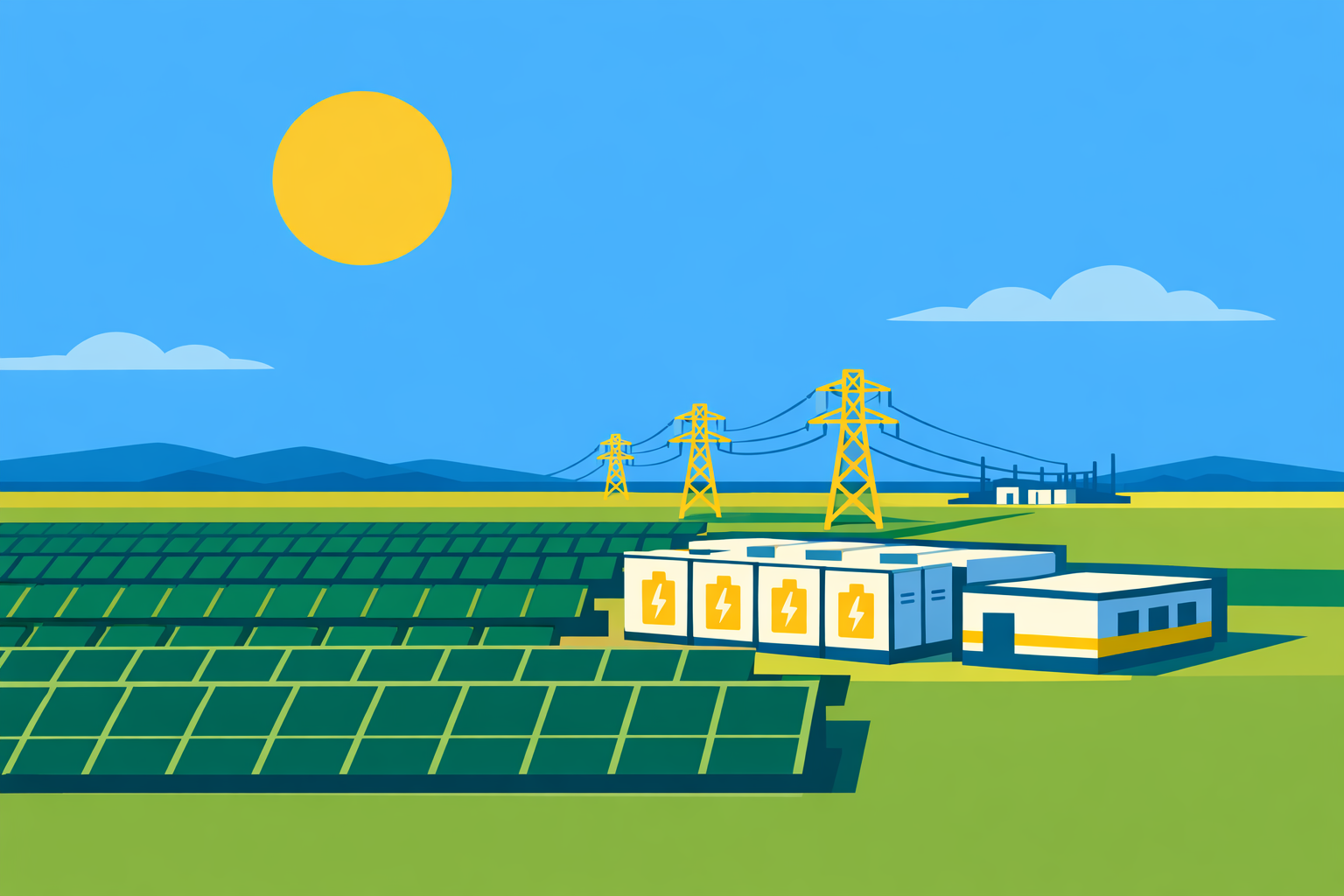
Redwood launched its dedicated energy storage unit, Redwood Energy, in June 2025, deploying what it described as North America's largest microgrid: a 12 MW / 63 MWh installation built from 805 retired EV battery packs to power a Crusoe AI modular data center in Sparks, Nevada, according to the company[7]. The system was constructed in under four months, and Straubel described it as profitable.
The business model has since expanded. In April 2026, Redwood and Rivian announced the first repurposed battery energy storage system deployed at a U.S. automaker's manufacturing facility - a 10 MWh installation at Rivian's Normal, Illinois, plant using more than 100 second-life Rivian battery packs, per Electrek[8]. Redwood has also signed a battery repurposing MOU with General Motors and holds partnerships spanning Volkswagen Group, BMW, Toyota, Ford, and Panasonic - giving it the broadest domestic battery feedstock network[9] among U.S. recyclers.
Crucially, Redwood processes more than 20 GWh of batteries annually - the equivalent of approximately 250,000 EVs - representing about 90% of all lithium-ion batteries recycled in North America, according to the company[7]. That feedstock dominance makes the second-life business viable: Redwood can identify which packs retain sufficient capacity for storage deployment before they reach end-of-life recycling.
The demand signal is equally compelling. Redwood has cited projections[8] that the U.S. will need more than 600 GWh of storage by 2030 to handle peak demand and AI-driven load growth - a scale that far exceeds current deployment pipelines.
Implications for the Domestic Supply Chain
Redwood's restructuring carries implications well beyond the company itself.
Near-term capacity signals. The cuts across engineering and operations - areas directly tied to processing throughput - warrant monitoring. If headcount reductions slow the ramp-up of Redwood's South Carolina facility[9], which carries a $2 billion conditional DOE loan commitment, short-term tightening in recycled material supply could follow. The South Carolina facility's first phase added an initial 20,000 metric tons of annual processing capacity in late 2025, according to Resource Recycling[5], and its continued ramp is central to domestic supply chain resilience.
Competitive consolidation. Ascend's bankruptcy leaves Redwood as the dominant independent domestic recycler with scale. The absence of a meaningful competitor in high-purity cathode precursor production could affect pricing dynamics for automakers and cell manufacturers that depend on recycled material inputs for domestic content compliance - a factor of growing importance as tariff pressures reshape battery component sourcing.
The policy funding gap. The recycling sector's current difficulties underscore a structural challenge: capital-intensive recycling infrastructure requires policy support that remains consistent across administrations. Ascend's undoing was partly a canceled federal grant; Redwood's resilience partly reflects having raised over $2 billion in private capital before grant dependency became critical. Policymakers weighing incentive structures for domestic materials supply chains must consider the EV manufacturing buildout's upstream dependencies alongside the risks of abrupt funding reversals.
The second-life opportunity as a bridging mechanism. Redwood's pivot demonstrates a commercially viable path for recyclers to generate cash flow while EV volumes lag projections and commodity prices remain depressed. By monetizing packs before recycling - extracting storage value from batteries retaining 50% or more of usable capacity - companies can improve unit economics while supporting grid and AI infrastructure buildout. Geopolitical disruptions affecting battery metals supply chains make this domestic circular model more strategically valuable over time.
Key Takeaways for Industry Stakeholders
- Redwood's restructuring is a strategic realignment, not a signal of financial distress. The company's $6 billion-plus valuation, $425 million Series E, and growing OEM partnership roster position it among the best-capitalized players in the sector.
- The commodity price environment remains the central challenge for the entire domestic recycling ecosystem. Lithium, nickel, and cobalt price recovery is a prerequisite for first-life recycling economics to work at scale without permanent subsidy dependency.
- Second-life storage is emerging as a real revenue bridge. Redwood's Crusoe and Rivian deployments demonstrate that repurposing EV packs for grid and industrial storage is commercially viable and scalable - a model competitors and investors should examine closely.
- Policy consistency matters. The bankruptcies and restructurings accumulating across the battery materials sector reflect, in part, business plans built on grant structures that proved vulnerable to political reversals.
- Feedstock control is a structural moat. Redwood's dominance in North American battery collection provides a durable competitive advantage that commodity-price headwinds cannot easily erode. Smaller recyclers without comparable feedstock networks face a structurally harder path.
The sector is undergoing a painful but necessary correction. The operators that survive - and ultimately reduce U.S. dependence on overseas battery material supply chains - will be those with the capital resilience, feedstock access, and diversified revenue streams to sustain operations through the current trough. Redwood Materials, despite the restructuring headlines, appears positioned to be among them.