A single regulatory vote in Pierre last September set in motion one of the most closely watched energy storage permitting cases in the Great Plains - and exposed a structural gap that could slow grid storage deployment across an entire region.
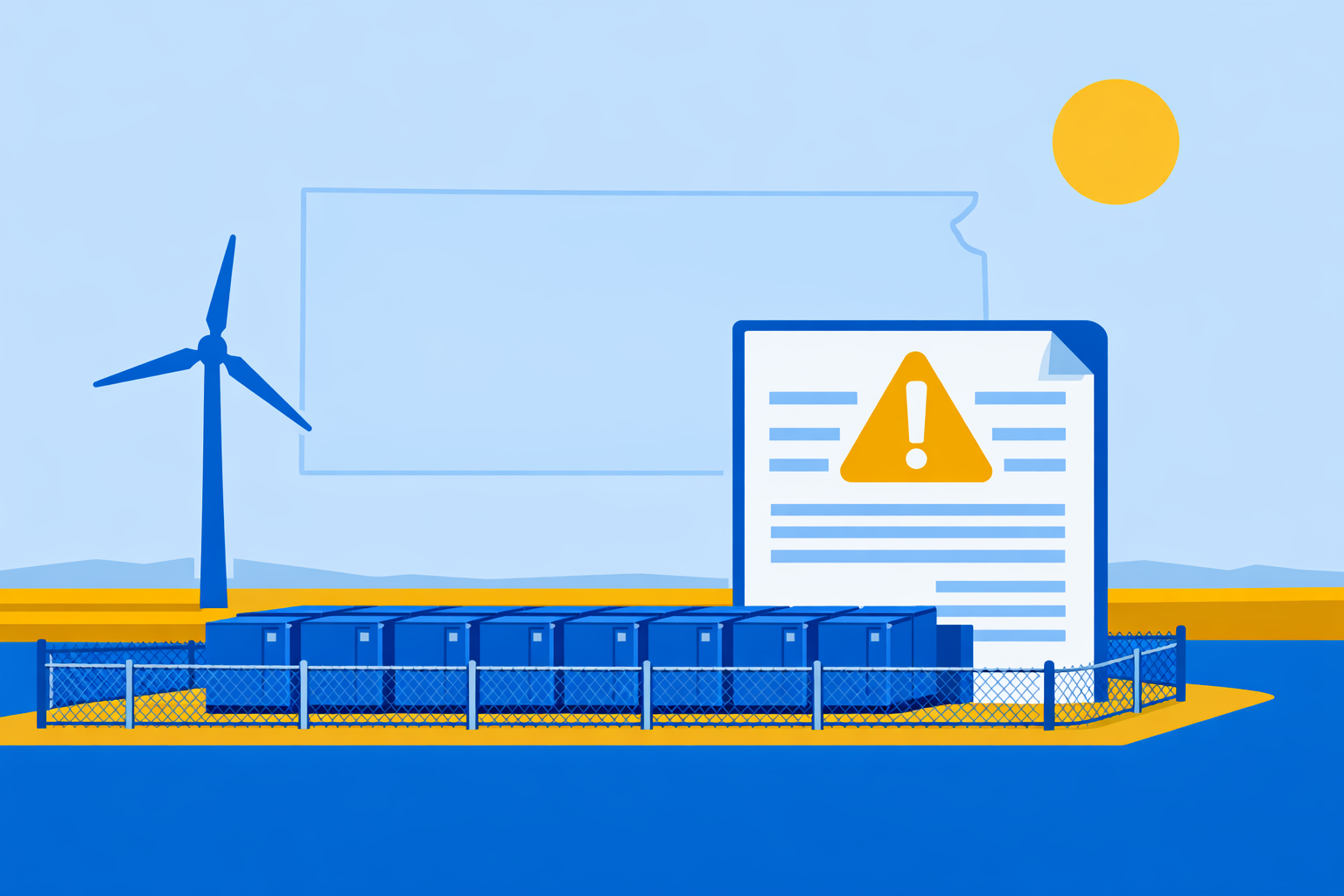
In August 2025, Crowned Ridge Energy Storage[1], a subsidiary of NextEra Energy Resources, petitioned South Dakota's Public Utilities Commission (PUC) for a declaratory ruling that its planned 120 MW battery energy storage system (BESS) did not require a state permit. The PUC disagreed - and the consequences extend well beyond one project.
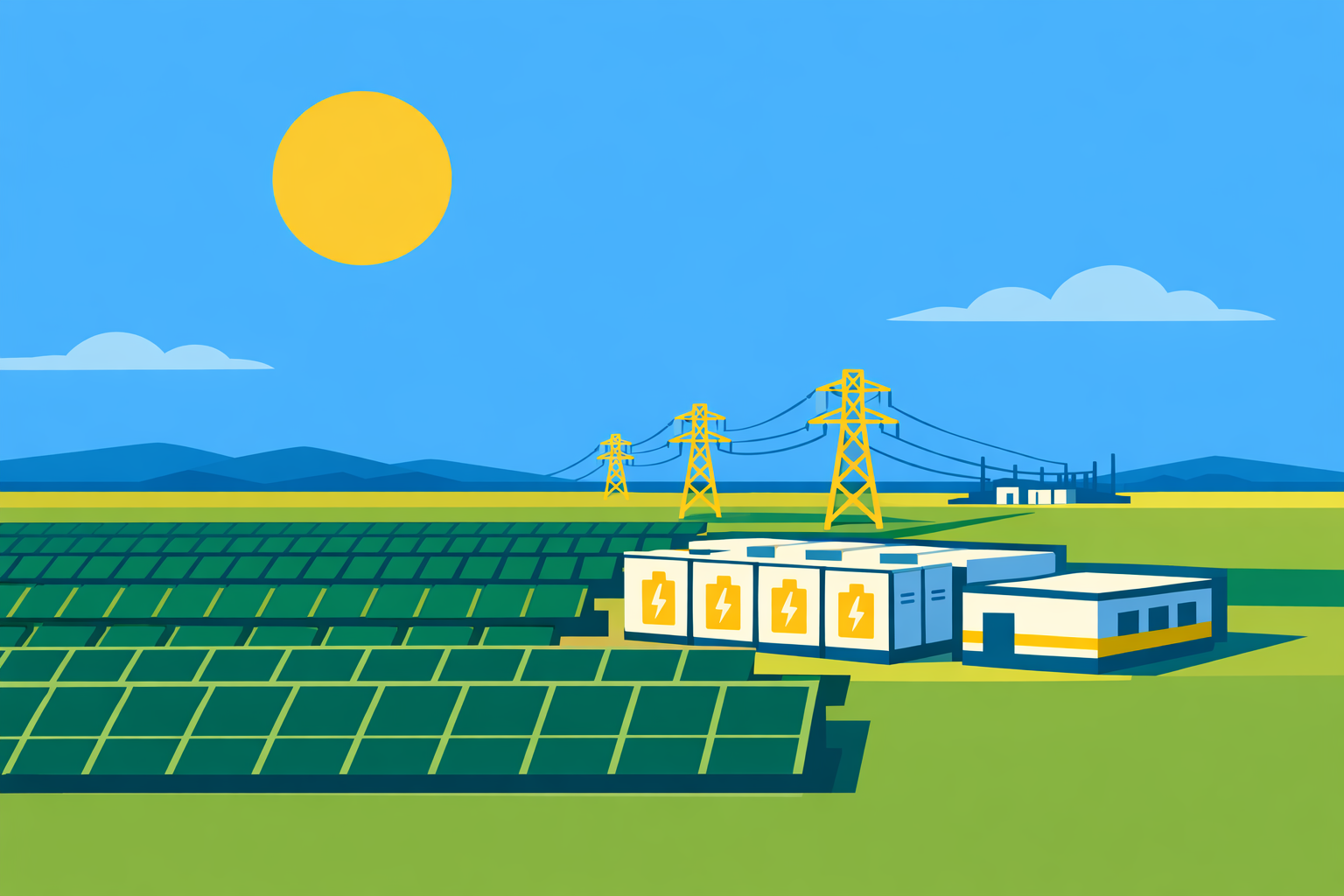
The $174 million Crowned Ridge Energy Storage facility, proposed for a 53-acre site within the existing Crowned Ridge Wind project 13 miles northeast of Watertown, would be among the first large-scale, standalone battery storage facilities in South Dakota. Its permitting trajectory - from notice of intent to anticipated commercial operation - illustrates precisely the kind of regulatory friction that developers, utilities, and policymakers must resolve as storage demand accelerates nationwide.
A Legal Grey Zone Triggers a Full Permitting Process
The core dispute stems from ambiguous statutory language. South Dakota PUC staff reviewed NextEra's petition and found that a BESS facility "could be seen as a secondary generation resource, which does not produce electricity from raw materials," potentially placing it outside the commission's siting jurisdiction. However, staff declined to make a conclusive recommendation, leaving the decision to the three elected commissioners.
The result: a 2-1 vote on September 23, 2025[2], requiring Crowned Ridge to pursue a full state permit. Commissioner Gary Hanson, who sided with the majority, argued that large-scale energy storage could reshape the grid and therefore deserves regulation.
The dissenting commissioner argued the technology falls outside existing statutory definitions. Both interpretations are textually defensible - which is precisely the problem. The 2-1 vote set a permitting precedent for future BESS projects in South Dakota, pending any legislative clarification of the state's ambiguous statutory language.
This kind of definitional ambiguity - does a battery qualify as an "energy conversion facility"? - is not unique to South Dakota. It reflects a broader reality: energy storage statutes in most states predate commercially viable utility-scale BESS, leaving regulators to apply rules designed for generation assets to a fundamentally different technology class.
The Permitting Timeline: Phase by Phase
Following the PUC ruling, Crowned Ridge filed a Notice of Intent[3] in October 2025, formally entering South Dakota's siting process under SDCL § 49-41B-5. The projected schedule underscores the length of the road ahead:
| Milestone | Projected Date |
|---|---|
| Notice of Intent Filed | October 2025 |
| PUC Affected Area Designation | November 2025 |
| Prefiling Conference | March 2026 |
| Formal Permit Application | April 2026 |
| Public Comment Period & Local Review | May-August 2026 (est.) |
| Environmental & Cultural Resource Reviews | June-October 2026 (est.) |
| PUC Contested Case Hearing | November-December 2026 (est.) |
| Permit Issuance | April 2027 |
| Construction Start | May 2027 (est.) |
| Commercial Operation | December 2027 |
According to PUC filings, Crowned Ridge anticipates submitting its formal permit application in April 2026, with permit issuance expected in April 2027 and commercial operation targeted for December 2027 - a roughly 26-month span from notice of intent to energization.
South Dakota's process includes several mandatory steps that introduce scheduling risk:
- Affected Area Designation: Within 30 days of the Notice of Intent, the PUC designates a geographic affected area - in this case, a five-mile radius from the proposed facility - and constitutes a local review committee.
- Prefiling Conference: Developer and PUC staff align on application content before the formal filing, reducing deficiency notices but consuming lead time.
- Local Review Committee Report: Community representatives within the affected area conduct an independent assessment. The PUC may adopt it in whole or in part, introducing a variable the developer cannot fully control.
- Public Comment Period: Formal notice requirements allow landowners, tribal governments, and other stakeholders to intervene or submit comments, adding procedural layers that can extend timelines unpredictably.
- Cultural Resource Surveys: In northeast South Dakota, proximity to tribal cultural areas means Section 106 consultations under the National Historic Preservation Act may be required - a process that can run concurrently but adds coordination complexity.
How South Dakota Compares to Neighboring States
The table below contextualizes South Dakota's framework relative to regional peers. A key differentiator: South Dakota's PUC is an elected three-member body[4], meaning commissioners face electoral accountability that can shape how contentious projects are handled.
| State | Primary Siting Authority | BESS Review Threshold | Typical Timeline | Statutory Clarity |
|---|---|---|---|---|
| South Dakota | Elected PUC | Ambiguous - full permit now required (2025 ruling) | ~18-24 months (est.) | Low - legislative fix pending |
| Minnesota | MN PUC + MPCA | ≥ 80 MW or associated with ≥ 80 MW facility | 12-36 months | Moderate - first standalone BESS filings in 2024 |
| North Dakota | ND Public Service Commission | ≥ 50 MW generation facilities | 12-18 months (est.) | Moderate - robust statewide process |
| Wyoming | Industrial Siting Council | ≥ 50 MW power generation | 9-18 months | Moderate - co-location with wind common |
| Iowa | Iowa Utilities Board | ≥ 25 MW generation | 12-24 months | Moderate - storage policy still evolving |
California, Minnesota, North Dakota, and Wisconsin[5] maintain robust statewide permitting processes for energy facilities. States with defined thresholds and established application templates - such as Minnesota, where the first standalone BESS applications were filed in 2024 - give developers a predictable runway. South Dakota, by contrast, is building its BESS permitting framework in real time, with Crowned Ridge as the reference case.
Significant permitting issues inhibiting project completion are typically at the state and local levels, not the federal level - a finding consistent with Brookings Institution analysis[6] of the clean energy permitting landscape.
Project Economics Under Pressure
Permitting timelines are not merely administrative inconveniences - they impose real financial costs. Every month added to a pre-construction schedule extends the period during which capital is committed but generating no revenue. For a $174 million project, carrying costs on debt and equity, insurance, legal fees, and land lease obligations accumulate throughout the review period.
The Crowned Ridge project is co-located with an operational wind facility, which provides some cost mitigation: existing grid interconnection infrastructure, established land rights, and a known transmission pathway reduce scope uncertainty. The facility is designed to consist of up to 150 lithium-ion battery cabinet modules, each not exceeding 25 feet in height, on approximately 53 acres within the existing Crowned Ridge Wind footprint.
However, the 26-month permitting timeline exposes the project to several risk vectors:
- Interest rate and financing risk: Longer pre-revenue periods increase sensitivity to rate movements.
- Equipment cost volatility: Utility-scale battery system prices increased 23% year-over-year from Q4 2024 to Q4 2025, meaning extended timelines can push equipment procurement into a more expensive window.
- Policy uncertainty: Tax credit frameworks - including the Investment Tax Credit (ITC) for standalone storage - are subject to legislative revision, and multi-year permitting timelines increase exposure to mid-course policy changes.
- Competitive disadvantage: States with faster, more predictable processes attract development capital first. South Dakota's first large-scale BESS is a late entrant to a national market already maturing rapidly.
The National Context: Record Growth, Uneven Access
The South Dakota case unfolds against a backdrop of accelerating U.S. storage deployment[7]. The U.S. installed a record 18.9 GW of energy storage in 2025, a 52% increase over 2024. Utility-scale installations led the market at 16 GW in 2025, a 48% increase over the prior year.
Yet that growth is geographically concentrated. In 2025, three states - Texas, California, and Arizona - accounted for approximately 80% of planned new U.S. battery storage capacity. Storage markets with clear regulatory frameworks and competitive power markets continue to attract the bulk of investment.
For South Dakota and similar states without dedicated BESS siting statutes, the path to joining that growth story runs through regulatory reform. As of 2025, roughly 890 GW of storage capacity sat in U.S. interconnection queues, underscoring both the scale of developer interest and the scale of the bottleneck.
The situation also carries grid reliability implications. The Crowned Ridge BESS is explicitly designed to capture excess wind energy and dispatch it during periods of peak demand. A two-year permitting clock defers that grid reliability benefit - and in a region where renewable curtailment is already a growing concern, the deferral has operational consequences for utilities and ratepayers alike.
For further context on how siting disputes can stall projects with otherwise strong fundamentals, see the related analysis of interconnection and siting delays in the Nevada market and the Adirondack battery storage moratorium case, where zoning ambiguities triggered regulatory paralysis at the local level.
Policy and Procedural Fixes: What Would Actually Help
Several targeted interventions could accelerate BESS siting in South Dakota without undermining oversight:
Legislative Clarification of BESS Definitions. The most impactful near-term fix is a statutory amendment explicitly classifying standalone and co-located BESS under South Dakota's Energy Conversion and Electric Transmission Facilities Siting Act (SDCL § 49-41B). Clear definitions eliminate the front-end jurisdictional dispute that added months to the Crowned Ridge timeline - and will recur with every future applicant until resolved.
Standardized Application Templates. South Dakota's PUC lacks a BESS-specific application framework. The prefiling conference process partially compensates, but a published template - covering expected environmental study scope, acoustic modeling standards, fire suppression plans, and cultural resource survey protocols - would reduce first-mover uncertainty.
Concurrent Review Tracks. Environmental, cultural resource, and technical reviews currently run sequentially in many jurisdictions. Parallel-tracking these reviews - a practice adopted by several states and recommended under FERC Order 2023 for interconnection processes - can compress total timelines without eliminating any substantive review step.
Defined Timelines for Each Phase. Minnesota's permitting process includes statutory time limits for agency action at each stage. South Dakota's process lacks equivalent guardrails. Without deadlines, each phase can expand to fill available time, compounding delays.
Legislative Clarity on Tribal Consultation Scope. Given the geography of northeast South Dakota and the presence of Dakota tribal cultural resources, establishing a defined, upfront consultation protocol - rather than an open-ended discovery process - would reduce uncertainty for developers and tribal governments alike.
Implications for Developers, Utilities, and Ratepayers
For developers, the Crowned Ridge filing serves as a real-world stress test of South Dakota's emergent BESS regulatory environment. The legal challenge and subsequent permit requirement have extended the project's critical path by multiple months - time and money that factor into IRR calculations and investment committee decisions. Future applicants should budget for a full 18-26 month permitting process and engage PUC staff at the earliest possible stage.
For utilities and grid operators, the broader implication is that storage procurement timelines must account for permitting risk in states without mature frameworks. Integrated resource plans that treat BESS as a near-term reliability resource need to reflect realistic development schedules, not just construction timelines.
For ratepayers, the stakes are less immediate but no less real. Storage enables more efficient use of existing wind and solar assets, reduces curtailment costs, and defers more expensive peaking capacity investments. Permitting bottlenecks that delay storage deployment translate into higher long-run system costs - costs that ultimately flow through to electricity bills.
Key Takeaways
- South Dakota's PUC voted 2-1 in September 2025 to require a full state permit for the Crowned Ridge BESS, establishing a precedent for all future large-scale battery storage projects in the state.
- The root cause is statutory ambiguity - existing siting law was not written with standalone BESS in mind. Legislative clarification is the most efficient long-term solution.
- The Crowned Ridge project faces a projected 26-month span from notice of intent to commercial operation, exposing it to financing, equipment cost, and policy risks.
- Regional peers including Minnesota, North Dakota, and Wyoming offer faster, more defined pathways, creating competitive pressure on South Dakota to modernize its framework.
- National storage growth is record-breaking but geographically concentrated in states with regulatory clarity - a pattern that will persist until ambiguous jurisdictions act.
The Crowned Ridge case is unlikely to be the last time South Dakota regulators grapple with how to classify and site a grid-scale battery. The question is whether the legislature and the PUC use this first-mover project to build a durable, predictable framework - or leave each subsequent developer to navigate the same undefined terrain.